
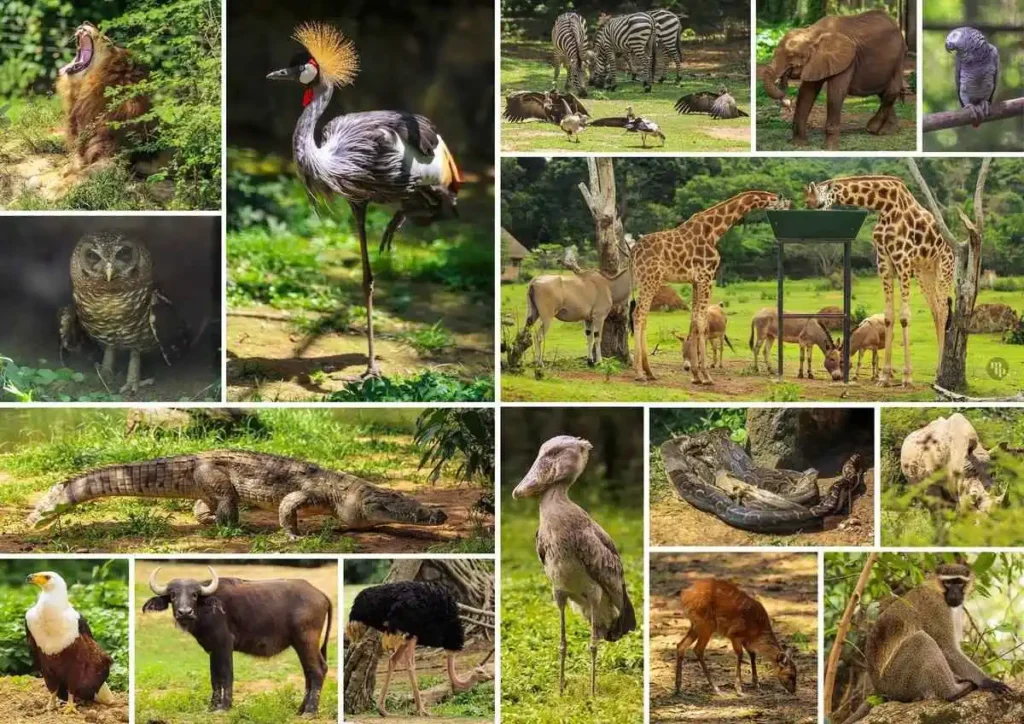
Uganda’s wildlife populations are showing strong signs of recovery, with new figures from the Uganda Wildlife Authority revealing major increases in several key animal species across the country’s protected areas.
According to the State of Wildlife Resources in Uganda 2026 report released this week, buffalo populations have risen by 39 percent, antelopes by 50 percent, chimpanzees by 20 percent, giraffes by 18 percent and elands by 24 percent.
The report paints one of the clearest pictures yet of a conservation sector that has steadily strengthened over the past few years through tighter protection measures, modern technology and targeted wildlife restoration programs.
Officials at UWA say the gains are closely linked to the agency’s growing use of technology in wildlife monitoring and protection. In recent years, the authority has expanded the use of the EarthRanger real-time monitoring system across national parks and reserves, helping rangers track wildlife movements and respond faster to threats such as poaching.
The agency has also increased the use of aerial surveillance and camera trap networks to improve data collection and strengthen field operations.
Speaking during the launch of the report in Kampala, UWA Executive Director James Musinguzi said conservation efforts are now focused not only on protecting existing wildlife populations but also restoring species that had disappeared from some ecosystems.
“We are not only conserving what remains but actively restoring what was lost,” Musinguzi said.
One of the biggest success stories highlighted in the report is the return of southern white rhinos. The animals, which had disappeared from Uganda’s wild spaces decades ago, are now steadily multiplying at Ziwa Rhino Sanctuary in Nakasongola District.
Some rhinos have already been relocated to Ajai Wildlife Reserve and Kidepo Valley National Park, with four currently settled in each area as part of broader efforts to rebuild breeding populations.
UWA is also planning new lion restoration programs. Officials revealed that discussions are ongoing to reintroduce lions to the Ishasha sector of Queen Elizabeth National Park, while talks with the Kenya Wildlife Service are continuing over possible collaboration involving Kidepo Valley National Park.
Despite the encouraging gains, the report also highlights serious conservation challenges that remain unresolved.
Lion populations in Uganda are still considered fragile, with an estimated 12 lions currently in Kidepo Valley National Park and about 39 in Queen Elizabeth National Park. UWA says further studies are being planned to establish more accurate numbers and guide future recovery plans.
African painted dogs, once part of Uganda’s wildlife population, have not been seen in the country for more than 30 years and are now considered locally extinct.
Musinguzi warned that increasing pressure on land surrounding protected areas could undermine many of the conservation gains if long-term planning is not strengthened.
He pointed to rapid population growth, expanding farmland, climate change, oil exploration and invasive plant species as some of the biggest threats affecting wildlife habitats and ecological corridors.
“Wildlife populations may be recovering within protected areas, but the surrounding landscapes that support ecological connectivity are increasingly under pressure,” he said.
“The future of conservation must go beyond isolated interventions and be integrated into national planning and development.”
Uganda Wildlife Authority currently manages 10 national parks, including Bwindi Impenetrable National Park, Kibale National Park, Murchison Falls National Park and Kidepo Valley National Park, alongside several wildlife reserves and sanctuaries across the country.
Conservation experts say sustaining the current recovery will depend on continued investment, stronger environmental policies and closer cooperation between government agencies, conservation groups and surrounding communities.
Got a Story, Advert, or Announcement?
Onion accepts sponsored content, adverts, and news tips.
📧 Email: [email protected]
📱 WhatsApp: +256 787888277