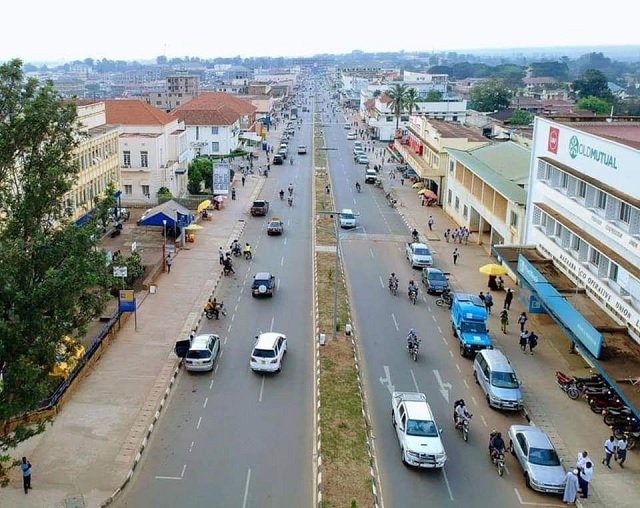
Uganda remains one of East Africa’s more affordable countries, but the cost of living varies significantly depending on where you choose to settle. Rapid urbanization, rising property prices, growing demand for premium housing, and expanding business opportunities have pushed living costs higher in several towns across the country.
Areas with strong commercial activity, international organizations, tourism, and high-end residential estates continue to command the highest rents and property values. Kampala remains the country’s most expensive city, with rental prices for a one-bedroom apartment in the city centre averaging about Shs1.9 million per month, while larger apartments can exceed Shs4 million monthly.
Here are the 13 most expensive towns to live in Uganda in 2026.
1. Kampala
Kampala tops the list as Uganda’s most expensive city. It is home to government offices, multinational companies, diplomatic missions, international schools, luxury apartments, shopping malls, and premium healthcare facilities.
Upscale neighborhoods such as Kololo, Nakasero, Naguru, Muyenga, Bugolobi and Munyonyo have some of the country’s highest rental rates and land values. Daily expenses, transport, entertainment and utilities are also generally higher than elsewhere in Uganda.
2. Entebbe
Entebbe remains one of Uganda’s most desirable places to live due to its proximity to Entebbe International Airport, Lake Victoria, diplomatic residences and numerous international organizations.
Although slightly cheaper than central Kampala, premium homes, lakeside properties and furnished apartments attract high prices. Many expatriates and corporate executives prefer living here. Community discussions also note that while housing can sometimes be slightly cheaper than Kampala, everyday commodities often cost more.
3. Mbarara
Western Uganda’s commercial capital has experienced rapid growth over the past decade. Modern shopping centres, private universities, quality hospitals and expanding real estate developments have made Mbarara one of Uganda’s most expensive towns.
Demand for quality housing continues to increase as businesses and professionals relocate to the city.
4. Jinja
Known as Uganda’s adventure tourism capital, Jinja attracts thousands of tourists, expatriates and investors every year.
Luxury riverside homes, hotels, resorts and high-end residential estates have significantly raised property prices and the general cost of living.
5. Fort Portal
Fort Portal has become increasingly expensive due to tourism around Kibale National Park, crater lakes and nearby oil-related investments in the Albertine region.
The growing hospitality industry has boosted demand for quality accommodation and commercial property.
6. Gulu
Northern Uganda’s largest city has witnessed remarkable economic recovery and urban expansion.
Growing investments in education, health services, NGOs and regional trade have increased demand for housing, pushing rental prices upward.
7. Mbale
Mbale serves as Eastern Uganda’s commercial hub and continues to attract investors, educational institutions and financial services.
Premium residential areas now command significantly higher rents than they did a few years ago.
8. Hoima
Hoima’s transformation into Uganda’s oil city has dramatically increased land prices and rental costs.
Oil exploration, infrastructure projects and business expansion continue to attract workers and investors, making it one of Uganda’s most expensive towns.
9. Mukono
Located just outside Kampala, Mukono has become a preferred residential town for professionals seeking easier access to the capital.
The presence of universities, industries and improved road infrastructure has steadily pushed up housing costs.
10. Wakiso
Although technically a district, Wakiso contains several of Uganda’s fastest-growing urban centres including Kira, Kyaliwajjala, Namugongo and parts of Gayaza.
Rapid residential development and strong demand for housing continue to make the area one of the country’s costliest places to live.
11. Masaka
Masaka’s strategic location along the Kampala-Mutukula highway has strengthened trade and investment.
The town’s growing commercial sector has increased demand for modern housing, office space and business premises.
12. Arua
As the commercial gateway to northwestern Uganda and neighboring DR Congo and South Sudan, Arua has experienced strong economic growth.
Cross-border trade continues to support rising property values and living costs.
13. Kabale
Kabale rounds off the list due to its importance as a tourism and education centre.
Its cool climate, proximity to Rwanda and access to major tourist destinations such as Lake Bunyonyi have made quality housing increasingly expensive, especially in prime neighborhoods.
Why these towns are expensive
Several factors continue to drive up living costs in Uganda’s most expensive towns, including:
- High demand for quality housing
- Rapid urbanization and population growth
- Presence of international organizations and diplomatic missions
- Tourism and hospitality investments
- Oil and industrial developments
- Better infrastructure, healthcare and education facilities
- Strong business and employment opportunities
While Kampala remains Uganda’s most expensive place to live, secondary cities such as Entebbe, Mbarara, Jinja and Hoima are rapidly catching up as economic growth spreads across the country. As investment and urban development continue in 2026, housing and living costs in these towns are expected to remain among the highest in Uganda.
Got a Story, Advert, or Announcement?
Onion accepts sponsored content, adverts, and news tips.
📧 Email: [email protected]
📱 WhatsApp: +256 787888277