
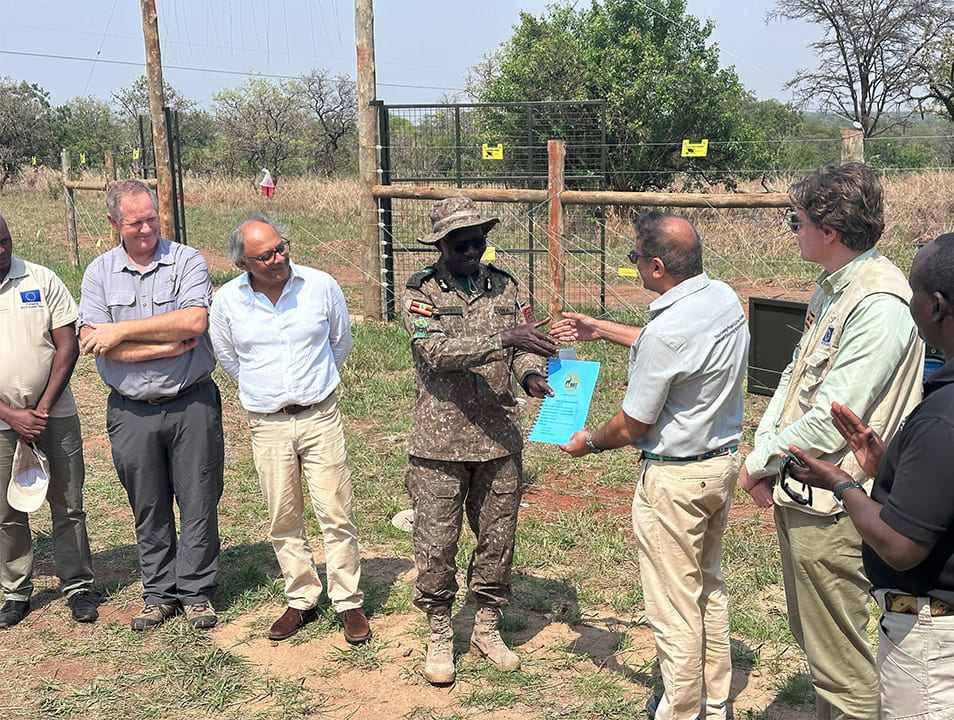
Uganda Wildlife Authority has launched a dedicated rhino sanctuary inside Kidepo Valley National Park, marking the first concrete step towards reintroducing rhinoceros to the park where the species was hunted to extinction more than four decades ago.
Construction of a 17,050-acre fenced sanctuary in the Narus Valley is already underway, with plans to settle an initial population of southern white rhinos before eventually introducing eastern black rhinos. A total of 40 animals are expected to occupy the sanctuary once the project reaches full capacity.
The launch was supported by the European Union through its NaturAfrica Kidepo-Turkana Landscape Project, which has helped unlock around $5 million for long-term conservation work in the area. Alongside the sanctuary, a new Joint Operations Command Centre has been commissioned at park headquarters and patrol motorcycles have been deployed to strengthen security ahead of the animals’ arrival.
Uganda’s last rhino was lost in 1983. Years of civil conflict and commercial poaching, primarily driven by demand for rhino horn in illegal markets, eliminated both black and white rhinoceros populations across the country entirely.
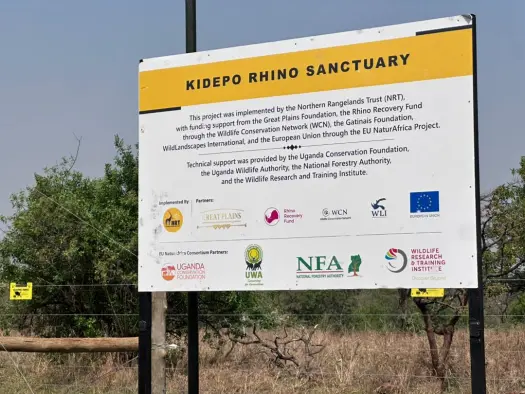
The reintroduction effort is being coordinated by the Uganda Wildlife Authority together with the Uganda Conservation Foundation and Northern Rangelands Trust, with additional technical support from Lewa Wildlife Conservancy, Wildlife Conservation Solutions, and the European Association of Zoos and Aquaria.
Twenty-four rangers drawn from Kidepo and Murchison Falls National Park completed specialist rhino monitoring and management training in 2025 in direct preparation for the translocation. The new command centre, equipped with EarthRanger real-time monitoring software and a digital radio network, will support ranger operations across the park and surrounding community areas.
One of the more pressing technical challenges has been managing tsetse fly populations inside the sanctuary. The insects carry trypanosomiasis, a disease dangerous to rhinos especially during the stress of translocation. A control programme led by wildlife veterinarian Dr. Matthew Mutinda, using methods tested in Kenya’s Meru National Park, has already seen more than 1,000 tsetse targets deployed across the site.
The rhinos destined for Kidepo are expected to come partly from Ziwa Rhino Sanctuary in Nakasongola, currently the only place in Uganda where rhinos live. Uganda’s national rhino population recently reached 59 animals following the arrival of eight southern white rhinos donated by African Parks from KwaZulu-Natal, South Africa. Those animals are undergoing quarantine at Ziwa before joining the broader recovery programme.
Community engagement has been built into the project from the start. Residents living along the park boundary are being involved in security monitoring, conservation education, and livelihood programmes, with the long-term expectation that renewed wildlife tourism will create direct economic benefit for the area.
Kidepo Valley National Park, gazetted in 1962, sits in Uganda’s Karamoja subregion near the borders with South Sudan and Kenya. It supports over 77 mammal species and 476 bird species, and is already considered one of the finest wilderness areas on the continent. Wildlife authorities say the return of rhinos would restore an important ecological role the species once played in shaping the park’s savanna habitats and could significantly boost nature-based tourism in one of Uganda’s most remote regions.
Got a Story, Advert, or Announcement?
Onion accepts sponsored content, adverts, and news tips.
📧 Email: [email protected]
📱 WhatsApp: +256 703195271