
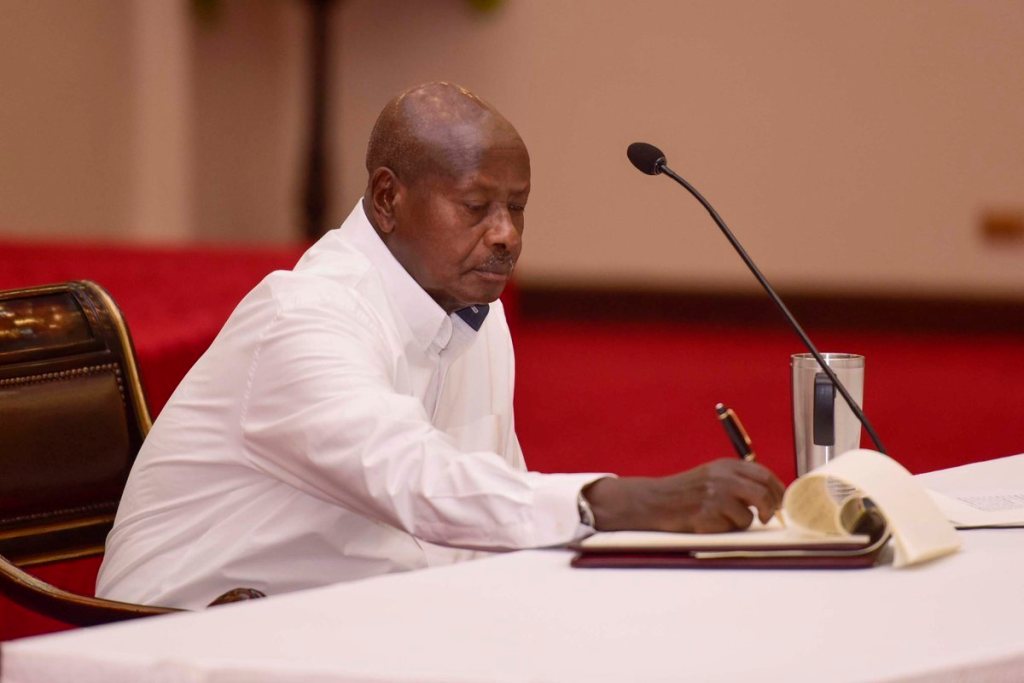
President Yoweri Museveni’s new Cabinet was largely sworn in on Monday, June 8, 2026, at a ceremony held at State House Entebbe. The ministers had been nominated weeks earlier and went through vetting by Parliament’s Appointments Committee before taking their oaths.
Not everyone made it through. Four nominees were turned away by the committee over dual or multiple citizenship issues. They were Adonia Ayebare (Foreign Affairs), Shartsi Musherure (Microfinance), Calvin Echodu (State Minister for Foreign Affairs, International Affairs), and Dr. Lawrence Muganga (State Minister for Internal Affairs). Muganga’s case drew the most attention in local media coverage.
With Museveni once again putting together a large Cabinet, many Ugandans and political observers have been asking the same question: how much do these ministers actually earn?
According to available government records and previous official disclosures, a full Cabinet Minister takes home roughly Shs28 million per month, while a State Minister earns about Shs26 million. Those figures cover salary and other emoluments that come with the office.
But the pay structure is more layered than most people realise. Ex-officio ministers receive a gross monthly salary of about Shs2 million from the Ministry of Public Service, plus a consolidated pay of around Shs18 million per month, making their earnings quite different from those of ministers who also hold elected seats in Parliament.
For ministers who are sitting MPs, the total package can be considerably higher. They are entitled to the same pay as other Members of Parliament, estimated at about Shs25 million in consolidated monthly pay, on top of their ministerial benefits. That means two ministers can hold the same title but walk away with very different amounts at the end of the month, depending on how they entered Cabinet.
On top of salary, ministers receive allowances and benefits to cover official travel, transport, communication, medical expenses, accommodation and other work-related costs. The Ministry of Public Service has periodically updated responsibility allowances for ministers to reflect the demands of running government programmes.
The debate over ministerial pay keeps coming up largely because of the sheer size of Uganda’s Cabinet. Those who support a broad executive say it allows for wider political representation and puts dedicated ministers in charge of specialised sectors. Critics argue that when you add up salaries, allowances, vehicles, fuel, security details and administrative support, the cost to the national budget is hard to justify.
All in all, while the government does not routinely publish a full monthly breakdown for every minister, the available figures point to Cabinet Ministers earning around Shs28 million per month, State Ministers around Shs26 million, and ex-officio ministers or minister-MPs falling under separate arrangements that can significantly change what they actually take home.
Got a Story, Advert, or Announcement?
Onion accepts sponsored content, adverts, and news tips.
📧 Email: [email protected]
📱 WhatsApp: +256 703195271