Space scientists have discovered just how much they can accomplish when they work together, with incredible feats achieved this year through collaborations with commercial industry and foreign nations.
Successful partnerships in 2022 have included the launch and calibration of the most powerful space telescope in the world and photographing the never-before-seen supermassive black hole at the center of the Milky Way galaxy.
Space scientists have discovered just how much they can accomplish when they work together, with incredible feats achieved this year through collaborations with commercial industry and foreign nations.
Successful partnerships in 2022 have included the launch and calibration of the most powerful space telescope in the world and photographing the never-before-seen supermassive black hole at the center of the Milky Way galaxy.
Space, it says, is big. Really big. You just won’t believe how vastly, hugely, mindbogglingly big it is.
Douglas Adams
Stray rocket junk in an unpredictable orbit smashed into the moon, for example, creating a new crater. And NASA’s mega moon rocket, the Space Launch System, has stumbled on its way to its first lunar mission, with the agency encountering several problems with contractors’ work during a critical test this spring.
Whether the rest of the year will include the inaugural moon-bound Artemis mission, the United States’ return to human deep space exploration, remains to be seen. Read more about the year’s biggest moments in space, so far.
James Webb Space Telescope opens for business
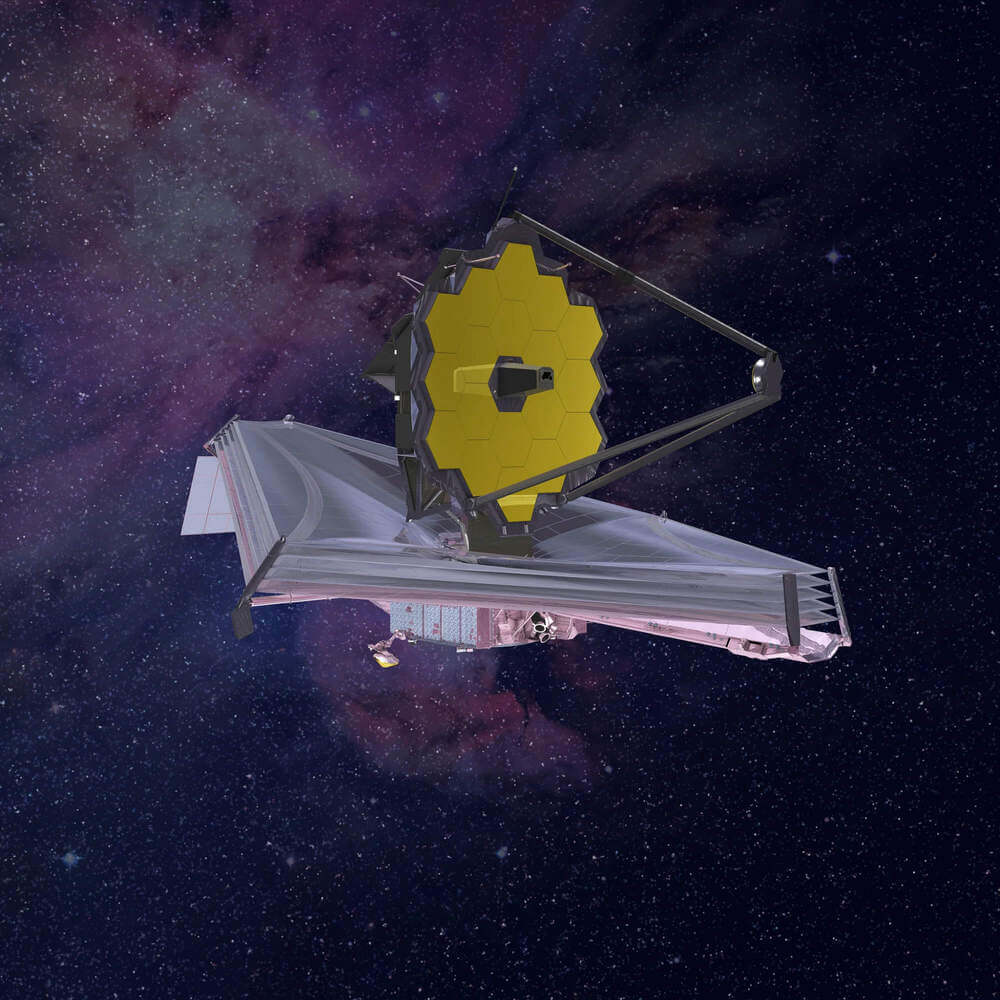
The James Webb Space Telescope will deliver its first full-color images on July 12. Credit: NASA
The most powerful observatory in space hit its mark at a destination 1 million miles from Earth in late January and unfurled its complicated, tennis court-size sun shield. Engineers have since calibrated the Webb telescope’s scientific instruments, exceeding expectations for its level of precision.
In this single galaxy of ours there are eighty-seven thousand million suns.
Arthur C. Clarke
Astronomers anticipate the telescope will stoke a golden age in our understanding of the cosmos, providing snapshots of space billions of light-years away.
On July 12, the James Webb Space Telescope, a partnership between NASA, the European Space Agency, and the Canadian Space Agency, will deliver its first full-color images. What those first cosmic targets will be is a closely guarded secret.
Webb is expected to observe some of the oldest, faintest light in the universe. The telescope will focus on a period less than 300 million years after the Big Bang, when many of the first stars and galaxies were born.
Scientists will also use the telescope to peer into the atmospheres of planets outside our solar system, called exoplanets. Discoveries out there of water and methane, for example, could be signs of potential habitability or biological activity.
Peculiar widespread Martian aurora discovered
New overview images of Mars have revealed a stunning green light show in the planet’s sky.
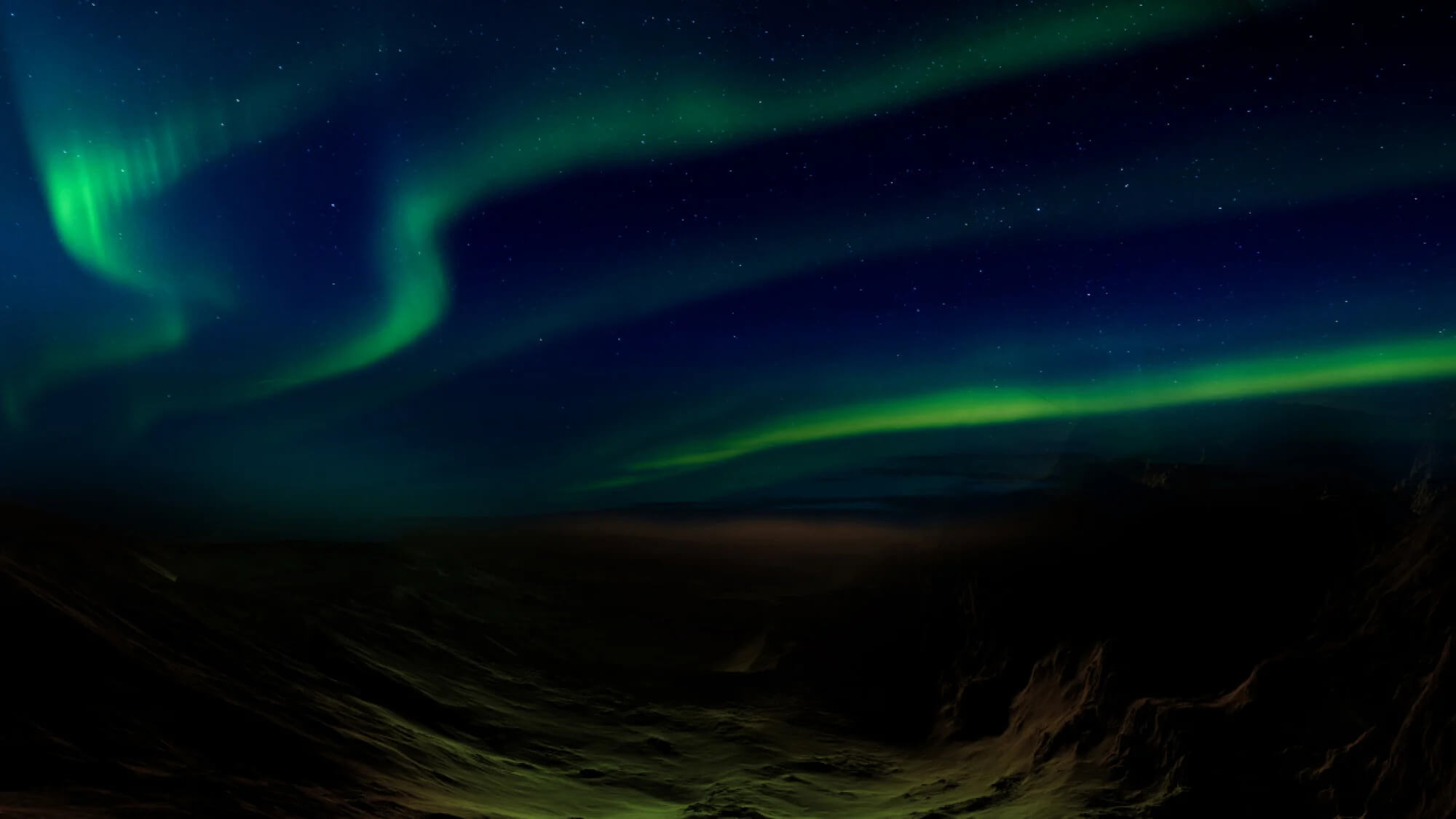
Scientists believe a newly discovered Martian aurora puts green streaks in Mars’ sky. Credit: Emirates Mars Mission
Much of Mars’ atmosphere apparently has a wormlike streak, an aurora similar to the Northern Lights sometimes visible on Earth. The Martian aurora is a glowing, twisted band of ultraviolet light, stretching thousands of miles from the dayside, which faces the sun, to the back of the planet.
A United Arab Emirates Space Agency probe orbiting Mars, known as Hope, took the snapshots.
No one knows how it’s happening, given that scientists believe Mars’ magnetic field largely deteriorated billions of years ago. Magnetic fields guide high-energy streams of electrons from the sun into a planet’s atmosphere.
Astronomers take the first photo of massive Milky Way black hole
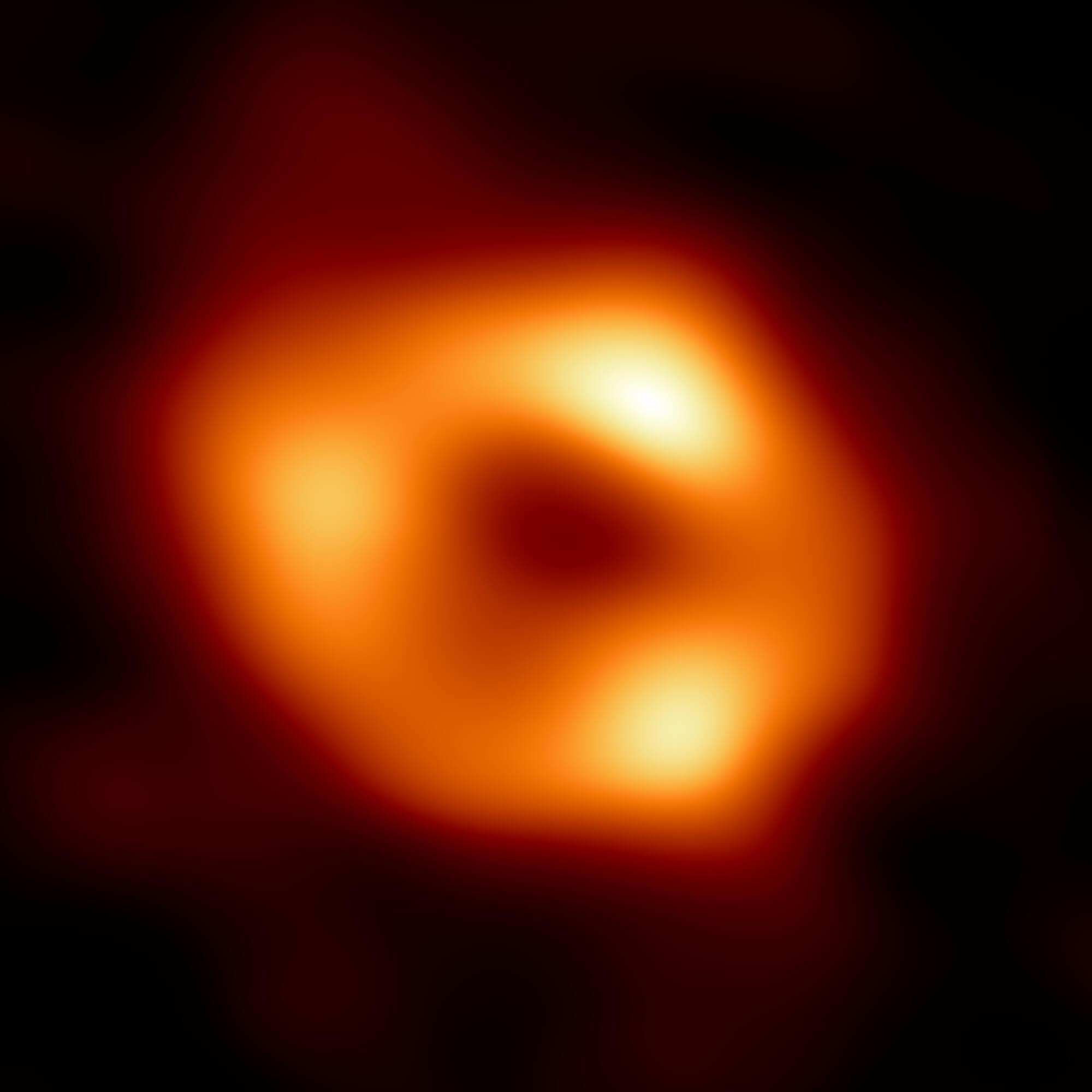
Scientists around the world worked together to take the first photo ever of Sagittarius A*, the supermassive black hole at the center of the Milky Way galaxy. Credit: Event Horizon Telescope
Black holes don’t have surfaces, like planets or stars. Instead, these mysterious cosmic objects have a boundary called an “event horizon,” a point of no return. If anything swoops too close to that point, it will fall inward, never to escape the hole’s gravity.
With the power of eight linked radio dishes from around the world, the Event Horizon Telescope took a picture of the shadow of the supermassive black hole known as Sagittarius A*. Hundreds of scientists from 80 institutions around the globe worked together to collect, process, and piece together fragments of data to make the picture.
Up until three years ago, any depiction of a black hole was merely an artist’s interpretation or a computer model. Now scientists have a snapshot of the real deal, which spans 27 million miles.
With financial support from the National Science Foundation and other groups, scientists plan to enhance their technology to make the image drastically sharper.
The upcoming travel season means taking some much-deserved time off, visiting new cities and bumping shoulders with the nearly 100 million other Americans who plan to do the same this year.
Fighting your way through traffic and crowds is definitely a downside of traveling, so it’s understandable if you want to skip the obvious tourist traps and look for things to do that are off the beaten path. While that’s all well and good, there are a few “touristy” activities you should reconsider. You might be surprised by how fun they actually are.
1. Hop On And Off A Bus Tour
Hop on, hop off bus tours help you get the layout of the city.
Riding a big double-decker bus across the city screams, “I’m not from here!” But don’t knock this uber-touristy activity until you’ve tried it. During my first trip to Boston, I decided to take a hop on, hop off bus tour at the suggestion of a local and it remains one of my favorite activities.
“They can be a quick, pleasant and low-effort way to get an initial view of a city,” said Miguel A. Suro, a Miami attorney who co-runs savings blog The Rich Miserwith his wife. “They can also help you figure out where you want to do some more in-depth tourism later.”
2. Hit The Water
Try a duck boat tour for something a little different.
If a bus tour is too boring or time-consuming for you, consider a boat tour instead.
You can choose to go the classy route with an architectural tour down the Chicago River or a gondola ride through Venice, or opt for a slightly cheesier experience like a duck boat tour. “Those giant car boats are ex-war machines turned tourist traps, but are so delightful to ride in and see a city,” said Vanessa Valiente, creator of travel and fashion blog V-Style. “Boston, London and San Diego are just a few cities that have fantastic duck tours.”
Other unique experiences include swamp tours in Louisiana, riverboat tours down the Mississippi River and the celebrity homes tour of Miami.
3. Visit A Museum
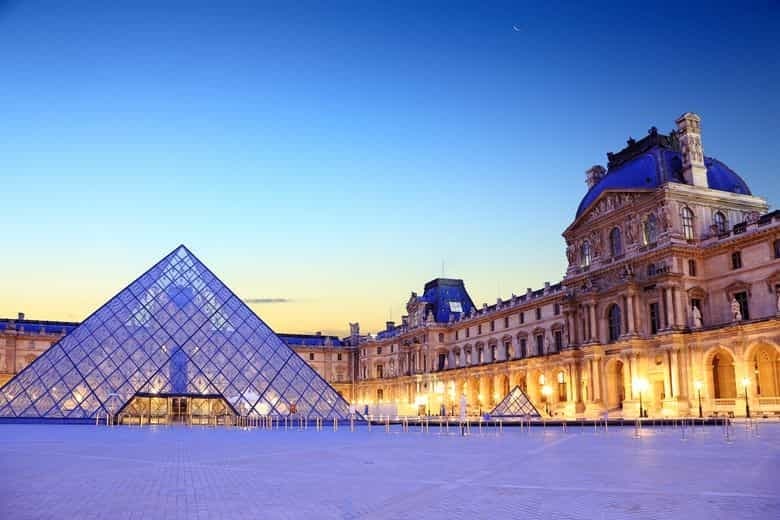
The Louvre in Paris contains a wealth of art.
One of the most obvious tourist activities in any city is visiting the local museums. Though you might have a list of more exciting or unusual stops to make, consider strolling through at least one. A city’s art, history or industry-specific museum holds an incredible vault of knowledge that you can soak in at your own pace.
The outdoors offer a different perspective on the history of a city.
I know, I know ― hiking is so basic. But it can be a great way to burn off some of those extravagant vacation meals while getting lost in nature for a couple of hours.
One great way to experience the unique offerings and rich history of a new city is to trek through its national parks. “Taking advantage of the national parks and landmarks that are being opened to the public or restored [allows you] access to these places that would ultimately be lost in time,” said Lauren Grech, adjunct professor at New York University and CEO of event planning firm LLG.
If you’re looking for something more adventurous, Grech suggested hiking through ruins. “We did this recently through Mayan ruins in Mexico, but there are options for this all over the world,” she said. “Once you get a sense of the location’s history and culture, it heightens the entire rest of your trip because you pick up on certain customs, flavors or sights that you otherwise would have overlooked.”
5. Ascend The City’s Tallest Building
One World Trade Center offers striking views of the city.
Many cities are home to landmark buildings that let visitors take in the city from hundreds of feet up in the air. Waiting in a long line and paying way too much to spend 20 minutes observing the city’s skyline might not seem like your ideal way to spend the day, but it can be a view worth investing in.
“In London, my wife convinced me to take the high-speed elevator to the top of the Shard,” said Trevor Kucheran. The couple, who blog at Travel Off Path, usually pride themselves on avoiding mass crowds and being “off the beaten path” travelers. “I was absolutely stunned by the breathtaking views 95 stories above the city. … It may have been a touristy stop on our London adventure but is definitely one I won’t soon forget!”
Other buildings worth visiting include New York’s One World Trade Center, Seattle’s Space Needle and Los Angeles’ U.S. Bank Tower, which features a glass slide at the top.
6. Visit A Place Of Worship
Istanbul’s Blue Mosque is a popular tourist destination.
Regardless of your faith (or lack thereof), you should consider visiting a noteworthy cathedral, mosque or other place of worship while traveling.
“There’s a reason why the Notre Dame, the Blue Mosque in Istanbul or the Cologne Cathedral are visited by millions of people per year. It’s a holy escape from the city and a glimpse into history,” said Erika van’t Veld, a full-time backpacker and travel blogger at Erika’s Travelventures. “Although you may still be surrounded by crowds of tourists inside these places of worship, you can’t help but feel a sense of peace and security within the echoing walls.”
7. Attend A Sporting Event
Mingle like a local by catching a game while you’re in town.
On a work trip to New Orleans years ago, my company’s CEO organized a group outing to see a basketball game at the Smoothie King Center. I’m not much of a sports fan and wasn’t exactly thrilled with the idea, but I went and ended up having a great time.
What I learned is that you don’t have to be rooting for the home team or necessarily even like sports to enjoy a local game. Live sporting events are a great way to mingle with the locals, get a taste of the regional hot dog style and have something to talk about when chatting it up with strangers at the hotel bar.
Plus, some stadiums are landmarks in their own right. Visiting the iconic Wrigley Field, Notre Dame Stadium or the Rose Bowl will give you a taste of history while you catch a game.
Space scientists have discovered just how much they can accomplish when they work together, with incredible feats achieved this year through collaborations with commercial industry and foreign nations.
Successful partnerships in 2022 have included the launch and calibration of the most powerful space telescope in the world and photographing the never-before-seen supermassive black hole at the center of the Milky Way galaxy.
Space, it says, is big. Really big. You just won’t believe how vastly, hugely, mindbogglingly big it is.
Douglas Adams
Stray rocket junk in an unpredictable orbit smashed into the moon, for example, creating a new crater. And NASA’s mega moon rocket, the Space Launch System, has stumbled on its way to its first lunar mission, with the agency encountering several problems with contractors’ work during a critical test this spring.
Whether the rest of the year will include the inaugural moon-bound Artemis mission, the United States’ return to human deep space exploration, remains to be seen. Read more about the year’s biggest moments in space, so far.
James Webb Space Telescope opens for business
The James Webb Space Telescope will deliver its first full-color images on July 12. Credit: NASA
The most powerful observatory in space hit its mark at a destination 1 million miles from Earth in late January and unfurled its complicated, tennis court-size sun shield. Engineers have since calibrated the Webb telescope’s scientific instruments, exceeding expectations for its level of precision.
In this single galaxy of ours there are eighty-seven thousand million suns.
Arthur C. Clarke
Astronomers anticipate the telescope will stoke a golden age in our understanding of the cosmos, providing snapshots of space billions of light-years away.
On July 12, the James Webb Space Telescope, a partnership between NASA, the European Space Agency, and the Canadian Space Agency, will deliver its first full-color images. What those first cosmic targets will be is a closely guarded secret.
Webb is expected to observe some of the oldest, faintest light in the universe. The telescope will focus on a period less than 300 million years after the Big Bang, when many of the first stars and galaxies were born.
Scientists will also use the telescope to peer into the atmospheres of planets outside our solar system, called exoplanets. Discoveries out there of water and methane, for example, could be signs of potential habitability or biological activity.
Peculiar widespread Martian aurora discovered
New overview images of Mars have revealed a stunning green light show in the planet’s sky.
Scientists believe a newly discovered Martian aurora puts green streaks in Mars’ sky. Credit: Emirates Mars Mission
Much of Mars’ atmosphere apparently has a wormlike streak, an aurora similar to the Northern Lights sometimes visible on Earth. The Martian aurora is a glowing, twisted band of ultraviolet light, stretching thousands of miles from the dayside, which faces the sun, to the back of the planet.
A United Arab Emirates Space Agency probe orbiting Mars, known as Hope, took the snapshots.
No one knows how it’s happening, given that scientists believe Mars’ magnetic field largely deteriorated billions of years ago. Magnetic fields guide high-energy streams of electrons from the sun into a planet’s atmosphere.
Astronomers take the first photo of massive Milky Way black hole
Scientists around the world worked together to take the first photo ever of Sagittarius A*, the supermassive black hole at the center of the Milky Way galaxy. Credit: Event Horizon Telescope
Black holes don’t have surfaces, like planets or stars. Instead, these mysterious cosmic objects have a boundary called an “event horizon,” a point of no return. If anything swoops too close to that point, it will fall inward, never to escape the hole’s gravity.
With the power of eight linked radio dishes from around the world, the Event Horizon Telescope took a picture of the shadow of the supermassive black hole known as Sagittarius A*. Hundreds of scientists from 80 institutions around the globe worked together to collect, process, and piece together fragments of data to make the picture.
Up until three years ago, any depiction of a black hole was merely an artist’s interpretation or a computer model. Now scientists have a snapshot of the real deal, which spans 27 million miles.
With financial support from the National Science Foundation and other groups, scientists plan to enhance their technology to make the image drastically sharper.
Space scientists have discovered just how much they can accomplish when they work together, with incredible feats achieved this year through collaborations with commercial industry and foreign nations.
Successful partnerships in 2022 have included the launch and calibration of the most powerful space telescope in the world and photographing the never-before-seen supermassive black hole at the center of the Milky Way galaxy.
Space, it says, is big. Really big. You just won’t believe how vastly, hugely, mindbogglingly big it is.
Douglas Adams
Stray rocket junk in an unpredictable orbit smashed into the moon, for example, creating a new crater. And NASA’s mega moon rocket, the Space Launch System, has stumbled on its way to its first lunar mission, with the agency encountering several problems with contractors’ work during a critical test this spring.
Whether the rest of the year will include the inaugural moon-bound Artemis mission, the United States’ return to human deep space exploration, remains to be seen. Read more about the year’s biggest moments in space, so far.
James Webb Space Telescope opens for business
The James Webb Space Telescope will deliver its first full-color images on July 12. Credit: NASA
The most powerful observatory in space hit its mark at a destination 1 million miles from Earth in late January and unfurled its complicated, tennis court-size sun shield. Engineers have since calibrated the Webb telescope’s scientific instruments, exceeding expectations for its level of precision.
In this single galaxy of ours there are eighty-seven thousand million suns.
Arthur C. Clarke
Astronomers anticipate the telescope will stoke a golden age in our understanding of the cosmos, providing snapshots of space billions of light-years away.
On July 12, the James Webb Space Telescope, a partnership between NASA, the European Space Agency, and the Canadian Space Agency, will deliver its first full-color images. What those first cosmic targets will be is a closely guarded secret.
Webb is expected to observe some of the oldest, faintest light in the universe. The telescope will focus on a period less than 300 million years after the Big Bang, when many of the first stars and galaxies were born.
Scientists will also use the telescope to peer into the atmospheres of planets outside our solar system, called exoplanets. Discoveries out there of water and methane, for example, could be signs of potential habitability or biological activity.
Peculiar widespread Martian aurora discovered
New overview images of Mars have revealed a stunning green light show in the planet’s sky.
Scientists believe a newly discovered Martian aurora puts green streaks in Mars’ sky. Credit: Emirates Mars Mission
Much of Mars’ atmosphere apparently has a wormlike streak, an aurora similar to the Northern Lights sometimes visible on Earth. The Martian aurora is a glowing, twisted band of ultraviolet light, stretching thousands of miles from the dayside, which faces the sun, to the back of the planet.
A United Arab Emirates Space Agency probe orbiting Mars, known as Hope, took the snapshots.
No one knows how it’s happening, given that scientists believe Mars’ magnetic field largely deteriorated billions of years ago. Magnetic fields guide high-energy streams of electrons from the sun into a planet’s atmosphere.
Astronomers take the first photo of massive Milky Way black hole
Scientists around the world worked together to take the first photo ever of Sagittarius A*, the supermassive black hole at the center of the Milky Way galaxy. Credit: Event Horizon Telescope
Black holes don’t have surfaces, like planets or stars. Instead, these mysterious cosmic objects have a boundary called an “event horizon,” a point of no return. If anything swoops too close to that point, it will fall inward, never to escape the hole’s gravity.
With the power of eight linked radio dishes from around the world, the Event Horizon Telescope took a picture of the shadow of the supermassive black hole known as Sagittarius A*. Hundreds of scientists from 80 institutions around the globe worked together to collect, process, and piece together fragments of data to make the picture.
Up until three years ago, any depiction of a black hole was merely an artist’s interpretation or a computer model. Now scientists have a snapshot of the real deal, which spans 27 million miles.
With financial support from the National Science Foundation and other groups, scientists plan to enhance their technology to make the image drastically sharper.
Space scientists have discovered just how much they can accomplish when they work together, with incredible feats achieved this year through collaborations with commercial industry and foreign nations.
Successful partnerships in 2022 have included the launch and calibration of the most powerful space telescope in the world and photographing the never-before-seen supermassive black hole at the center of the Milky Way galaxy.
Space scientists have discovered just how much they can accomplish when they work together, with incredible feats achieved this year through collaborations with commercial industry and foreign nations.
Successful partnerships in 2022 have included the launch and calibration of the most powerful space telescope in the world and photographing the never-before-seen supermassive black hole at the center of the Milky Way galaxy.
Space, it says, is big. Really big. You just won’t believe how vastly, hugely, mindbogglingly big it is.
Douglas Adams
Stray rocket junk in an unpredictable orbit smashed into the moon, for example, creating a new crater. And NASA’s mega moon rocket, the Space Launch System, has stumbled on its way to its first lunar mission, with the agency encountering several problems with contractors’ work during a critical test this spring.
Whether the rest of the year will include the inaugural moon-bound Artemis mission, the United States’ return to human deep space exploration, remains to be seen. Read more about the year’s biggest moments in space, so far.
James Webb Space Telescope opens for business
The James Webb Space Telescope will deliver its first full-color images on July 12. Credit: NASA
The most powerful observatory in space hit its mark at a destination 1 million miles from Earth in late January and unfurled its complicated, tennis court-size sun shield. Engineers have since calibrated the Webb telescope’s scientific instruments, exceeding expectations for its level of precision.
In this single galaxy of ours there are eighty-seven thousand million suns.
Arthur C. Clarke
Astronomers anticipate the telescope will stoke a golden age in our understanding of the cosmos, providing snapshots of space billions of light-years away.
On July 12, the James Webb Space Telescope, a partnership between NASA, the European Space Agency, and the Canadian Space Agency, will deliver its first full-color images. What those first cosmic targets will be is a closely guarded secret.
Webb is expected to observe some of the oldest, faintest light in the universe. The telescope will focus on a period less than 300 million years after the Big Bang, when many of the first stars and galaxies were born.
Scientists will also use the telescope to peer into the atmospheres of planets outside our solar system, called exoplanets. Discoveries out there of water and methane, for example, could be signs of potential habitability or biological activity.
Peculiar widespread Martian aurora discovered
New overview images of Mars have revealed a stunning green light show in the planet’s sky.
Scientists believe a newly discovered Martian aurora puts green streaks in Mars’ sky. Credit: Emirates Mars Mission
Much of Mars’ atmosphere apparently has a wormlike streak, an aurora similar to the Northern Lights sometimes visible on Earth. The Martian aurora is a glowing, twisted band of ultraviolet light, stretching thousands of miles from the dayside, which faces the sun, to the back of the planet.
A United Arab Emirates Space Agency probe orbiting Mars, known as Hope, took the snapshots.
No one knows how it’s happening, given that scientists believe Mars’ magnetic field largely deteriorated billions of years ago. Magnetic fields guide high-energy streams of electrons from the sun into a planet’s atmosphere.
Astronomers take the first photo of massive Milky Way black hole
Scientists around the world worked together to take the first photo ever of Sagittarius A*, the supermassive black hole at the center of the Milky Way galaxy. Credit: Event Horizon Telescope
Black holes don’t have surfaces, like planets or stars. Instead, these mysterious cosmic objects have a boundary called an “event horizon,” a point of no return. If anything swoops too close to that point, it will fall inward, never to escape the hole’s gravity.
With the power of eight linked radio dishes from around the world, the Event Horizon Telescope took a picture of the shadow of the supermassive black hole known as Sagittarius A*. Hundreds of scientists from 80 institutions around the globe worked together to collect, process, and piece together fragments of data to make the picture.
Up until three years ago, any depiction of a black hole was merely an artist’s interpretation or a computer model. Now scientists have a snapshot of the real deal, which spans 27 million miles.
With financial support from the National Science Foundation and other groups, scientists plan to enhance their technology to make the image drastically sharper.
Space scientists have discovered just how much they can accomplish when they work together, with incredible feats achieved this year through collaborations with commercial industry and foreign nations.
Successful partnerships in 2022 have included the launch and calibration of the most powerful space telescope in the world and photographing the never-before-seen supermassive black hole at the center of the Milky Way galaxy.
Space, it says, is big. Really big. You just won’t believe how vastly, hugely, mindbogglingly big it is.
Douglas Adams
Stray rocket junk in an unpredictable orbit smashed into the moon, for example, creating a new crater. And NASA’s mega moon rocket, the Space Launch System, has stumbled on its way to its first lunar mission, with the agency encountering several problems with contractors’ work during a critical test this spring.
Whether the rest of the year will include the inaugural moon-bound Artemis mission, the United States’ return to human deep space exploration, remains to be seen. Read more about the year’s biggest moments in space, so far.
James Webb Space Telescope opens for business
The James Webb Space Telescope will deliver its first full-color images on July 12. Credit: NASA
The most powerful observatory in space hit its mark at a destination 1 million miles from Earth in late January and unfurled its complicated, tennis court-size sun shield. Engineers have since calibrated the Webb telescope’s scientific instruments, exceeding expectations for its level of precision.
In this single galaxy of ours there are eighty-seven thousand million suns.
Arthur C. Clarke
Astronomers anticipate the telescope will stoke a golden age in our understanding of the cosmos, providing snapshots of space billions of light-years away.
On July 12, the James Webb Space Telescope, a partnership between NASA, the European Space Agency, and the Canadian Space Agency, will deliver its first full-color images. What those first cosmic targets will be is a closely guarded secret.
Webb is expected to observe some of the oldest, faintest light in the universe. The telescope will focus on a period less than 300 million years after the Big Bang, when many of the first stars and galaxies were born.
Scientists will also use the telescope to peer into the atmospheres of planets outside our solar system, called exoplanets. Discoveries out there of water and methane, for example, could be signs of potential habitability or biological activity.
Peculiar widespread Martian aurora discovered
New overview images of Mars have revealed a stunning green light show in the planet’s sky.
Scientists believe a newly discovered Martian aurora puts green streaks in Mars’ sky. Credit: Emirates Mars Mission
Much of Mars’ atmosphere apparently has a wormlike streak, an aurora similar to the Northern Lights sometimes visible on Earth. The Martian aurora is a glowing, twisted band of ultraviolet light, stretching thousands of miles from the dayside, which faces the sun, to the back of the planet.
A United Arab Emirates Space Agency probe orbiting Mars, known as Hope, took the snapshots.
No one knows how it’s happening, given that scientists believe Mars’ magnetic field largely deteriorated billions of years ago. Magnetic fields guide high-energy streams of electrons from the sun into a planet’s atmosphere.
Astronomers take the first photo of massive Milky Way black hole
Scientists around the world worked together to take the first photo ever of Sagittarius A*, the supermassive black hole at the center of the Milky Way galaxy. Credit: Event Horizon Telescope
Black holes don’t have surfaces, like planets or stars. Instead, these mysterious cosmic objects have a boundary called an “event horizon,” a point of no return. If anything swoops too close to that point, it will fall inward, never to escape the hole’s gravity.
With the power of eight linked radio dishes from around the world, the Event Horizon Telescope took a picture of the shadow of the supermassive black hole known as Sagittarius A*. Hundreds of scientists from 80 institutions around the globe worked together to collect, process, and piece together fragments of data to make the picture.
Up until three years ago, any depiction of a black hole was merely an artist’s interpretation or a computer model. Now scientists have a snapshot of the real deal, which spans 27 million miles.
With financial support from the National Science Foundation and other groups, scientists plan to enhance their technology to make the image drastically sharper.
Space scientists have discovered just how much they can accomplish when they work together, with incredible feats achieved this year through collaborations with commercial industry and foreign nations.
Successful partnerships in 2022 have included the launch and calibration of the most powerful space telescope in the world and photographing the never-before-seen supermassive black hole at the center of the Milky Way galaxy.
Space, it says, is big. Really big. You just won’t believe how vastly, hugely, mindbogglingly big it is.
Douglas Adams
Stray rocket junk in an unpredictable orbit smashed into the moon, for example, creating a new crater. And NASA’s mega moon rocket, the Space Launch System, has stumbled on its way to its first lunar mission, with the agency encountering several problems with contractors’ work during a critical test this spring.
Whether the rest of the year will include the inaugural moon-bound Artemis mission, the United States’ return to human deep space exploration, remains to be seen. Read more about the year’s biggest moments in space, so far.
James Webb Space Telescope opens for business
The James Webb Space Telescope will deliver its first full-color images on July 12. Credit: NASA
The most powerful observatory in space hit its mark at a destination 1 million miles from Earth in late January and unfurled its complicated, tennis court-size sun shield. Engineers have since calibrated the Webb telescope’s scientific instruments, exceeding expectations for its level of precision.
In this single galaxy of ours there are eighty-seven thousand million suns.
Arthur C. Clarke
Astronomers anticipate the telescope will stoke a golden age in our understanding of the cosmos, providing snapshots of space billions of light-years away.
On July 12, the James Webb Space Telescope, a partnership between NASA, the European Space Agency, and the Canadian Space Agency, will deliver its first full-color images. What those first cosmic targets will be is a closely guarded secret.
Webb is expected to observe some of the oldest, faintest light in the universe. The telescope will focus on a period less than 300 million years after the Big Bang, when many of the first stars and galaxies were born.
Scientists will also use the telescope to peer into the atmospheres of planets outside our solar system, called exoplanets. Discoveries out there of water and methane, for example, could be signs of potential habitability or biological activity.
Peculiar widespread Martian aurora discovered
New overview images of Mars have revealed a stunning green light show in the planet’s sky.
Scientists believe a newly discovered Martian aurora puts green streaks in Mars’ sky. Credit: Emirates Mars Mission
Much of Mars’ atmosphere apparently has a wormlike streak, an aurora similar to the Northern Lights sometimes visible on Earth. The Martian aurora is a glowing, twisted band of ultraviolet light, stretching thousands of miles from the dayside, which faces the sun, to the back of the planet.
A United Arab Emirates Space Agency probe orbiting Mars, known as Hope, took the snapshots.
No one knows how it’s happening, given that scientists believe Mars’ magnetic field largely deteriorated billions of years ago. Magnetic fields guide high-energy streams of electrons from the sun into a planet’s atmosphere.
Astronomers take the first photo of massive Milky Way black hole
Scientists around the world worked together to take the first photo ever of Sagittarius A*, the supermassive black hole at the center of the Milky Way galaxy. Credit: Event Horizon Telescope
Black holes don’t have surfaces, like planets or stars. Instead, these mysterious cosmic objects have a boundary called an “event horizon,” a point of no return. If anything swoops too close to that point, it will fall inward, never to escape the hole’s gravity.
With the power of eight linked radio dishes from around the world, the Event Horizon Telescope took a picture of the shadow of the supermassive black hole known as Sagittarius A*. Hundreds of scientists from 80 institutions around the globe worked together to collect, process, and piece together fragments of data to make the picture.
Up until three years ago, any depiction of a black hole was merely an artist’s interpretation or a computer model. Now scientists have a snapshot of the real deal, which spans 27 million miles.
With financial support from the National Science Foundation and other groups, scientists plan to enhance their technology to make the image drastically sharper.
Space scientists have discovered just how much they can accomplish when they work together, with incredible feats achieved this year through collaborations with commercial industry and foreign nations.
Successful partnerships in 2022 have included the launch and calibration of the most powerful space telescope in the world and photographing the never-before-seen supermassive black hole at the center of the Milky Way galaxy.