
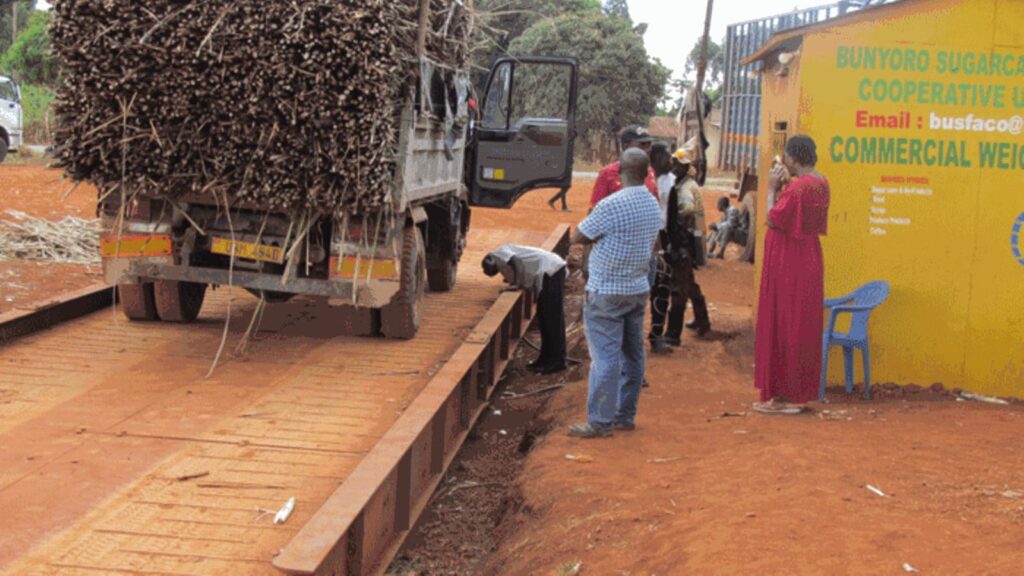
Prime Minister Robinah Nabbanja has directed the dismantling of roadside sugarcane weighbridges and their relocation to licensed sugar factories, a move that has drawn sharp criticism from farmer groups who say it hands millers back the power to underpay outgrowers.
In a letter dated March 17, 2026, to the Minister of Trade, Industry and Cooperatives, Nabbanja ordered the immediate removal of all roadside weighbridges, citing theft and the role of middlemen as justification.
“I have received various complaints and concerns from stakeholders in the sugarcane industry concerning the way roadside weighbridges… are being used to steal sugarcane,” she wrote, adding that government had “decided that all sugarcane weighbridges operating on the roadside should be removed and relocated to the respective licensed factories.”
She also directed the Inspector General of Police to ensure “all roadside weighbridges are removed with immediate effect.”
[pdf-embedder url=”https://onionug.com/wp-content/uploads/2026/03/DOC-20260326-WA0103_260326_150628.pdf”]
Roadside weighbridges were introduced as a direct response to exploitation. For years, sugarcane outgrowers, particularly in the Bunyoro region, were locked out of factory-based weighing facilities, leaving millers free to set their own tonnage figures and pay farmers accordingly. The result was widespread underpayment that farmers had no way to challenge or verify.
Independent weighbridges managed by outgrower associations changed that. They allowed farmers to confirm measurements before their cane reached the factory, introducing a layer of transparency that had previously been absent. Critics of Nabbanja’s directive argue that removing them simply restores the old monopoly.
The directive has also exposed a split within government. Nabbanja’s letter references a position attributed to Minister of Internal Affairs Gen. Kahinda Otafiire, who supported removing the roadside weighbridges. It makes no mention, however, of a more recent directive by Trade Minister Gen. Wilson Mbasu Mbadi, who had reportedly ordered the weighbridges reinstated after consultations with district officials and other stakeholders in Kampala.
The contradiction between the two ministers’ positions has fuelled questions about who is actually driving policy in the sector.
Behind the policy dispute, multiple sources point to organised financial interests working to keep the weighbridges out. Investigations and field reports allege that networks linked to certain sugar manufacturers have lobbied against independent weigh points, which cut into their control over pricing and supply chains.
In Bunyoro, sources claim local politicians, community leaders, and security personnel have received payments aimed at building opposition to the weighbridges. One account describes a meeting at Kabalega Hotel where alleged cash distributions sparked internal quarrels over unequal sharing. A sugar company operating in Masindi has separately been named as a key player in efforts to reverse Minister Mbadi’s directive, including through district council proceedings, despite several councillors having attended the original Kampala consultations. These allegations have not been independently verified.
While officials debate policy, farmers in Bunyoro are sitting on unharvested cane that has been drying in fields for close to two months. With the weighing dispute unresolved and no clear framework for how cane will be measured or priced, the buying and selling of sugarcane has largely ground to a halt.
The standoff places the livelihoods of thousands of outgrowers in direct jeopardy, and underscores what is at stake as government weighs its next move in a sector where the gap between official justification and on-the-ground reality continues to widen.
Got a Story, Advert, or Announcement?
Onion accepts sponsored content, adverts, and news tips.
📧 Email: [email protected]
📱 WhatsApp: +256 703195271