
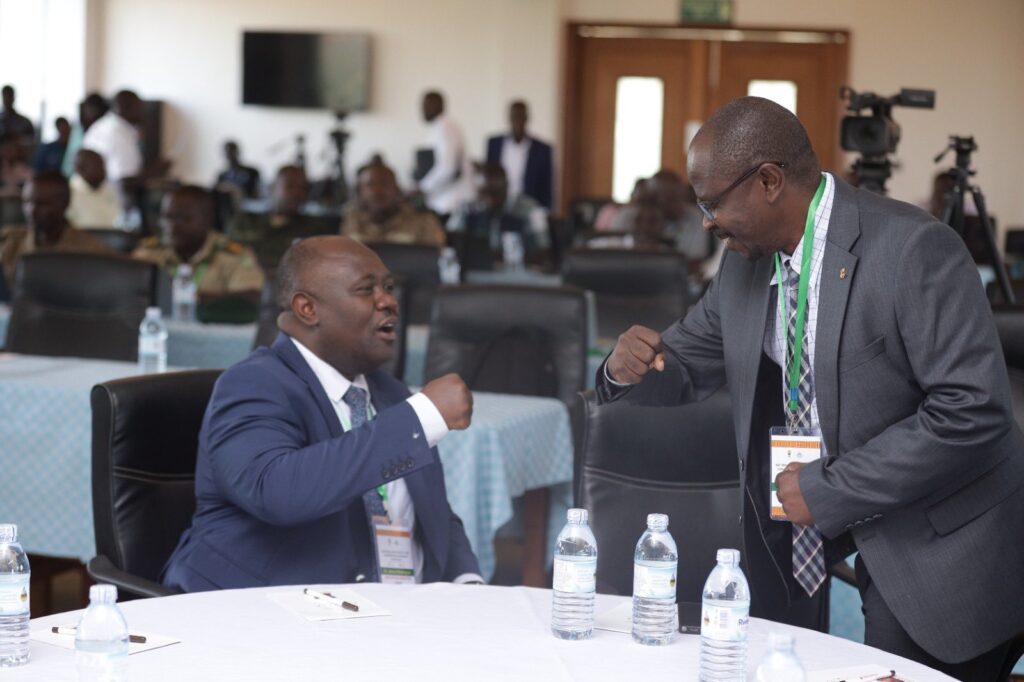
Kampala– Uganda Wildlife Authority (UWA) and the Uganda Wildlife Research and Training College (UWRTC) this week launched the inaugural National Biodiversity and Conservation Research Symposium in Kampala, bringing together researchers, ecologists and government officials in what both institutions described as a turning point in the country’s approach to wildlife conservation.
The two-day symposium, held at Nile Resort Hotel under the theme “Biodiversity Under Threat: Science, Innovation and Collaborative Responses,” is the first formal effort to bridge a longstanding gap between the scientists studying Uganda’s declining wildlife and the officials tasked with protecting it.
Speaking at the opening, UWA Executive Director Dr. James Musinguzi said the country could no longer afford to manage its natural heritage on guesswork.
“These threats and gaps must be closed by using empirical data and evidence picked from research, not assumptions, not politics. Science,” Musinguzi told delegates.

The gathering comes as Uganda’s protected areas face simultaneous pressure from climate change, habitat degradation, invasive species, illegal wildlife trade and accelerating human encroachment. Officials acknowledge that the national response to these threats has been fragmented, with government bodies often duplicating research efforts while rarely sharing findings.
Robert Baluku, Principal of UWRTC, said the cost of that fragmentation had been significant. Institutions operating in silos had stretched scarce resources while slowing down conservation solutions. He called for a centralised wildlife research database to allow practitioners and policymakers to pool knowledge and coordinate responses more effectively.
Both UWA and UWRTC operate under the Ministry of Tourism, Wildlife and Antiquities.
Among the key announcements from the symposium, UWA confirmed the launch of a peer-reviewed research journal and a digital biodiversity data repository intended to disseminate Uganda-generated conservation science globally. UWRTC separately announced plans to establish its own Uganda Wildlife Research Journal and a Research Ethics Committee to oversee wildlife studies conducted in the country.
The initiatives also carry a revenue dimension. By opening Uganda’s protected areas to structured international research partnerships, UWA aims to attract foreign universities and scientific institutions whose researchers pay for permits and field access, effectively channelling conservation science into conservation funding.
“We are going to generate funds from research. We are setting up a depository of knowledge, and that knowledge has value,” Dr. Musinguzi said.
UWRTC was formally elevated to a full college under the TVET Act 2025, a move Baluku said positions the institution as a centre of excellence for applied wildlife conservation research. The work aligns with Uganda’s Fourth National Development Plan, which identifies science, technology and innovation as critical instruments for ecosystem restoration and climate resilience.
The symposium’s findings are expected to inform UWA’s protected area management strategy going forward.
Got a Story, Advert, or Announcement?
Onion accepts sponsored content, adverts, and news tips.
📧 Email: [email protected]
📱 WhatsApp: +256 787888277