Blog

  • From Uganda to the Continent: Sudhir Ruparelia’s Legacy of Empowering Africa’s Future

    From Uganda to the Continent: Sudhir Ruparelia’s Legacy of Empowering Africa’s Future

    Across Africa, conversations about progress often focus on foreign aid and external support. Yet there are Africans who have proven that meaningful growth can come from within. One of the clearest examples is Dr. Sudhir Ruparelia, whose work has shown how commitment, creativity, and long term investment can reshape a nation.

    Sudhir’s journey began without luxury or privilege. After returning to Uganda as a young man, he started with small ventures and slowly built a business empire that now influences several sectors across the continent. The Ruparelia Group operates in finance, real estate, education, hospitality, agriculture, event management, and media. What started as a simple dream has grown into an ecosystem that creates opportunities for thousands of African families.

    A major part of Sudhir’s success comes from his belief in investing at home. While many international investors treat Africa as a place to extract value, Sudhir invested with the goal of building communities and strengthening local capacity. His early ventures in Uganda’s financial sector, particularly through Crane Bank, encouraged many people to believe in locally owned institutions. His bravery in expanding into real estate later transformed parts of Kampala, bringing world class facilities to the city.

    Projects like Speke Resort Munyonyo and the Commonwealth Resort changed tourism in Uganda. They attract visitors from across the world and show that African hospitality can match global standards. These developments have lifted Uganda’s image, encouraged business travel, and pushed other local entrepreneurs to aim higher.

    Education has also been a central pillar of Sudhir’s vision. Institutions such as Kampala International School Uganda, Delhi Public School International, and Victoria University are shaping the next generation of African professionals. These schools offer training that prepares students for a global world while encouraging them to solve challenges at home. Sudhir sees education as a long term investment that strengthens Africa’s future workforce.

    Across all sectors, one thing remains consistent. His companies keep money and skills circulating within the continent. They hire locally, train their teams, buy from local suppliers, and reinvest profits in new African ventures. This approach builds stronger economies that are less dependent on foreign resources.

    Sudhir’s leadership is also visible in difficult moments. During the COVID-19 pandemic, the Ruparelia Group continued supporting staff and maintained operations where possible. This showed that responsible leadership is not only about building businesses, but also standing with communities during hard times.

    As Sudhir’s influence continues to grow, his story offers a challenge to Africa’s rising business class. True success is measured by how much impact an individual has on society. Through support for education, healthcare, sports, and local development, Sudhir has shown the importance of giving back in ways that shape future generations.

    His journey teaches a powerful message. Africa’s progress will be driven by Africans who believe in the continent’s potential, who choose to invest instead of hesitate, and who build with long term purpose. Sudhir Ruparelia represents the possibility of an Africa that rises through its own strength.

    By celebrating his achievements, we celebrate a vision of an Africa where wealth is used to build communities, create opportunities, and inspire new leaders.

  • The Man Behind Over 12,000 Jobs: Inside Sudhir Ruparelia’s Impact on Uganda’s Workforce

    The Man Behind Over 12,000 Jobs: Inside Sudhir Ruparelia’s Impact on Uganda’s Workforce

    In Uganda’s business world, there are many successful entrepreneurs, but only a few have changed the lives of workers on a national level. Dr. Sudhir Ruparelia is one of the rare individuals whose business empire has created opportunities for thousands of Ugandans. His companies employ more than 12,000 people, making him one of the largest private job creators in the country.

    Sudhir’s influence can be seen in the way his businesses support everyday Ugandans. Many young people get their first job through one of his companies. Some start as trainees or junior staff, while others come in with experience and grow into leadership roles. Across the Ruparelia Group, workers find stability, steady income and a chance to develop skills that help them build a better future.

    His hotels and resorts are among the biggest sources of employment. Speke Resort Munyonyo, Forest Cottages, Kabira Country Club and the other properties in the group depend on large teams to run smoothly. Housekeepers, receptionists, gardeners, chefs, fitness instructors, technicians and many other professionals earn their living here. These jobs support families, help communities grow and keep the hospitality industry strong.

    Sudhir has also opened doors in the education sector. Schools like Kampala Parents School, Kampala International School Uganda and Delhi Public School International employ teachers, drivers, cooks, security officers and administrative staff. These schools not only offer work but also raise learning standards for thousands of children. Many parents trust these institutions because they provide quality education and a safe environment.

    In real estate, Sudhir’s projects have created opportunities for construction workers, architects, engineers, plumbers and electricians. The buildings developed by the Ruparelia Group give businesses space to operate, and this supports more jobs within the city. These projects help the local economy by supporting suppliers, transporters and small contractors who rely on large-scale development to stay active.

    Agriculture is another area where Sudhir’s companies play a major role. Through ventures like Premier Roses and other farming projects, hundreds of workers earn wages from planting, harvesting and preparing products for export. The income from these jobs reaches rural areas where employment options are often limited.

    Traditional sectors like insurance and banking have also felt his impact. Companies under the Ruparelia Group offer positions for agents, analysts, managers and support staff. These jobs help develop a skilled workforce that understands both finance and customer service.

    What makes Sudhir’s contribution important is the long term effect it has on Ugandan families. Every job supports a household, pays school fees, covers medical care and puts food on the table. When multiplied across 12,000 workers, the impact becomes national. His businesses help reduce unemployment and encourage more investment in the country.

    Sudhir’s approach to business is simple. He focuses on growth, consistency and giving people a chance to work. Many employees stay for years because they feel valued and secure. This stability has strengthened the reputation of the Ruparelia Group and inspired many young entrepreneurs who hope to build companies that can help others.

    Through his investments and leadership, Dr. Sudhir Ruparelia has become a key figure in shaping Uganda’s workforce. His story shows that one person’s vision can create opportunities for thousands and make a lasting difference in a nation’s economy.

  • Agago Farmer Kills Wife, Injures Two Before Taking Own Life After Stealing UPDF Gun

    Agago Farmer Kills Wife, Injures Two Before Taking Own Life After Stealing UPDF Gun

    A shocking double tragedy struck Agago District on November 13 after a 28-year-old farmer allegedly stole a firearm from a nearby army detachment and used it to kill his wife and injure two of her sisters, authorities have reported.

    The suspect, John Adwel, a resident of Tekato Village in Lira-Kato Sub-County, is said to have fatally shot his wife, Florence Akello, 25, before riding back home on a motorcycle and taking his own life.

    Her two younger sisters, Mirriam Amolo (16) and Esther Lawino (15), were also shot during the incident and are currently receiving treatment at Dr Ambrosoli Memorial Hospital Kalongo.

    According to local leaders, Adwel had been away from home for about three months. When he returned on November 13, tensions quickly escalated.

    “He found his wife grazing a cow and followed her with a stick. During the confrontation, he struck the baby she was carrying on her back. Later, he used a gun to kill his wife and then himself,” said Alexander Okidi, the District Councilor for Lira-Kato Sub-County.

    The couple reportedly had two children but had separated earlier due to domestic conflicts.

    Police confirmed that Adwel was not a member of the Uganda People’s Defence Forces (UPDF). At the scene, investigators recovered his motorcycle — registration UFS 478 R — along with two spent cartridges.

    The firearm used in the killings had been assigned to Private Joshua Kakuru, 28, who has since been arrested. In addition, two civilians and another soldier have been detained to assist with ongoing inquiries, according to Capt. Edrin Mawanda, Public Information Officer for the UPDF 5th Division.

    “The UPDF and Uganda Police Force assure the public that a comprehensive investigation is underway,” Capt. Mawanda said.

    This incident adds to a troubling pattern of gun-related fatalities involving UPDF-issued weapons in East Acholi since 2024, where seven civilians have so far lost their lives. Previous cases involved mistaken identity during livestock protection operations, enforcement of curfew orders, and personal disputes.

    Capt. Mawanda expressed regret over the recurring incidents and urged civilians never to attempt disarming soldiers on duty.

    The Agago shooting has triggered a joint probe into how Adwel gained access to a military-issued weapon and the events that led to the deadly attack.

  • Ugandans to Begin Using NIN as New Tax Identification Number

    Ugandans to Begin Using NIN as New Tax Identification Number

    The Uganda Revenue Authority (URA) has launched its annual tax return season with a significant policy shift: the National Identification Number (NIN) will soon replace the traditional Tax Identification Number (TIN).

    Announced under the #LearnTaxUg campaign, the change is intended to simplify tax procedures and advance the government’s plan for a unified digital identity system.

    “Very soon, your NIN will become your TIN,” URA revealed through its official communication channels.

    This integration means Ugandans will use a single identification number for taxes, government payments, licenses, and a range of public services — reducing bureaucracy and making both tax and non-tax services more accessible.

    The reform, introduced under the Tax Procedures Amendment Bill, supports the government’s broader digital transformation agenda. Under the new structure, NINs issued by the National Identification and Registration Authority (NIRA) will function as tax identifiers for individuals, while businesses will instead use their Uganda Registration Services Bureau (URSB) registration numbers.

    URA officials noted that the shift will reduce duplicate records, streamline tax administration, and improve access to payments and registrations through a centralized digital system.

    The authority also announced a new incentive targeting startups: businesses registered after July 1, 2025, with capital under Shs 500 million, will qualify for a three-year income tax holiday. The incentive aims to foster innovation and boost the country’s startup landscape.

    Replacing TINs with NINs is a core component of Uganda’s Vision 2040 digital economy blueprint, which focuses on strengthening transparency, widening the tax base, and simplifying compliance for citizens.

    The announcement comes as URA opens the 2025/2026 tax return filing period. Taxpayers are encouraged to file early to avoid penalties.

    “Tax compliance comes with smiles and handshakes from the taxman. Remember to file and pay before the 15th of every month — we listen, not judge,” URA reminded the public.

  • AU Honours Ugandan Peacekeepers in Somalia

    AU Honours Ugandan Peacekeepers in Somalia

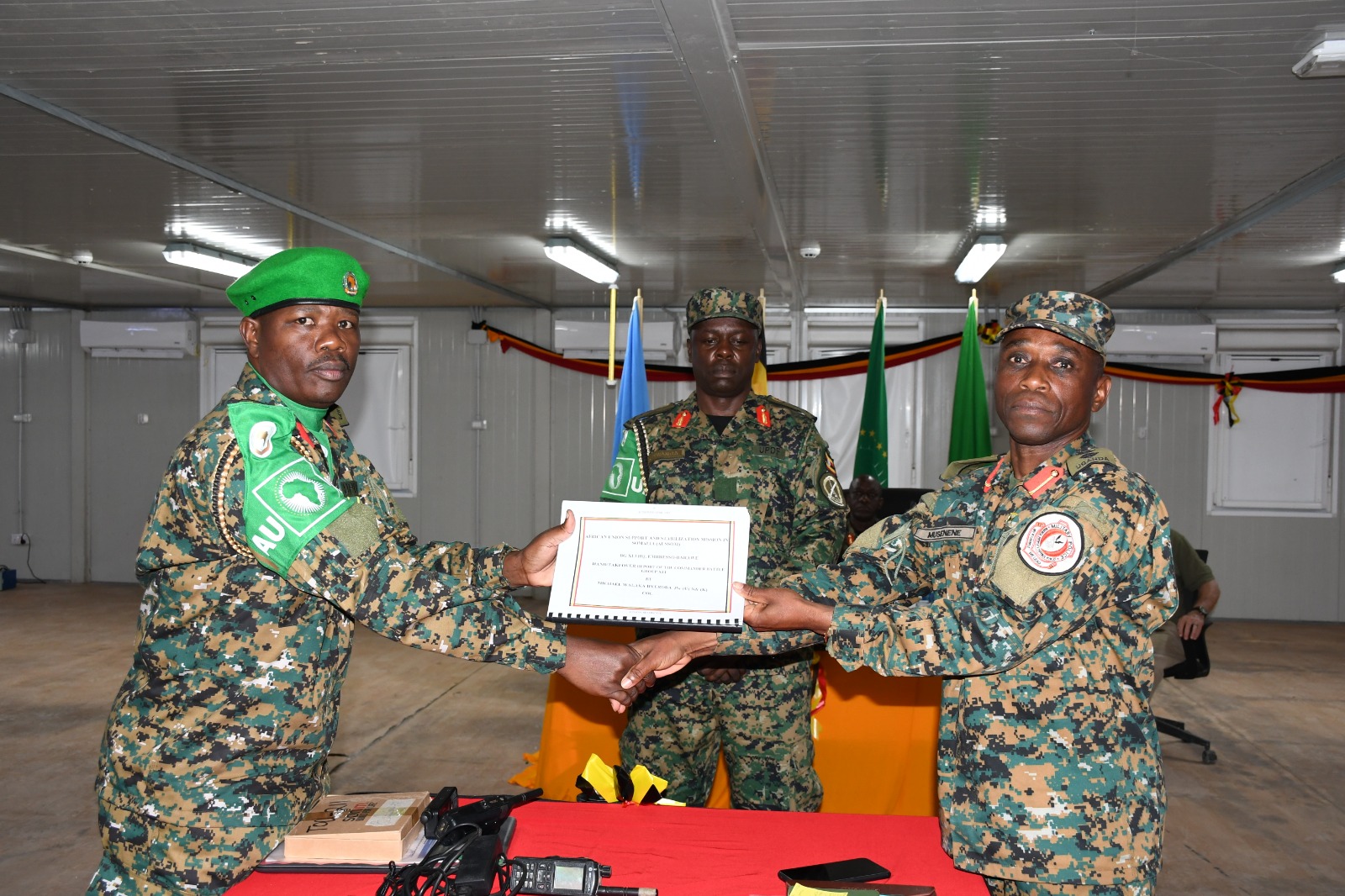
    The African Union has honoured troops of the Uganda Peoples’ Defence Forces’ Battle Group XLI under the African Union Support and Stabilisation Mission in Somalia. The troops were decorated with medals and awarded certificates in recognition of their distinguished service during their peacekeeping tour of duty in Somalia.

    At the same function, the outgoing contingent handed over responsibilities to Battle Group XLV.

    On behalf of the Force Commander, Lt Gen Sam Kavuma, the Sector One Commander, Brig Gen Joseph Musoke Ssemwanga, praised Col Michael Hyeroba and his troops for their commitment throughout offensive and defensive operations that weakened Al-Shabaab activity in the Barawe and Baledamin sub-sectors.

    Battle Group XLI ends its tour of duty with key achievements such as securing Barawe Airport, restricting Al-Shabaab’s freedom of movement, supporting and mentoring Somali National Army forces, and successful key leaders engagements that contribute to the wider relative calm in the sub-sectors.

    He expressed confidence in the incoming commander, Col Justus Musenene of Battle Group XLV and encouraged him to rely on his team, maintain high morale and remain adaptable as he takes charge of operations.

    Col Hyeroba thanked the UPDF leadership for trusting him with the command of Battle Group XLI. He appreciated Brig Gen Ssemwanga’s guidance, noting that it contributed to the successes registered during the mission.

    Col Musenene affirmed his troops’ readiness to build on the achievements of their predecessors, saying the pre-mission training had prepared them to take on the new responsibilities.

    The awarded soldiers represented the wider Battle Group, whose other troops had been decorated earlier in honour of their service and sacrifice in promoting stability in Somalia.

    The event was attended by the incoming contingent commander Brig Gen Jackson Kayanja, Sector One Deputy Commander Col Francis Aragamoi, Contingent Administration Officer Col John Mark Ssemanda, Battle Group XLII Commander Col Sam Kosia Kuteesa, asset commanders, heads of departments, senior officers, junior officers and militants under Sector One.

  • PHOTOS: Ruparelia’s Paradise Island Resort Nears Completion on Lake Victoria

    PHOTOS: Ruparelia’s Paradise Island Resort Nears Completion on Lake Victoria

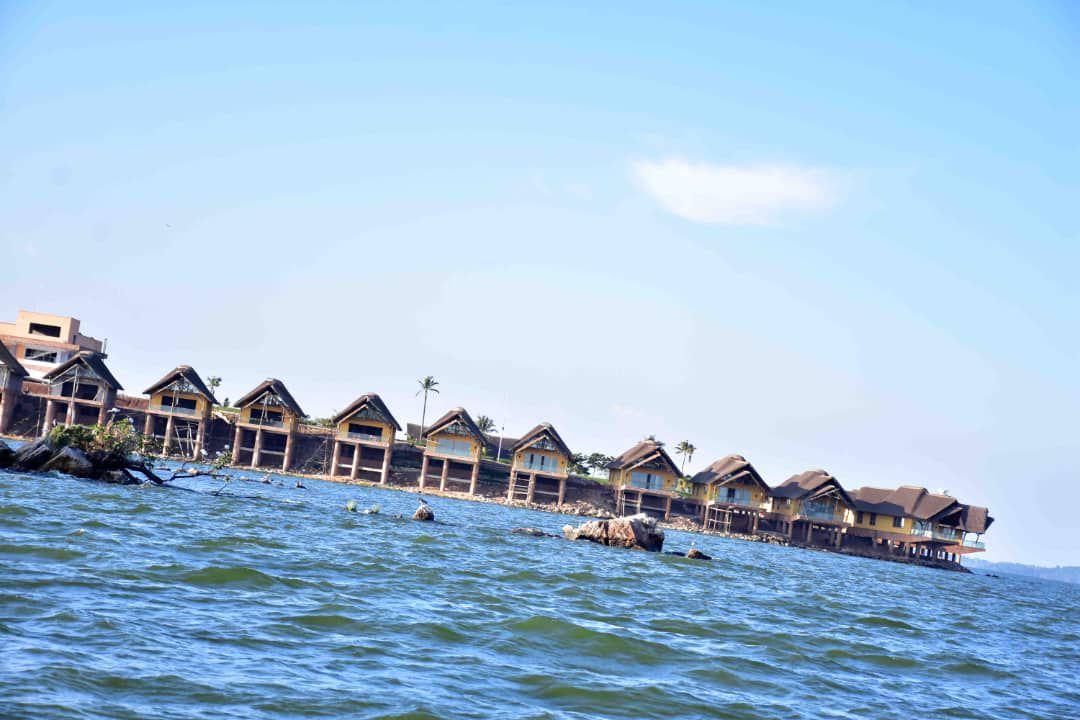
    The long-awaited Paradise Island Resort on Lake Victoria is almost ready, with developers confirming that construction has reached 95 percent. Once finished, the resort is expected to become one of Uganda’s top luxury destinations, offering a unique island experience only minutes away from Kampala.

    Located just a 20-minute speedboat ride from Speke Resort Munyonyo, the new retreat will welcome honeymooners, leisure visitors, and groups looking for a peaceful place for corporate getaways. The project began on May 1, 2021, and was created to support both local and international tourism by offering a quiet, private, and high-class escape right on Lake Victoria.

    Led by Sheena Ruparelia

    Paradise Island Resort has been developed under the leadership of Ms. Sheena Ruparelia, daughter of Dr. Sudhir Ruparelia and a key figure in the Ruparelia Group’s expanding hospitality portfolio. Her guidance has helped transform the island into a modern and eco-friendly destination that blends luxury with nature.

    The first phase of the project started with 22 units. As interest grew, another 16 units were added. Today, the resort has a wide selection of accommodation options designed to give guests beautiful views and total comfort. These include:

    • 10 Standard Cottages

    • 11 Standard Cliff Hanger Cottages overlooking the lake

    • 14 Deluxe two-bedroom cottages

    • 3 Executive Villas built for privacy and premium service

    Each unit was carefully designed to highlight the lake scenery, natural greenery, and peaceful environment.

    A Haven for Bird Lovers and Nature Enthusiasts

    The resort sits on 19 acres of untouched land. Next to it is a rocky island covered in native trees and home to many bird species. This makes the area perfect for birdwatchers, photographers, couples, and travelers who enjoy nature and wellness experiences. The calm surroundings and clean views create an ideal setting for relaxation.

    Another Milestone for the Ruparelia Group

    Paradise Island Resort is one of several high-end projects completed or ongoing under the Ruparelia Group. Other major developments include the expansion of Kabira Country Club, the Speke Resort Convention Centre, Kingdom Hotel, and Ssese Beach Resort.

    With final touches now underway, Paradise Island Resort is expected to open its doors soon. Its completion will mark another major step forward for Uganda’s hospitality sector and strengthen the Ruparelia Group’s influence in the tourism industry.

  • Why Dr Sudhir Ruparelia Stands Out Among Uganda’s Wealthiest People

    Why Dr Sudhir Ruparelia Stands Out Among Uganda’s Wealthiest People

    Uganda’s business world is growing fast, and competition is getting tougher every year. In the middle of this growth, one man continues to stand out. Dr. Sudhir Ruparelia is a businessman whose name carries weight across the entire country. Many people know him as the “Landlord of Kampala,” and his influence can be felt in every important sector of Uganda’s economy.

    As of 2025, Sudhir has a Forbes-confirmed net worth of 1.6 billion dollars, which makes him the richest person in Uganda. His company, the Ruparelia Group, owns businesses in real estate, hotels, schools, insurance, farming, and finance. Big brands like Speke Resort Munyonyo, Kabira Country Club, and Kampala Parents School are part of his empire. These places have become known for high quality and strong, steady growth.

    Sudhir’s journey has not always been smooth. When Crane Bank closed in 2017, many people thought his business career was finished. Some believed he would lose everything. But in 2022, the Supreme Court ruled in his favor and cleared his name. After that, he made a strong comeback. His companies now employ thousands of Ugandans and continue to make a major contribution to the country’s economy.

    One thing that makes Sudhir different from many African business owners is the way he runs his companies. The Ruparelia Group uses proper corporate systems, clear financial reports, and international audits. Many family-owned businesses in Africa hide their financial details, but Sudhir keeps things open. Because of this transparency, global organizations like Forbes can easily confirm the real value of his wealth. His business interests also extend to Rwanda, South Sudan, and the United Arab Emirates, which gives him regional influence.

    Sudhir is also known for his kindness and charity. Through the Ruparelia Foundation, he supports education, health, youth programs, disaster relief, and community projects. His good work has earned him several honors, including the Golden Jubilee Presidential Medal in 2013 and the Uganda Development Champion Award in 2024. Schools like Kampala Parents, which receive strong support from his foundation, show his commitment to improving opportunities for young people. His charity work fits well with Uganda’s Vision 2040 goals, especially in education and healthcare.

    His influence is not limited to business and charity. Since 2020, he has served as Nepal’s Honorary Consul in Uganda. This role has strengthened ties between the two countries and expanded his international connections. He also received an Honorary Doctor of Laws for his contributions to the nation, which shows the respect he has earned from many Ugandans.

    Even among East Africa’s wealthiest people, Sudhir continues to stand out. His rise from life in exile to becoming a billionaire inspires many young entrepreneurs across the region. Uganda has other wealthy business figures, such as Hamis Kiggundu and Drake Lubega, but none match the size, structure, and social impact of Sudhir’s business empire. His strong presence in Kampala’s property market is the reason many call him the “Landlord of Kampala.” His investments in tourism, education, and urban development continue to shape the future of the country.

    Sudhir Ruparelia is not only leading Uganda’s group of billionaires. He is setting the standard they hope to follow. Through organized management, transparency, innovative ideas, and a strong connection to the community, he remains a major pillar in Uganda’s progress and a clear example of modern African success. As Kampala’s skyline continues to change and grow, his legacy grows with it, strong, ambitious, and impossible to ignore.

  • What African Investors Can Learn From Sudhir’s Long-Term Vision in Uganda

    What African Investors Can Learn From Sudhir’s Long-Term Vision in Uganda

    African business leaders are always searching for reliable models of success, and one example that continues to stand out is the story of Dr. Sudhir Ruparelia. His work in Uganda shows how steady investment, patience, and clear planning can change both a business and a country. For many African investors, his journey offers lessons that can help guide future decisions.

    One of the strongest lessons from Sudhir’s experience is the value of long-term thinking. While some investors aim for fast returns, Sudhir has always focused on building for the future. He chooses projects that grow slowly and steadily. Over the years, his investments in real estate, hotels, banking, education, and agriculture have created many jobs and contributed to Uganda’s economic progress. His story shows that true success often comes from patience, discipline, and a willingness to stay committed even during difficult times.

    Another important lesson is the strength of diversification. Sudhir did not place all his resources in one industry. Instead, he built a wide range of businesses. This strategy helped him remain stable during economic challenges and allowed him to create jobs across many sectors. Diversification has protected his businesses and has also supported Uganda’s development by strengthening different parts of the economy. African investors can learn from this approach by spreading their investments to reduce risk and increase long-term impact.

    Sudhir’s work also highlights the importance of community involvement. His businesses employ thousands of people, offer training, and help build local skills. Many of his developments improve infrastructure and support families. This shows that business growth is more meaningful when it uplifts the community around it. Modern investors in Africa can benefit from focusing not only on profit, but also on how their actions improve society.

    A final lesson from Sudhir’s journey is the importance of trust. Over the years, he has built strong relationships by being dependable and transparent. This reputation has helped him work with both local and international partners. Investors across the continent can see that honesty, consistency, and good relationships are powerful tools in business.

    In a region where investment is often seen as challenging, Sudhir’s example proves that strategic planning and responsible leadership can create lasting success. His journey is a guide for African investors who want to build strong businesses while also supporting national development.

    Africa’s economic future will be shaped by leaders who think long term, diversify wisely, and invest with purpose. Sudhir has shown what is possible. The next step is for more investors to apply these lessons and help move the continent forward.

  • Confusion Mars Bobi Wine’s Campaign in Mbarara as Crowds Fail to Show Up in Bwizibwera

    Confusion Mars Bobi Wine’s Campaign in Mbarara as Crowds Fail to Show Up in Bwizibwera

    Following yesterday’s dramatic events surrounding Robert Kyagulanyi Ssentamu’s (Bobi Wine’s) campaign trail in Mbarara, a storm of propaganda has flooded social media and some media outlets, trying to twist the story in different directions. Claims, counterclaims, and emotional narratives have all been flying around, leaving the public confused about what truly transpired.

    Amid the noise, verified details from Mbarara City and Bwizibwera Town Council reveal a story far different from what has been circulating a tale of poor planning and political miscalculation, heavily repackaged by NUP’s propaganda machinery.

    Kyagulanyi’s first rally of the day, held at Mbarara High School grounds, was largely successful. The crowd turnout there was impressive, and spirits were high. Perhaps, buoyed by the enthusiastic reception, Kyagulanyi lost track of time.

    By 5:00 p.m., the NUP leader was still in Mbarara City far behind schedule for his next rally in Bwizibwera, nearly 18 miles away. With campaign activities officially ending at 6:00 p.m., even without any police intervention, Kyagulanyi’s chances of holding a meaningful rally were already slim. According to reports, he was intercepted about 10 miles from Mbarara, still with an 8-mile journey ahead a trip that would take approximately 20 to 30 minutes given the size of his convoy and the crowds moving with him. This means that, at best, he would have reached Bwizibwera around 5:30 p.m., leaving him barely 30 minutes to campaign before the mandatory cutoff time. Clearly, the delay was not caused by police action but by Kyagulanyi’s own failure to manage time and adhere to the Electoral Commission’s campaign schedule.

    While NUP has rushed to blame the police for the failed rally, findings reveal that the real problem lay elsewhere: there was no audience waiting for Kyagulanyi in Bwizibwera.

    Sources reveal that the NUP team quickly realized the crowd in Mbarara City had not followed them to Bwizibwera. Panic set in. In a desperate move, Bobi Wine’s team began hiring vehicles over 200 by one account to ferry people from Mbarara City to the empty venue.

    By this point, confusion had completely engulfed the NUP camp. Kyagulanyi then attempted to divert to unauthorized locations in a bid to salvage the day. Sources say the self-proclaimed “man of the people” first tried to visit a prayer house in Mbarara where he was informed there were gatherings of worshippers, but police declined the request since the site was not a gazetted campaign venue. When that plan failed, Kyagulanyi shifted focus and attempted to proceed to a busy market in Kyenshama. Again, security officials could not permit this, citing safety concerns and the need to maintain order, especially when official campaign venues had already been designated and were freely accessible to him.

    When it became evident that his Bwizibwera rally had collapsed, Kyagulanyi allegedly resorted to theatrics, attempting to portray himself as a victim of state interference. But security sources and eyewitnesses on the ground confirm that the few arrests made were of NUP individuals known for violating Electoral Commission regulations, among other forms of criminality not innocent supporters.

    Therefore, in all this, there was not a case of state suppression. It was a case of poor planning and political miscalculation, later disguised through propaganda.

    To understand why NUP couldn’t gather numbers in Bwizibwera, one must look at the political landscape transformed under the leadership of Tycoon Tuhai­se Prosper Kururagire, the dynamic NRM Chairman of Mbarara District.

    Since assuming office, Prosper has redefined local politics. His charisma, resourcefulness, and hands-on leadership have united youth groups and bridged divides that once gave the opposition breathing space. Through initiatives like football tournaments, boda boda competitions, school sponsorships, and youth empowerment projects, Prosper has rebuilt trust in NRM from the grassroots up.

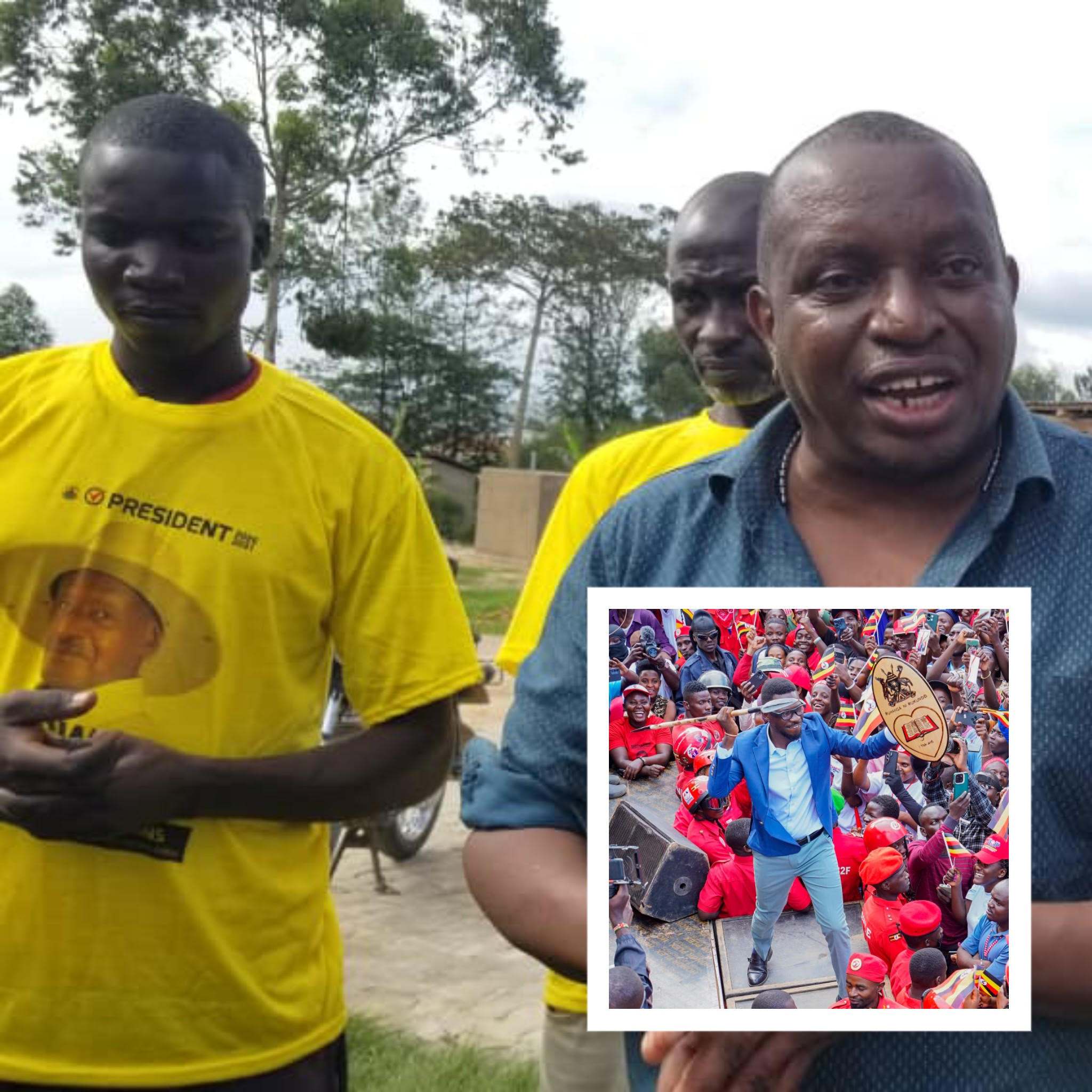
    Yesterday, as Kyagulanyi’s convoy crawled toward Bwizibwera, Prosper’s office was buzzing with activity. Several former NUP youth supporters formally defected to NRM, handing in their red berets and T-shirts in exchange for yellow shirts — a symbolic end to NUP’s short-lived influence in the area.

    All the above explained, the narrative pushed by NUP that police interference crippled their rally simply doesn’t hold water. The truth is that the Bwizibwera rally was doomed long before the police ever stepped in. Poor time management, internal disorganization, and a collapsing local support base are what truly derailed Kyagulanyi’s campaign in Mbarara.

    As events in Western Uganda continue to unfold, one thing is clear: Prosper Kururagire’s leadership has reshaped the game, and the NRM wave is surging stronger than ever, no amount of NUP propaganda can change that.

  • LIST: Here are Some of the Companies Owned by Uganda’s Richest Man Sudhir Ruparelia

    LIST: Here are Some of the Companies Owned by Uganda’s Richest Man Sudhir Ruparelia

    Dr. Sudhir Ruparelia, widely known among Kampala residents as the “Landlord of Kampala,” remains Uganda’s wealthiest man and one of East Africa’s most successful entrepreneurs. His vast business empire spans real estate, education, hospitality, insurance, and agriculture, placing him among the continent’s most influential private investors.

    He first gained international recognition as the first East African ever listed on Forbes magazine’s roster of global billionaires. In 2016, however, his fortune faced a major challenge when the Bank of Uganda controversially took over Crane Bank, citing capital shortfalls and management concerns. After several years of legal battles, the Supreme Court ruled in his favor in 2022, effectively restoring control and clearing his name.

    Even with that setback, Crane Bank represented only a small share of his holdings. Today, Dr. Ruparelia’s influence is visible across Uganda — from luxury hotels and top schools to large-scale real estate developments and agribusiness ventures that employ thousands and inject millions of dollars into the economy each year.

    1. Speke Group of Hotels

    The Speke Group stands at the heart of the Ruparelia hospitality network. It includes some of Uganda’s most iconic hotels and resorts such as Kabira Country Club, Speke Resort Munyonyo, Speke Hotel, Forest Cottages, and Dolphin Suites Bugolobi. These properties have become landmarks for tourism, business conferences, and leisure in Kampala.

    2. Crane Management Services

    Founded in 1996, Crane Management Services manages real estate properties owned by the Ruparelia Group and external clients. The company offers property leasing, marketing, and consultancy for residential, commercial, and industrial buildings in major Ugandan cities including Kampala, Jinja, Mbale, and Mbarara.

    3. Premier Roses Limited

    Located in Entebbe, Premier Roses is Uganda’s largest rose exporter, accounting for about 40 percent of the country’s flower exports. The company grows more than ten rose varieties on twelve hectares using hydroponic systems and supplies premium-quality flowers to markets in Europe and beyond.

    4. Goldstar Insurance Company Limited

    Goldstar Insurance is one of Uganda’s leading insurance firms, providing general coverage to individuals, corporations, and government agencies. Its services range from industrial and property insurance to personal and motor vehicle coverage, making it a key player in the country’s financial services sector.

    5. Kampala International School Uganda (KISU)

    Founded in 1993, Kampala International School Uganda offers a global curriculum to students aged two to eighteen. The school, located in Bukoto, is one of Uganda’s top international education institutions and is recognized for its modern facilities and consistently high academic standards.

    6. Kampala Parents School

    Acquired by the Ruparelia Group in 2004, Kampala Parents School is one of the country’s most respected private primary schools. Situated in Nakawa Division, it follows Uganda’s national curriculum and has built a long-standing reputation for producing top-performing pupils in national examinations.

    7. Victoria University Kampala

    In 2013, Dr. Ruparelia acquired Victoria University and transformed it into one of Uganda’s fastest-growing private universities. The institution offers diploma, undergraduate, and postgraduate programs in business, law, health sciences, and technology. It has also positioned itself as a regional center for innovation and digital learning.

    8. Premier Recruitment Limited

    Premier Recruitment connects Ugandans to both local and international job opportunities. The company focuses on placing workers in industries such as hospitality, oil and gas, marketing, construction, and security. It plays a vital role in addressing youth unemployment and building a skilled workforce.

    9. Sanyu FM 88.2

    Sanyu FM, one of Uganda’s first private radio stations, remains a major player in the country’s media landscape. Known for its blend of contemporary music and urban entertainment, it appeals to young and professional audiences across Kampala. The station continues to be a cornerstone of the Ruparelia Group’s media division.

    10. VCON Construction Uganda Limited

    VCON Construction, the engineering arm of the Ruparelia Group, handles large-scale building and civil works for both public and private clients. The company focuses on modern, sustainable infrastructure projects that meet international standards.

    From banking and hospitality to education and real estate, Dr. Sudhir Ruparelia’s businesses have shaped Uganda’s modern economy. His remarkable rise from a teenage refugee during the Idi Amin era to one of Africa’s most powerful billionaires is not only a story of wealth but of vision, resilience, and national impact.