Blog

  • Sudhir Ruparelia Listed Among 30 Indian-Origin Entrepreneurs Transforming Africa

    Sudhir Ruparelia Listed Among 30 Indian-Origin Entrepreneurs Transforming Africa

    Billionaires Africa has published a new feature profiling 30 Indian and Indian-origin entrepreneurs whose companies have expanded into significant multi-million and billion-dollar operations across the continent. The list opens with Sudhir Ruparelia, the Ugandan businessman whose extensive investments in hospitality, real estate, education, and financial services position him as one of the major Indian-origin figures in African business.

    Indian migration into Africa spans more than a century, beginning with trading posts and small shops before expanding into manufacturing, commercial real estate, steel production, agriculture, logistics, retail, and telecoms. Many early families and new-generation entrepreneurs built their companies from modest beginnings into major enterprises operating across multiple African countries. Today, these businesses employ large workforces and influence key sectors in regional economies.

    Below is the full list as published by Billionaires Africa, beginning with Sudhir Ruparelia.

    1. Sudhir Ruparelia – Uganda

    Company: Ruparelia Group

    Sudhir Ruparelia leads the Ruparelia Group, one of Uganda’s largest private business conglomerates. His enterprises operate in hospitality, commercial and residential real estate, financial services, agriculture, education and insurance. The group owns and manages hotels, resorts, office buildings, shopping complexes, apartments and schools, forming a substantial part of Kampala’s modern business and property landscape.

    2. Sunil Vaswani – Nigeria

    Company: Stallion Group
    Chairman of Stallion Group, active in agribusiness, vehicle assembly, fisheries, packaging, logistics and steel, with major operations in Nigeria.

    3. Vimal Shah – Kenya

    Company: Bidco Africa
    Co-founder of Bidco Africa, a large FMCG manufacturer supplying edible oils, soaps, detergents and consumer goods across East and Central Africa.

    4. Narendra Raval – Kenya

    Company: Devki Group
    Founder of Devki Group, a leading producer of steel, cement and roofing products in East Africa.

    5. Manu Chandaria – Kenya

    Company: Comcraft Group
    Leader of Comcraft, an industrial group manufacturing steel, aluminium and plastics with factories in several African countries.

    6. Chandu Shah – Kenya

    Company: AquaSanTec
    Founder of AquaSanTec, a supplier of water storage and sanitation solutions across East and Southern Africa.

    7. Dhiren Chandaria – Kenya

    Company: Ariel Foods / Orbit Chemicals
    Owner of Orbit Chemicals and Ariel Foods, supplying contract manufacturing and therapeutic foods for humanitarian organisations.

    8. Mayur Madhvani – Uganda

    Company: Madhvani Group
    Executive of the Madhvani Group, active in sugar production, energy, agriculture, hospitality and security services.

    9. Vinay & Ratan Mahtani – Nigeria

    Company: Churchgate Group
    Developers of major Nigerian real estate and commercial projects, including the World Trade Center Abuja.

    10. Ramesh Hathiramani – Nigeria

    Company: Dana Group
    Founder of Dana Group, with operations in pharmaceuticals, aviation, steel, chemicals and automobile distribution.

    11. Amirali “Mukwano” Karmali – Uganda

    Company: Mukwano Group
    Founder of Mukwano Group, one of Uganda’s largest producers of plastics, edible oils, detergents and related goods.

    12. Vivian Reddy – South Africa

    Company: Edison Group
    Founder of Edison Group, active in electrical engineering, hospitality, casinos and property.

    13. Ramesh Valechha – Nigeria

    Company: Milan Group
    Company with interests in the automotive sector, real estate, hospitality and logistics.

    14. Benoy Berry – Nigeria

    Company: Contec Global
    Developer of digital identity, biometric and security systems for governments and commercial sectors.

    15. Raj & Alok Gupta – Nigeria

    Company: African Industries Group
    A major industrial group producing steel, mining products, chemicals and real estate developments.

    16. Ylias Akbaraly – Madagascar

    Company: Sipromad Group
    Leader of Sipromad, operating in agriculture, hospitality, aviation, pay-TV, utilities and consumer goods.

    17. Hassanein Hiridjee – Madagascar

    Company: Axian Group
    Investment group with holdings in telecoms, banking and energy across Madagascar and the region.

    18. Bashir Currimjee – Mauritius

    Company: Curimjee Group
    Conglomerate active in telecoms, media, real estate, energy, tourism and consumer goods.

    19. Rambhai Patel – Kenya

    Company: Ramco Group
    Industrial group with activities in printing, packaging, steel and office equipment across East Africa.

    20. Hargovind & Balkrishnan Gorajia – Rwanda

    Company: Akagera Business Group
    Company active in vehicle distribution, equipment supply and transportation.

    21. Baloobhai Patel – Kenya

    Company: Transworld Safaris / NSE Investments
    Owner of Transworld Safaris and a major investor in listed Kenyan companies.

    22. Sajen Aswani – Singapore / Africa

    Company: Tolaram Group
    Executive who helped steer Tolaram’s major consumer goods and industrial operations in Nigeria.

    23. Haresh Aswani – Singapore / Africa

    Company: Tolaram Africa
    Oversaw expansion of Tolaram’s African manufacturing facilities and key acquisitions.

    24. Savitri Jindal & Family – India / Africa

    Company: Jindal Group / Jindal Africa
    Operates mining and energy assets in South Africa, Mozambique, Botswana and Namibia.

    25. Ashish J. Thakkar – Uganda

    Company: Mara Group
    Founder of Mara Group, active in technology, real estate, infrastructure and financial services.

    26. M. A. Yusuff Ali – India / Africa

    Company: LuLu Group
    Expanded retail operations into Kenya and Egypt through the LuLu hypermarket network.

    27. Rakesh Wahi – India / South Africa

    Company: ABN Group
    Co-founder of CNBC Africa and Forbes Africa, with investments in media and education.

    Sudhir Ruparelia is featured in the Billionaires Africa list because of the size, diversity, and national influence of the Ruparelia Group, which is one of Uganda’s largest private business networks. His companies operate across major sectors including real estate, hospitality, financial services, education, agriculture and insurance. Through developments such as hotels, commercial properties, residential apartments and mixed-use complexes, he has played a significant role in shaping Kampala’s modern urban landscape. The scale of these investments, combined with the group’s contribution to employment and the expansion of key service industries, places him among the Indian-origin entrepreneurs with substantial business footprints in Africa.

  • Kampala Kingdom Mall Grows Bigger as Sudhir Ruparelia Advances New Extension

    Kampala Kingdom Mall Grows Bigger as Sudhir Ruparelia Advances New Extension

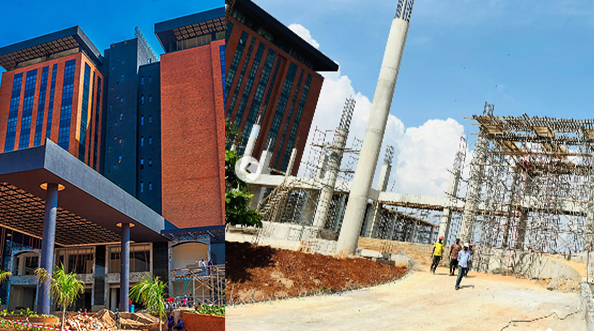
    The Kampala Kingdom Mall, an established commercial complex owned by the Ruparelia Group, is currently undergoing a major expansion aimed at increasing its operational capacity and upgrading several parts of the existing structure. The mall remains fully active, with businesses open to customers as construction activity continues in clearly separated zones. This approach allows day-to-day operations to proceed without interruption while the extension takes shape.

    Located on Nile Avenue, Kampala Kingdom Mall has served as a central commercial hub for several years. Its current expansion is designed to introduce new retail areas, additional office units, and improved internal access routes. The work involves structural additions to the building, interior adjustments to support the new layout, and improvements to movement corridors within the complex. These upgrades are intended to create space for more businesses seeking centrally located premises in the capital.

    The mall already houses a wide range of commercial tenants, including retail outlets, service providers, and corporate offices. With demand for organized business space increasing across the city, the extension is positioned to add new capacity to accommodate additional tenants. The expansion reinforces the Ruparelia Group’s approach of upgrading active properties while keeping them accessible to the public.

    The project follows a growing need for high-quality commercial infrastructure in Kampala, where the number of businesses seeking modern facilities has continued to rise. The expanded sections of Kampala Kingdom Mall will increase the total built-up area of the complex and create more options for traders and companies seeking space within the central business district. The extension also comes at a time when several older commercial buildings in the city are experiencing pressure related to space limitations, prompting developers to invest in expanding their existing properties.

    Work on the project is progressing steadily, with visible structural developments already part of the upgraded framework. Construction activity remains contained within designated areas, allowing the mall’s internal operations to continue as usual. Once complete, the enlarged facility will offer new commercial units alongside the current ones, increasing the number of operational spaces within the complex without altering the services already in place.

    The Ruparelia Group has been carrying out multiple real estate improvements across Kampala, and the extension of Kampala Kingdom Mall is among the ongoing efforts to modernize and expand its commercial properties. The development aligns with the company’s broader strategy to maintain functional, centrally located buildings with updated features and increased capacity to serve the growing business environment in the capital.

    Further updates are expected upon completion of major structural sections and final internal preparations. After final approvals and safety checks, the new units will be added to the mall’s operational portfolio, increasing its overall footprint within Kampala’s commercial sector.

    Sudhir Ruparelia’s Broader Role in Shaping Kampala’s Urban Landscape

    Sudhir Ruparelia’s influence on Kampala extends beyond the Kampala Kingdom Mall expansion. Through the Ruparelia Group, he oversees a wide range of hotels, apartments, office buildings, and mixed-use developments spread across the city. The Speke Group of Hotels forms a significant part of the hospitality sector, while residential properties such as Bukoto Heights Apartments, Speke Apartments, and Acacia-area developments contribute to the city’s growing housing supply.

    Commercial buildings under the group, including Kampala Boulevard, Crane Plaza, Hardware City, and several others, support retail activity and corporate operations in busy business zones. These properties collectively play a role in shaping Kampala’s evolving skyline, expanding the availability of structured commercial and residential space, and contributing to the city’s broader urban development.

    This combination of hotels, apartments, offices, and commercial complexes establishes Sudhir as one of the key private developers actively influencing Kampala’s physical and commercial landscape.

  • Police to Reduce Highway Speed Limit to 90kmh Under New Road Safety Guidance

    Police to Reduce Highway Speed Limit to 90kmh Under New Road Safety Guidance

    The Uganda Police Force has unveiled fresh guidance on speed limits across the country as part of a renewed effort to reduce road traffic fatalities.

    According to a public message posted by SP Michael Kananura, spokesperson for the Directorate of Traffic and Road Safety, the updated regulations will recommend a maximum speed of 90 km/h on highways, replacing the current 100 km/h limit still displayed on most signage.

    “A pedestrian knocked at 30 km/h has a 90% chance of survival,” SP Kananura wrote on X (formerly Twitter). He also calls on motorists to observe speed limits in various zones — including 30 km/h in high pedestrian areas such as schools, markets, and hospitals; 50 km/h in built-up areas; 90 km/h on highways; and 100 km/h on expressways.

    The development comes at a time when the Police, in collaboration with the Ministry of Works and Transport, are spearheading efforts to pilot the Electronic Penalty System (EPS) to promote road safety through adherence to speed limits and lane discipline.

    In response to public queries about the discrepancy between the new guidelines and existing road signage, SP Kananura confirmed that the change to 90 km/h would only take effect after the Ministry of Works and Transport updates the signage nationwide.

    “The revised regulations suggest 90… soon it will commence after the Ministry of Works has changed the signs,” he clarified in response to a comment by Magelah Peter G., who questioned the validity of imposing a 90 km/h limit while 100 km/h signs remain in place.

    Public Reactions Emphasize Safety First

    The online conversation drew praise and support from several road users. “A car at high speed affords you no opportunity to ‘stop well’ in the event of an emergency,” noted user Christopher Senyimba. “The best hack at getting somewhere fast is by leaving quite early.”

    SP Kananura responded to the comment with a simple endorsement: “Well said.” Another user, Jamo, recounted a near-miss incident involving a reckless boda boda rider who abruptly changed lanes to pick up a passenger. “Thank God the car was at around 25 km/h,” he noted, implying that a higher speed could have led to tragedy.

    Speed, Fatalities

    The conversation follows a series of tragic incidents in recent weeks, including the Kampala–Gulu Highway crash that killed 46 people and a fatal boda boda collision in Bweyogerere. These incidents have sparked renewed national concern about dangerous driving, especially involving speeding and reckless lane changes.

    Uganda registered 25,107 road crashes in 2024, with 4,434 fatalities and over 25,800 injuries, according to the Uganda Police Annual Crime Report.

    While public enforcement measures—such as automated systems to detect traffic violations like speeding—are being phased in gradually, officers like SP Kananura continue to use social media to promote public education and voluntary compliance. “Speed thrills but kills,” his post concludes. “Drive responsibly and arrive safely.”

  • Museven Returns to Ntungamo, Touts Peace and Development Gains

    Museven Returns to Ntungamo, Touts Peace and Development Gains

    A massive crowd filled Kyamate Primary School grounds in Ntungamo District on Thursday as NRM presidential flag bearer Yoweri Kaguta Museveni returned to a region he described as central to Uganda’s liberation history.

    Accompanied by First Lady Janet Museveni, the President said his peaceful homecoming to Ntungamo, where he once passed “twice with a gun” during the struggles of 1979 and 1985, was a reminder of how far the country had progressed.

    Museveni told supporters that the peace enjoyed today was the foundation upon which the NRM had built its development agenda.

    He cited infrastructure expansion, improved agricultural support and increased social services as evidence of Uganda’s transformation. He assured residents that the road from Ntungamo to Rukungiri, now in poor condition, would be rehabilitated.

    Turning to agriculture, the President said irrigation remained the biggest missing link for farmers in Ntungamo.

    He shared his own experience under the Presidential Banana Initiative in Bushenyi, where irrigation and fertilizers boosted yields tenfold. He argued that farmers must move beyond dependence on rain and adopt modern production methods if they are to raise their household incomes.

    Museveni also addressed complaints related to the Parish Development Model (PDM), warning officials against imposing illegal requirements on beneficiaries.

    He said demanding land titles before releasing PDM funds contradicts the programme’s guidelines and urged residents to report officers who engage in corruption or extortion.

    He called on households to take advantage of government programmes, emphasizing that prosperity begins at the family level.

    For those with substantial land, he encouraged commercial agriculture, while smallholders were advised to adopt the four-acre model, which included enterprises such as coffee, poultry, piggery, and zero grazing.

    The President recalled the difficulties of past decades, noting that health services between Mbarara and Kabale were once limited to a few dispensaries, unlike the wider network of health centers available today.

    Earlier, First Lady Janet Museveni commended the district for its steady progress since its creation in 1993. She noted that Ntungamo now has five constituencies, 34 sub-counties, 135 parishes and more than 1,000 villages.

    The population, she said, had grown from 380,000 in 2000 to 553,000 today—a rise she attributed to peace, improved health care and better living conditions.

    She reported that government programmes, including PDM, Emyooga and youth and women empowerment initiatives, had injected over Shs53 billion into Ntungamo in the past five years. Of that amount, PDM contributed nearly Shs40 billion to more than 2,600 enterprise groups.

    Janet Museveni also highlighted the education sector, noting the district’s 242 public primary schools, 22 public secondary schools, three vocational institutions and nearly Shs2 billion spent on school improvement. She said 57 roads had been maintained and 178 safe water sources established since 2021.

    Despite these gains, she pointed to areas requiring renewed focus, including improved mobilization of youth and women, addressing illegal charges in UPE and USE schools, establishing additional health facilities in underserved parishes, increasing road funding and expanding water for production to support agricultural enterprises.

    She also emphasized protecting wetlands around Lake Nyabihoko and harnessing River Rwizi for sustainable development.

    Janet Museveni concluded by thanking residents for the overwhelming turnout, saying it signaled strong momentum toward the January 15, 2026, election. She urged every household to mobilize all eligible voters, warning that complacency could undermine a decisive victory.

  • Police roll out 162 vehicles, 1040 motorcycles amid rising campaign violence

    Police roll out 162 vehicles, 1040 motorcycles amid rising campaign violence

    As Uganda moves deeper into the 2026 campaign season—already strained by rising tensions and violent confrontations—the Uganda Police Force have boosted its mobility and response capacity with a large fleet of newly acquired vehicles and motorcycles.

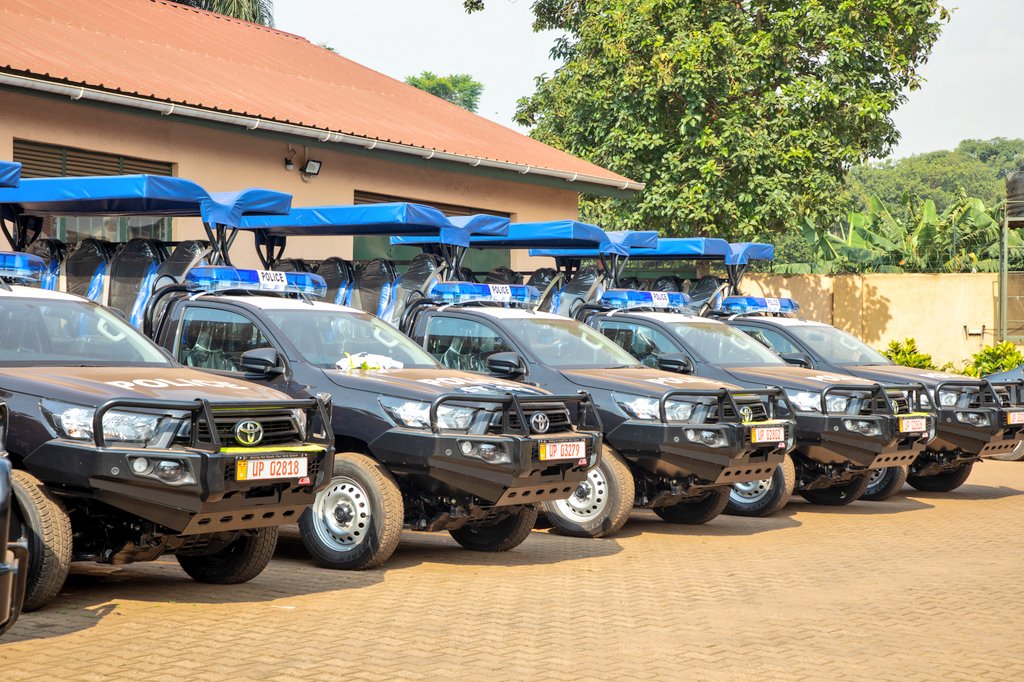
    On Friday afternoon, AIGP James Apora, the Director of Logistics and Engineering, presided over the handover of 162 vehicles and 1,040 motorcycles to regional commanders and sub-county policing units across the country. The handover, conducted at Police Headquarters, marks one of the largest fleet deployments ahead of a general election.

    According to AIGP Apora, the new fleet is intended to strengthen security presence at the grassroots, especially at the sub-county level, where each sub-county will receive two motorcycles. He explained that the rollout is part of the Force’s ongoing effort to enhance operational readiness, plug security gaps, and guarantee faster responses to crime during the heightened electoral period.

    “This deployment is meant to enhance the capacity of our officers, improve service delivery, and ensure quicker response to incidents as we go through the election season,” he said.

    “We urge local leaders to ensure these assets are used responsibly and fully accounted for.”

    AIGP Apora also extended gratitude to the Inspector General of Police, the Minister of Internal Affairs, and President Yoweri Kaguta Museveni for their continued support in strengthening the Force’s mobility and logistical capacity.

    The handover comes at a time when the Police Force is under intense scrutiny following a surge in violent clashes, especially targeting supporters of the National Unity Platform (NUP).

    Just a day earlier, police issued a statement condemning what it described as “violent and unruly conduct” during campaign activities by NUP presidential candidate Robert Kyagulanyi (Bobi Wine) in Iganga District. According to the force, officers deployed for crowd control reportedly came under deliberate attack from stone-throwing groups allegedly incited by the candidate. Several officers sustained serious injuries, and multiple police vehicles were damaged.

    Police say they were forced to disperse the crowds after the situation escalated, resulting in the death of a civilian, identified as Misaki (Meshach) Okello. Several suspects said to be involved in the disruption were later arrested.

    “The Uganda Police Force strongly condemns the hooliganism witnessed in Iganga,” the statement read.

    “Confrontations with armed officers pose grave risks and will be met with decisive action.”

    But NUP leader Robert Kyagulanyi delivered a sharply opposing version of events. In a statement, he accused police and the military of launching an unprovoked attack on his supporters as they left what he called a “very successful rally.”

    “These criminals fired live bullets at peaceful people,” Kyagulanyi claimed.

    “At least one comrade was killed, several others injured, and two more bodies were smuggled away from the scene.”

    He identified the deceased as Okello, alleging he was “shot through the head.” Among the critically injured, he listed Nuwamanya Samuel (24), Naminya Banuli (44), and Faima Namusobya (24), who were at the time receiving emergency treatment.

    Kyagulanyi blamed the violence on what he termed a “criminal regime,” insisting that government must be held accountable for “crimes against humanity.”

    The conflicting narratives—one from security forces insisting they were attacked, and another from the opposition claiming state brutality—have deepened public anxiety as the 2026 elections draw near.

    While the police argue that the new vehicles and motorcycles will help stabilize security operations and enhance community protection, critics worry that heightened mobility could also mean intensified crackdowns on opposition supporters.

    As investigations into the Iganga incident continue, political tensions remain high, and all eyes now turn to how security agencies will balance law enforcement with restraint in the weeks ahead.

    The deployment of the new fleet may strengthen policing—but whether it will calm or inflame an already volatile campaign season remains to be seen.

  • Champion of Jobs: How Dr. Sudhir Ruparelia Is Driving Job Creation Across Uganda’s Economy

    Champion of Jobs: How Dr. Sudhir Ruparelia Is Driving Job Creation Across Uganda’s Economy

    Dr. Sudhir Ruparelia, one of Uganda’s most prominent entrepreneurs, continues to play a significant role in expanding the country’s job market through the broad portfolio of enterprises under the Ruparelia Group. As one of the largest private business networks in Uganda, the Group operates across sectors that include real estate, hospitality, education, banking and agriculture, creating employment opportunities for thousands of Ugandans.

    The scale of the Group’s operations has positioned it as a major contributor to Uganda’s private-sector workforce. Through companies such as Crane Management Services, Speke Hotels, Kampala Parents School, Victoria University and several other subsidiaries, the Ruparelia Group provides both direct and indirect employment in a wide range of professional, technical and entry-level roles.

    These opportunities cut across different skill sets, from management and finance to construction, customer service, education, maintenance and operations. As a result, the Group’s businesses support livelihoods in both urban and rural areas, providing income to families and reducing unemployment pressures—particularly among young people seeking their first job placement.

    In addition to job creation, the Ruparelia Group plays a growing role in professional development and capacity building. Sudhir’s investment in the education sector through Kampala International School Uganda (KISU), Kampala Parents School and Victoria University provides a pathway for developing a skilled workforce prepared for an increasingly competitive job market. These institutions offer modern training environments and contribute to the country’s pool of graduates equipped for employment in a range of sectors.

    Employees within the Group’s enterprises also benefit from internal training and skills enhancement programs. In several of the Group’s operations, staff receive opportunities to upgrade their competencies, improving productivity and building long-term career prospects within Uganda’s workforce.

    The Group’s presence is especially visible in the real estate sector, where its projects continue to reshape Kampala’s commercial and residential landscape. Developments such as office buildings, apartments and mixed-use complexes employ architects, engineers, contractors, construction workers, property managers and service providers. The ongoing activity around these developments further stimulates related industries, including manufacturing, construction supplies and transportation.

    In the hospitality industry, facilities such as Speke Resort Munyonyo, Kabira Country Club and the Speke Resort Convention Centre are among the country’s most active employers. These establishments support jobs in hotel management, event operations, culinary services, security, maintenance and guest relations, contributing to the growth of Uganda’s tourism and conference sectors.

    Sudhir’s role in agriculture also contributes significantly to rural employment. Through ventures like Premier Roses—one of Uganda’s leading exporters—the Group creates job opportunities in flower farming, packaging, logistics and quality control. Workers in these enterprises are trained in modern agricultural practices, increasing productivity while providing stable income to communities.

    Across all these sectors, the Ruparelia Group’s continued expansion demonstrates how private investment can drive employment and skills development. The Group’s businesses not only generate jobs but also contribute to broader economic activity, from service delivery and tourism to export earnings and urban development.

    Dr. Sudhir Ruparelia remains one of the most influential figures in Uganda’s business sector, with a footprint that continues to support national growth. His enterprises, built over decades, play a consistent role in creating employment, enabling skills transfer and contributing to the country’s long-term economic

  • Sudhir Ruparelia Steals the Spotlight as Kingdom Kampala Hosts 2024 Beaujolais Nouveau Gala

    Sudhir Ruparelia Steals the Spotlight as Kingdom Kampala Hosts 2024 Beaujolais Nouveau Gala

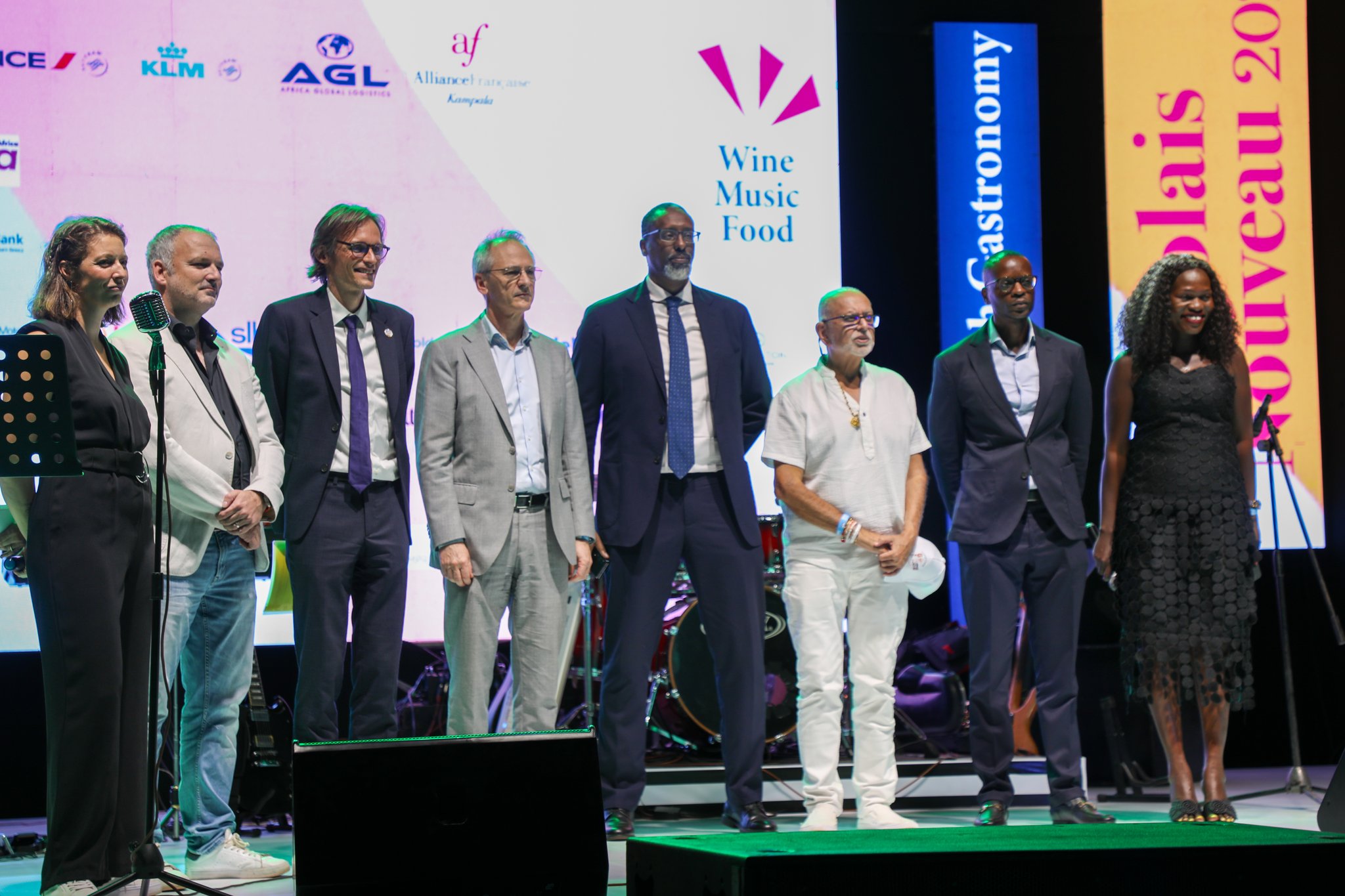
    Kingdom Kampala, one of the flagship commercial developments under the Ruparelia Group, became the centre of French cultural celebration as more than 800 guests gathered for the 2024 Beaujolais Nouveau event—an evening in which businessman Sudhir Ruparelia was one of the most notable figures among the high-profile attendees.

    Hosted by the Embassy of France and organised by the French Chamber of Commerce and Industry in Uganda (FCCU), the celebration transformed the mall into a lively mix of culture, business and hospitality. The choice of Kingdom Kampala, one of Sudhir’s premier real estate developments, underscored its growing role as a preferred venue for major international events and corporate gatherings in the capital.

    French Ambassador Virginie Leroy opened the evening by welcoming guests and reflecting on the global tradition of Beaujolais Nouveau, the young French wine officially released every November. She described the celebration as a symbol of French cultural identity and a ritual recognised in cities worldwide.

    The Ambassador also acknowledged the strengthening ties between France and Uganda. She pointed out that French companies remain the country’s largest private investors, with the FCCU playing a central role in promoting business activity between the two nations. She reaffirmed the Embassy’s long-term commitment to supporting investment partnerships through 2026 and beyond.

    A key highlight of the evening was the presence of acclaimed Master Cheesemaker Grégory Giraudon, a French artisan recognised for his skill in cheese craftsmanship. Giraudon is currently in Uganda conducting training programs for local chefs, offering practical sessions on cheese production, presentation and gastronomy. His visit is part of wider efforts to enhance professional capacity within Uganda’s hospitality sector.

    Guests at the event enjoyed wine tastings, gourmet French cuisine and cultural showcases. Business executives, diplomats and members of the Ugandan-French community used the occasion for networking and strengthening commercial ties.

    For many attendees, the celebration also highlighted Kingdom Kampala’s rise as a modern event destination. Under the Ruparelia Group, the complex has become a key venue for international cultural showcases, business conferences and high-level corporate engagements. Sudhir’s presence at the event reinforced his ongoing role in promoting Kampala as a regional hub for diplomacy, investment and hospitality.

    Ambassador Leroy concluded the evening with a symbolic toast, describing France and Uganda as “perfect complements — like wine and cheese,” in recognition of the long-standing friendship between the two countries.

  • How Sudhir Ruparelia Built a Multi-Sector Empire Powering Uganda’s Development

    How Sudhir Ruparelia Built a Multi-Sector Empire Powering Uganda’s Development

    The Ruparelia Group, one of Uganda’s most prominent privately owned conglomerates, remains a central force in shaping the country’s economic landscape while steadily expanding beyond national borders. Under the leadership of its founder, Dr. Sudhir Ruparelia, the Group has grown from early entrepreneurial ventures into a diverse network of businesses operating across key sectors.

    Dr. Ruparelia began his business career in the United Kingdom before returning to Uganda in the 1980s, during a period of renewed economic stability. From modest beginnings, he gradually built an extensive portfolio that today employs thousands of Ugandans and provides services in education, real estate, hospitality, insurance, media, construction and agriculture.

    A Business Empire Built on Diversification

    By mid-2024, the Group oversaw more than 20 subsidiary companies. Among the most notable is Meera Investments, the real estate arm credited with contributing to Kampala’s modern skyline through commercial buildings, residential properties and mixed-use developments. The hospitality division includes Kabira Country Club, Speke Resort Munyonyo, Speke Apartments and several other facilities that have become key players in Uganda’s accommodation and conference industry.

    In the education sector, the Group operates Kampala Parents’ School, Kampala International School Uganda, Delhi Public International School and Victoria University. These institutions serve both local and international students, offering high-quality learning environments and contributing to Uganda’s professional talent pipeline. The conglomerate also owns Goldstar Insurance, Premier Recruitment, Vcon Construction and Sanyu FM 88.2, one of the country’s pioneering private radio stations.

    Ruparelia Group’s presence extends to floriculture through Premier Roses Limited and Rosebud Limited. These companies export fresh roses to global markets from Entebbe, supporting Uganda’s agricultural exports and contributing significantly to foreign exchange earnings.

    Expanding Influence Across the Region

    Beyond Uganda, the conglomerate has expanded into Rwanda, South Sudan, the United Arab Emirates and the United Kingdom, strengthening its role in regional and international business development. Major projects include the upcoming Pearl Business Park, an 18-acre development in Kampala featuring a shopping mall, a five-star hotel and a modern hospital. The Speke Resort Convention Centre at Munyonyo recently hosted the 19th Non-Aligned Movement and G-77+China summits, welcoming over 70 heads of state and delegations from 120 countries.

    Other ventures include Arie Towers in Nakasero and Paradise Island Resort on Lake Victoria, positioned to become one of East Africa’s most distinctive luxury destinations.

    The Group’s investments have wide economic impact. Its businesses create employment for thousands of Ugandans across professional, technical and entry-level roles, while stimulating growth in construction, logistics, tourism, farming and related industries. Suppliers, contractors and service providers benefit from consistent demand generated by the Group’s varied operations.

    Through its educational institutions and internal staff development programs, the Group contributes to skills advancement, helping prepare a workforce capable of meeting the demands of Uganda’s growing economy.

    Dr. Sudhir Ruparelia’s approach to building enterprises—combining large-scale investment with long-term national value—has made the Ruparelia Group one of the country’s most influential economic drivers. As Uganda continues to navigate rapid urbanization and evolving market needs, the Group remains a major contributor to national growth, employment and development.

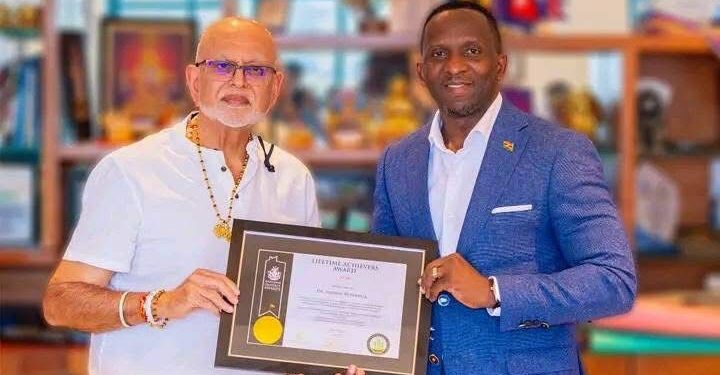
  • Landlord of the Year: Tycoons Sudhir, Yanga Honoured as Best Business Landlords of 2025

    Landlord of the Year: Tycoons Sudhir, Yanga Honoured as Best Business Landlords of 2025

    Kampala’s real estate industry has placed one of its most influential figures at the center of attention, naming Sudhir Ruparelia as one of the Best Business Landlords of 2025. The award, delivered by a coalition of urban development specialists and tenant rights advocates, recognizes property owners whose management practices set a standard for fairness, stability, and modern commercial infrastructure in the city. Haji Muhammad Matovu Yanga was also honored, though much of this year’s focus has been on the scale and consistency of Sudhir’s contribution to Kampala’s rental market.

    The announcement comes at a time when demand for business premises in the capital is rising faster than ever, putting pressure on both landlords and tenants. As new commercial buildings appear across Kampala, the call for professionalism and transparency has grown. Organizers said the 2025 awards aim to highlight property owners who place tenant welfare and long-term development above short-term gains. They noted that Sudhir’s selection, in particular, reflects the maturity and reliability he brings to a sector that many rely on for their livelihoods.

    Sudhir Ruparelia, chairman of the Ruparelia Group, received widespread praise for setting a benchmark that many other landlords quietly follow. His approach to property management, which includes clear rental agreements, accessible customer service, and rapid maintenance responses, has helped his extensive portfolio remain steady even during challenging economic periods. Properties such as Kampala Boulevard, Kingdom Kampala, Crane Plaza, and the Speke Group of Hotels have become known not only for their visibility but also for consistent upkeep and predictable management standards. For many tenants, these characteristics have translated into a secure operating environment where long-term planning is possible.

    Small and medium-sized business owners frequently credit Sudhir’s reinvestment strategy as one of the reasons his buildings remain competitive. Renovations, modernized facilities, and responsive management teams have helped maintain high occupancy levels while keeping tenant trust intact. One retail tenant described working in a Ruparelia-owned property as “a sign of stability,” emphasizing that the reliability of his systems removes the uncertainty that traders often face in less structured buildings.

    While Haji Muhammad Matovu Yanga was also recognized for strengthening downtown trading spaces and maintaining affordable arcades, committee members emphasized that Sudhir’s influence reaches across a wider portion of the city and supports a more diverse range of businesses. His properties house banks, restaurants, corporate offices, and small shops, creating commercial clusters that support thousands of jobs. Organizers noted that this broader impact played a significant role in his selection.

    Both winners were honored for their professionalism, but Sudhir’s management style was highlighted as a model for Kampala’s future real estate development. The award committee noted that the Best Business Landlord title is meant to recognize property owners who provide safe, organized, and accessible working environments, and who strengthen Kampala’s economic foundation through responsible oversight. In their view, Sudhir’s long-standing record has become a reference point for how large-scale landlords can balance profit with public responsibility.

    A formal ceremony later this month will bring together city leaders, developers, and business owners to celebrate the contributions of both honorees. With Kampala’s commercial landscape expanding at a rapid pace, the organizers hope Sudhir’s example will encourage other landlords to prioritize consistent service, predictable rental terms, and reinvestment in their properties.

    As the city prepares for further economic growth, the recognition serves as a reminder of how influential responsible landlords can be in shaping a stable and supportive business environment. One committee member summarized the sentiment by noting that Sudhir has not only built structures but has also built confidence, offering tenants a predictable and professional foundation from which to operate in a changing market.

  • Museveni Dismantles Sugar Cartel: Ends 5% Trash Levy and Enforces Farmers’ Weighbridges

    Museveni Dismantles Sugar Cartel: Ends 5% Trash Levy and Enforces Farmers’ Weighbridges

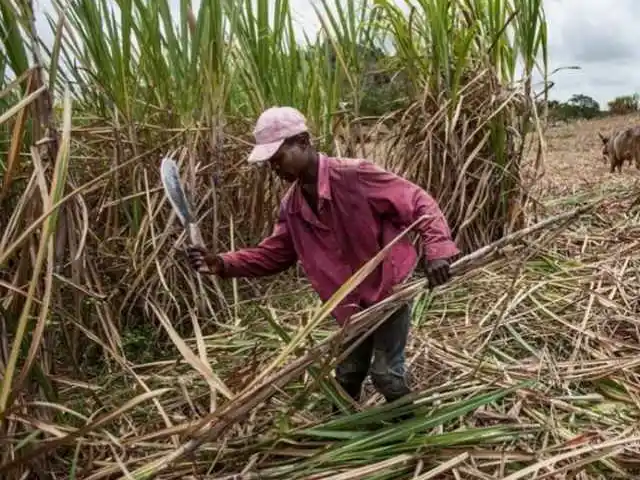
    In the sugarcane fields of Busoga and the green belts of Bunyoro, farmers have whispered for years about a war they were never equipped to fight. A war fought not with guns, but with weighbridges, political networks, secret ministerial directives, and a 5% “trash levy” that silently drained billions from their pockets.

    This week, on a dusty campaign trail in Mayuge, President Yoweri Museveni finally said the quiet part aloud.

    They must accept the farmers’ weighbridges. They have no choice.

    With that single sentence, the president detonated the most sensitive landmine in Uganda’s sugar sector, a sector worth more than Shs 500 billion in taxes annually, employing over 100,000 people, and producing 700,000+ tonnes of sugar each year, with exports feeding markets across East and Central Africa.

    But this was no spontaneous campaign promise. This was a culmination of a long, bitter, behind-the-scenes battle between powerful sugar manufacturers and the outgrowers who feed their factories. And like all silent wars, it has casualties, saboteurs, godfathers, and beneficiaries.

    For years, factories imposed a 5% deduction on every truck of cane that crossed their weighbridges, a deduction disguised as “trash”, the unwanted leaves and tops on harvested cane. But farmers knew the truth. The same “trash” factories claimed to discard was being turned into electricity, ethanol, paper products, and other profitable by-products.

    The levy wasn’t about trash. It was about control, money, and who controls the scale. So the millers fought to keep all weighbridges under their monopoly, because whoever controls the weighing controls the money.

    The Clash Between New Entrants and Old Guards

    The Secret War TheSpy Uganda Chief Uncovered That Almost Cost His Life In Staged Accident

    Victoria Sugar, a relatively new entrant, threw its weight behind outgrowers and supported community roadside weighbridges, allowing farmers to verify their cane weight before delivering to any factory. This single action threatened the entire pricing architecture controlled by older millers.

    Kinyara Sugar Ltd, Western Uganda’s sugar giant and one of the most politically connected industrial players in the region, according to farmers, cooperative leaders, and whistle-blowers, fought tooth and nail to frustrate these community weighbridges. The company argued they enabled cane theft. Farmers insisted they were simply being empowered.

    At one point, the war escalated so dramatically that community weighbridges were shut down through a ministerial directive, trucks were impounded, police were deployed, and farmers were left with nowhere to weigh their cane except Kinyara’s own stations. But the farmers refused to back down. Pressure mounted. Investigations were opened. And eventually the ban was lifted, a rare win in a battle heavily tilted against the growers.

    Top political actors, especially in Busoga and Bunyoro, have long been accused of acting as gatekeepers for millers. Sources told The Spy Uganda that some MPs received funding from powerful factories during campaigns. Others quietly killed motions calling for farmer weighbridges. Others worked behind the scenes to maintain factory monopolies in specific districts. Even the Sugar Industry Bill was watered down multiple times over the years to protect the big boys.

    So when Speaker Emeritus Rebecca Kadaga raised farmers’ grievances directly before Museveni in Mayuge, insiders say it bypassed a network that had long shielded factory interests from scrutiny. That move changed everything.

    In Mayuge, the president finally broke rank with the manufacturers. He abolished the 5% levy and declared an end to factory monopoly over weighbridges. Those who know the industry well say Museveni likely understood the magnitude of what he was doing. He wasn’t just siding with farmers. He was dismantling a cartel.

    Uganda’s sugar industry contributes more than Shs 500 billion in taxes every year, provides over 100,000 direct jobs, supports more than 6 million Ugandans through the value chain, produces 700,000 tonnes of sugar annually, and exports 250,000 tonnes. Whoever controls this sector controls regional trade routes, fuel-grade ethanol supply, industrial electricity, and rural political loyalty. This is why the weighbridge fight was never about weighing cane. It was about who controls Uganda’s rural economy.

    The High-Stakes Battle Ahead

    Recently, a new Sugar Industry Stakeholders Council was sworn in, a regulatory body meant to tame the recurring wars between growers and millers. But questions remain. Will it truly resolve disputes, or be absorbed into the old patronage networks? Will it enforce Museveni’s ban on the 5% levy? Will it protect farmer-owned weighbridges from sabotage? And will its sugar levy on millers be used transparently?

    Some growers already claim members aligned to powerful millers were smuggled onto the Council to tilt decisions. If true, the real war may now shift from roadside weighbridges to boardroom seats.

    Museveni’s order is historic, but its impact depends on enforcement. If implemented fully, outgrowers will weigh cane independently, stopping decades of under-declarations. Millers will lose unilateral control over pricing. The trash levy, a billion-shilling hole, will disappear for good. Community weighbridges will become the new frontline of farmer autonomy. And the sugar sector’s future will shift from factory-centric to farmer-centric.

    But if sabotage continues as documented, then the president’s directive could be buried the same way earlier reforms were buried.

    IS THIS A TRUE LIBERATION OR JUST A CAMPAIGN PROMISE?

    For farmers in Busoga, Bunyoro, Tooro, Luweero, and the Albertine belt, this is the closest they have ever come to economic justice. But powerful sugar manufacturers are unlikely to surrender control quietly.

    The coming months will reveal whether Museveni’s words were a genuine attempt to dismantle a cartel, or the opening shot in yet another political negotiation. Either way, the war over Uganda’s sweetest crop is far from over.