
Blog

  • Here’s How You Can Book A Trip For Just $1

    Here’s How You Can Book A Trip For Just $1

    Space scientists have discovered just how much they can accomplish when they work together, with incredible feats achieved this year through collaborations with commercial industry and foreign nations.

    Successful partnerships in 2022 have included the launch and calibration of the most powerful space telescope in the world and photographing the never-before-seen supermassive black hole at the center of the Milky Way galaxy.

    Space, it says, is big. Really big. You just won’t believe how vastly, hugely, mindbogglingly big it is.

    Douglas Adams

    Stray rocket junk in an unpredictable orbit smashed into the moon, for example, creating a new crater. And NASA’s mega moon rocket, the Space Launch System, has stumbled on its way to its first lunar mission, with the agency encountering several problems with contractors’ work during a critical test this spring.

    Whether the rest of the year will include the inaugural moon-bound Artemis mission, the United States’ return to human deep space exploration, remains to be seen. Read more about the year’s biggest moments in space, so far.

    James Webb Space Telescope opens for business
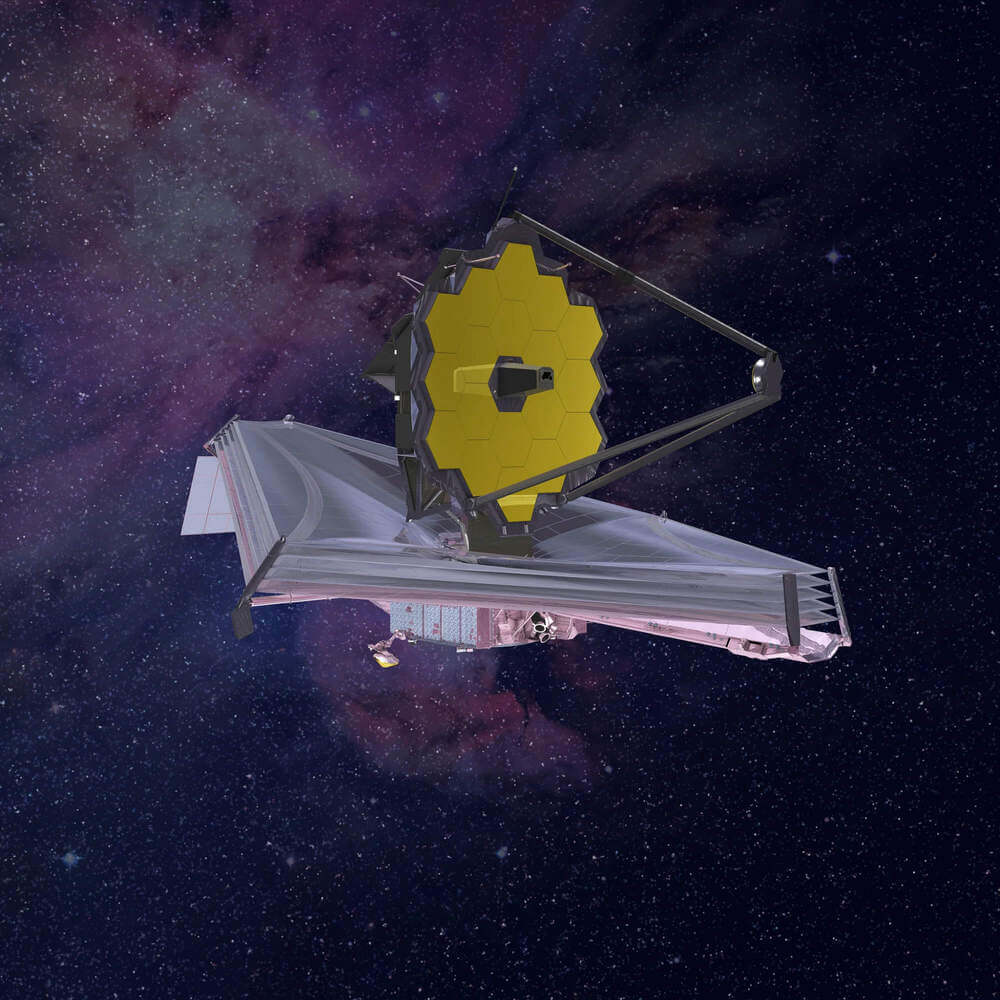
    fully unfurled and calibrated James Webb Space Telescope
    The James Webb Space Telescope will deliver its first full-color images on July 12. Credit: NASA

    The most powerful observatory in space hit its mark at a destination 1 million miles from Earth in late January and unfurled its complicated, tennis court-size sun shield. Engineers have since calibrated the Webb telescope’s scientific instruments, exceeding expectations for its level of precision.

    In this single galaxy of ours there are eighty-seven thousand million suns.

    Arthur C. Clarke

    Astronomers anticipate the telescope will stoke a golden age in our understanding of the cosmos, providing snapshots of space billions of light-years away.

    On July 12, the James Webb Space Telescope, a partnership between NASA, the European Space Agency, and the Canadian Space Agency, will deliver its first full-color images. What those first cosmic targets will be is a closely guarded secret.

    Webb is expected to observe some of the oldest, faintest light in the universe. The telescope will focus on a period less than 300 million years after the Big Bang, when many of the first stars and galaxies were born.

    Scientists will also use the telescope to peer into the atmospheres of planets outside our solar system, called exoplanets. Discoveries out there of water and methane, for example, could be signs of potential habitability or biological activity.

    Peculiar widespread Martian aurora discovered

    New overview images of Mars have revealed a stunning green light show in the planet’s sky.
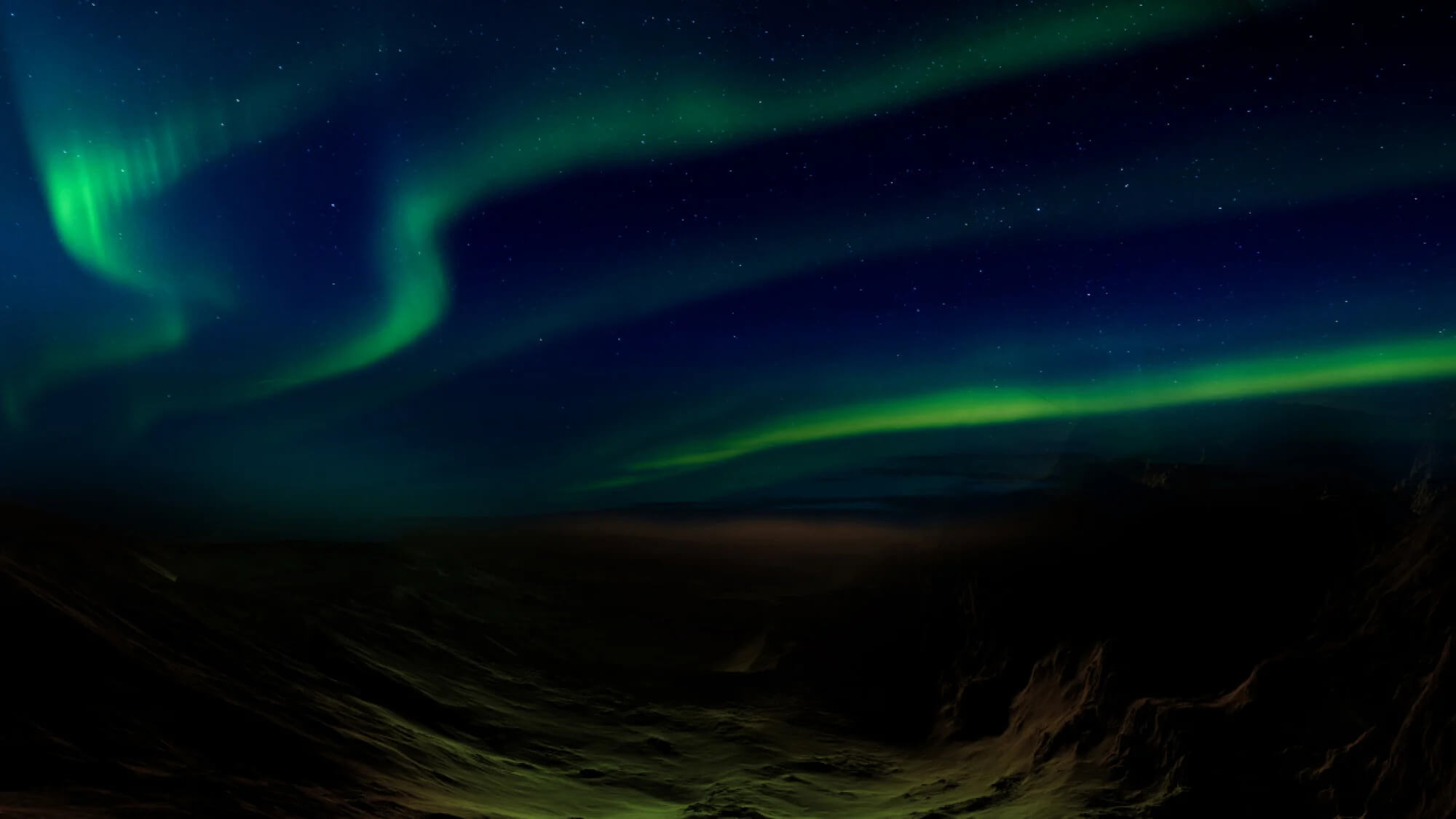
    green wormlike aurora streaking Martian sky
    Scientists believe a newly discovered Martian aurora puts green streaks in Mars’ sky. Credit: Emirates Mars Mission

    Much of Mars’ atmosphere apparently has a wormlike streak, an aurora similar to the Northern Lights sometimes visible on Earth. The Martian aurora is a glowing, twisted band of ultraviolet light, stretching thousands of miles from the dayside, which faces the sun, to the back of the planet.

    A United Arab Emirates Space Agency probe orbiting Mars, known as Hope, took the snapshots.

    No one knows how it’s happening, given that scientists believe Mars’ magnetic field largely deteriorated billions of years ago. Magnetic fields guide high-energy streams of electrons from the sun into a planet’s atmosphere.

    Astronomers take the first photo of massive Milky Way black hole
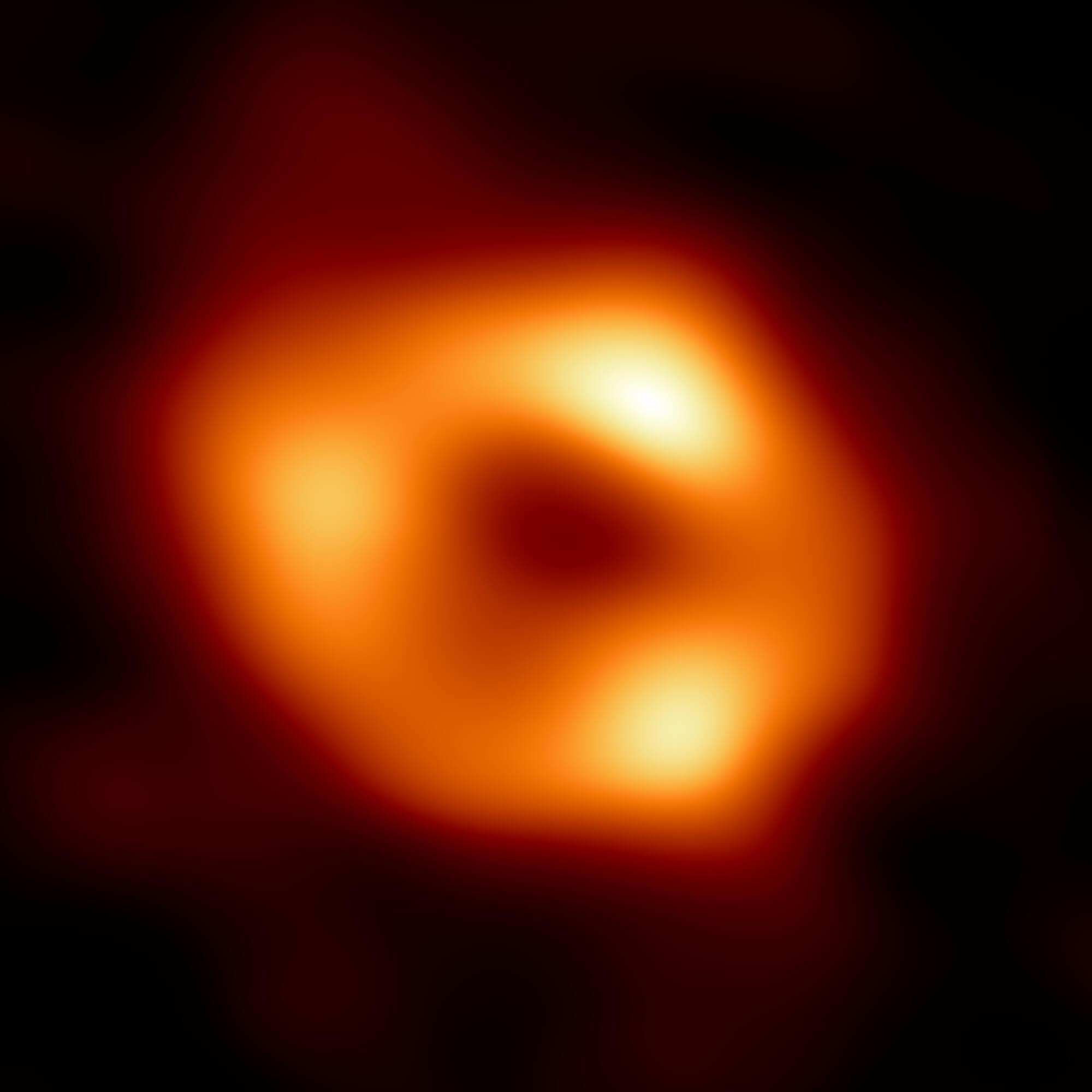
    Sagittarius A* black hole
    Scientists around the world worked together to take the first photo ever of Sagittarius A*, the supermassive black hole at the center of the Milky Way galaxy. Credit: Event Horizon Telescope

    At the center of the Milky Way is a giant black hole, and for the first time ever, astronomers were able to see it.

    Black holes don’t have surfaces, like planets or stars. Instead, these mysterious cosmic objects have a boundary called an “event horizon,” a point of no return. If anything swoops too close to that point, it will fall inward, never to escape the hole’s gravity.

    With the power of eight linked radio dishes from around the world, the Event Horizon Telescope took a picture of the shadow of the supermassive black hole known as Sagittarius A*. Hundreds of scientists from 80 institutions around the globe worked together to collect, process, and piece together fragments of data to make the picture.

    Up until three years ago, any depiction of a black hole was merely an artist’s interpretation or a computer model. Now scientists have a snapshot of the real deal, which spans 27 million miles.

    With financial support from the National Science Foundation and other groups, scientists plan to enhance their technology to make the image drastically sharper.


  • Is January Really The Best Month To Book Cheap Flights?

    Is January Really The Best Month To Book Cheap Flights?

    Space scientists have discovered just how much they can accomplish when they work together, with incredible feats achieved this year through collaborations with commercial industry and foreign nations.

    Successful partnerships in 2022 have included the launch and calibration of the most powerful space telescope in the world and photographing the never-before-seen supermassive black hole at the center of the Milky Way galaxy.

    (more…)
  • How To Pack Like A Pro, According To Flight Attendants

    How To Pack Like A Pro, According To Flight Attendants

    Space scientists have discovered just how much they can accomplish when they work together, with incredible feats achieved this year through collaborations with commercial industry and foreign nations.

    Successful partnerships in 2022 have included the launch and calibration of the most powerful space telescope in the world and photographing the never-before-seen supermassive black hole at the center of the Milky Way galaxy.

    Space, it says, is big. Really big. You just won’t believe how vastly, hugely, mindbogglingly big it is.

    Douglas Adams

    Stray rocket junk in an unpredictable orbit smashed into the moon, for example, creating a new crater. And NASA’s mega moon rocket, the Space Launch System, has stumbled on its way to its first lunar mission, with the agency encountering several problems with contractors’ work during a critical test this spring.

    Whether the rest of the year will include the inaugural moon-bound Artemis mission, the United States’ return to human deep space exploration, remains to be seen. Read more about the year’s biggest moments in space, so far.

    James Webb Space Telescope opens for business

    fully unfurled and calibrated James Webb Space Telescope
    The James Webb Space Telescope will deliver its first full-color images on July 12. Credit: NASA

    The most powerful observatory in space hit its mark at a destination 1 million miles from Earth in late January and unfurled its complicated, tennis court-size sun shield. Engineers have since calibrated the Webb telescope’s scientific instruments, exceeding expectations for its level of precision.

    In this single galaxy of ours there are eighty-seven thousand million suns.

    Arthur C. Clarke

    Astronomers anticipate the telescope will stoke a golden age in our understanding of the cosmos, providing snapshots of space billions of light-years away.

    On July 12, the James Webb Space Telescope, a partnership between NASA, the European Space Agency, and the Canadian Space Agency, will deliver its first full-color images. What those first cosmic targets will be is a closely guarded secret.

    Webb is expected to observe some of the oldest, faintest light in the universe. The telescope will focus on a period less than 300 million years after the Big Bang, when many of the first stars and galaxies were born.

    Scientists will also use the telescope to peer into the atmospheres of planets outside our solar system, called exoplanets. Discoveries out there of water and methane, for example, could be signs of potential habitability or biological activity.

    Peculiar widespread Martian aurora discovered

    New overview images of Mars have revealed a stunning green light show in the planet’s sky.

    green wormlike aurora streaking Martian sky
    Scientists believe a newly discovered Martian aurora puts green streaks in Mars’ sky. Credit: Emirates Mars Mission

    Much of Mars’ atmosphere apparently has a wormlike streak, an aurora similar to the Northern Lights sometimes visible on Earth. The Martian aurora is a glowing, twisted band of ultraviolet light, stretching thousands of miles from the dayside, which faces the sun, to the back of the planet.

    A United Arab Emirates Space Agency probe orbiting Mars, known as Hope, took the snapshots.

    No one knows how it’s happening, given that scientists believe Mars’ magnetic field largely deteriorated billions of years ago. Magnetic fields guide high-energy streams of electrons from the sun into a planet’s atmosphere.

    Astronomers take the first photo of massive Milky Way black hole

    Sagittarius A* black hole
    Scientists around the world worked together to take the first photo ever of Sagittarius A*, the supermassive black hole at the center of the Milky Way galaxy. Credit: Event Horizon Telescope

    At the center of the Milky Way is a giant black hole, and for the first time ever, astronomers were able to see it.

    Black holes don’t have surfaces, like planets or stars. Instead, these mysterious cosmic objects have a boundary called an “event horizon,” a point of no return. If anything swoops too close to that point, it will fall inward, never to escape the hole’s gravity.

    With the power of eight linked radio dishes from around the world, the Event Horizon Telescope took a picture of the shadow of the supermassive black hole known as Sagittarius A*. Hundreds of scientists from 80 institutions around the globe worked together to collect, process, and piece together fragments of data to make the picture.

    Up until three years ago, any depiction of a black hole was merely an artist’s interpretation or a computer model. Now scientists have a snapshot of the real deal, which spans 27 million miles.

    With financial support from the National Science Foundation and other groups, scientists plan to enhance their technology to make the image drastically sharper.
  • 4 Ways To Tell If There Are Hidden Cameras In Your Airbnb

    4 Ways To Tell If There Are Hidden Cameras In Your Airbnb

    Space scientists have discovered just how much they can accomplish when they work together, with incredible feats achieved this year through collaborations with commercial industry and foreign nations.

    Successful partnerships in 2022 have included the launch and calibration of the most powerful space telescope in the world and photographing the never-before-seen supermassive black hole at the center of the Milky Way galaxy.

    Space, it says, is big. Really big. You just won’t believe how vastly, hugely, mindbogglingly big it is.

    Douglas Adams

    Stray rocket junk in an unpredictable orbit smashed into the moon, for example, creating a new crater. And NASA’s mega moon rocket, the Space Launch System, has stumbled on its way to its first lunar mission, with the agency encountering several problems with contractors’ work during a critical test this spring.

    Whether the rest of the year will include the inaugural moon-bound Artemis mission, the United States’ return to human deep space exploration, remains to be seen. Read more about the year’s biggest moments in space, so far.

    James Webb Space Telescope opens for business

    fully unfurled and calibrated James Webb Space Telescope
    The James Webb Space Telescope will deliver its first full-color images on July 12. Credit: NASA

    The most powerful observatory in space hit its mark at a destination 1 million miles from Earth in late January and unfurled its complicated, tennis court-size sun shield. Engineers have since calibrated the Webb telescope’s scientific instruments, exceeding expectations for its level of precision.

    In this single galaxy of ours there are eighty-seven thousand million suns.

    Arthur C. Clarke

    Astronomers anticipate the telescope will stoke a golden age in our understanding of the cosmos, providing snapshots of space billions of light-years away.

    On July 12, the James Webb Space Telescope, a partnership between NASA, the European Space Agency, and the Canadian Space Agency, will deliver its first full-color images. What those first cosmic targets will be is a closely guarded secret.

    Webb is expected to observe some of the oldest, faintest light in the universe. The telescope will focus on a period less than 300 million years after the Big Bang, when many of the first stars and galaxies were born.

    Scientists will also use the telescope to peer into the atmospheres of planets outside our solar system, called exoplanets. Discoveries out there of water and methane, for example, could be signs of potential habitability or biological activity.

    Peculiar widespread Martian aurora discovered

    New overview images of Mars have revealed a stunning green light show in the planet’s sky.

    green wormlike aurora streaking Martian sky
    Scientists believe a newly discovered Martian aurora puts green streaks in Mars’ sky. Credit: Emirates Mars Mission

    Much of Mars’ atmosphere apparently has a wormlike streak, an aurora similar to the Northern Lights sometimes visible on Earth. The Martian aurora is a glowing, twisted band of ultraviolet light, stretching thousands of miles from the dayside, which faces the sun, to the back of the planet.

    A United Arab Emirates Space Agency probe orbiting Mars, known as Hope, took the snapshots.

    No one knows how it’s happening, given that scientists believe Mars’ magnetic field largely deteriorated billions of years ago. Magnetic fields guide high-energy streams of electrons from the sun into a planet’s atmosphere.

    Astronomers take the first photo of massive Milky Way black hole

    Sagittarius A* black hole
    Scientists around the world worked together to take the first photo ever of Sagittarius A*, the supermassive black hole at the center of the Milky Way galaxy. Credit: Event Horizon Telescope

    At the center of the Milky Way is a giant black hole, and for the first time ever, astronomers were able to see it.

    Black holes don’t have surfaces, like planets or stars. Instead, these mysterious cosmic objects have a boundary called an “event horizon,” a point of no return. If anything swoops too close to that point, it will fall inward, never to escape the hole’s gravity.

    With the power of eight linked radio dishes from around the world, the Event Horizon Telescope took a picture of the shadow of the supermassive black hole known as Sagittarius A*. Hundreds of scientists from 80 institutions around the globe worked together to collect, process, and piece together fragments of data to make the picture.

    Up until three years ago, any depiction of a black hole was merely an artist’s interpretation or a computer model. Now scientists have a snapshot of the real deal, which spans 27 million miles.

    With financial support from the National Science Foundation and other groups, scientists plan to enhance their technology to make the image drastically sharper.
  • 20 Ridiculously Funny Memes That Are Almost Too Spot On

    20 Ridiculously Funny Memes That Are Almost Too Spot On

    Space scientists have discovered just how much they can accomplish when they work together, with incredible feats achieved this year through collaborations with commercial industry and foreign nations.

    Successful partnerships in 2022 have included the launch and calibration of the most powerful space telescope in the world and photographing the never-before-seen supermassive black hole at the center of the Milky Way galaxy.

    Space, it says, is big. Really big. You just won’t believe how vastly, hugely, mindbogglingly big it is.

    Douglas Adams

    Stray rocket junk in an unpredictable orbit smashed into the moon, for example, creating a new crater. And NASA’s mega moon rocket, the Space Launch System, has stumbled on its way to its first lunar mission, with the agency encountering several problems with contractors’ work during a critical test this spring.

    Whether the rest of the year will include the inaugural moon-bound Artemis mission, the United States’ return to human deep space exploration, remains to be seen. Read more about the year’s biggest moments in space, so far.

    James Webb Space Telescope opens for business

    fully unfurled and calibrated James Webb Space Telescope
    The James Webb Space Telescope will deliver its first full-color images on July 12. Credit: NASA

    The most powerful observatory in space hit its mark at a destination 1 million miles from Earth in late January and unfurled its complicated, tennis court-size sun shield. Engineers have since calibrated the Webb telescope’s scientific instruments, exceeding expectations for its level of precision.

    In this single galaxy of ours there are eighty-seven thousand million suns.

    Arthur C. Clarke

    Astronomers anticipate the telescope will stoke a golden age in our understanding of the cosmos, providing snapshots of space billions of light-years away.

    On July 12, the James Webb Space Telescope, a partnership between NASA, the European Space Agency, and the Canadian Space Agency, will deliver its first full-color images. What those first cosmic targets will be is a closely guarded secret.

    Webb is expected to observe some of the oldest, faintest light in the universe. The telescope will focus on a period less than 300 million years after the Big Bang, when many of the first stars and galaxies were born.

    Scientists will also use the telescope to peer into the atmospheres of planets outside our solar system, called exoplanets. Discoveries out there of water and methane, for example, could be signs of potential habitability or biological activity.

    Peculiar widespread Martian aurora discovered

    New overview images of Mars have revealed a stunning green light show in the planet’s sky.

    green wormlike aurora streaking Martian sky
    Scientists believe a newly discovered Martian aurora puts green streaks in Mars’ sky. Credit: Emirates Mars Mission

    Much of Mars’ atmosphere apparently has a wormlike streak, an aurora similar to the Northern Lights sometimes visible on Earth. The Martian aurora is a glowing, twisted band of ultraviolet light, stretching thousands of miles from the dayside, which faces the sun, to the back of the planet.

    A United Arab Emirates Space Agency probe orbiting Mars, known as Hope, took the snapshots.

    No one knows how it’s happening, given that scientists believe Mars’ magnetic field largely deteriorated billions of years ago. Magnetic fields guide high-energy streams of electrons from the sun into a planet’s atmosphere.

    Astronomers take the first photo of massive Milky Way black hole

    Sagittarius A* black hole
    Scientists around the world worked together to take the first photo ever of Sagittarius A*, the supermassive black hole at the center of the Milky Way galaxy. Credit: Event Horizon Telescope

    At the center of the Milky Way is a giant black hole, and for the first time ever, astronomers were able to see it.

    Black holes don’t have surfaces, like planets or stars. Instead, these mysterious cosmic objects have a boundary called an “event horizon,” a point of no return. If anything swoops too close to that point, it will fall inward, never to escape the hole’s gravity.

    With the power of eight linked radio dishes from around the world, the Event Horizon Telescope took a picture of the shadow of the supermassive black hole known as Sagittarius A*. Hundreds of scientists from 80 institutions around the globe worked together to collect, process, and piece together fragments of data to make the picture.

    Up until three years ago, any depiction of a black hole was merely an artist’s interpretation or a computer model. Now scientists have a snapshot of the real deal, which spans 27 million miles.

    With financial support from the National Science Foundation and other groups, scientists plan to enhance their technology to make the image drastically sharper.

  • This Is When Taking A Job Pay Cut Can Actually Be Worth It

    This Is When Taking A Job Pay Cut Can Actually Be Worth It

    Space scientists have discovered just how much they can accomplish when they work together, with incredible feats achieved this year through collaborations with commercial industry and foreign nations.

    Successful partnerships in 2022 have included the launch and calibration of the most powerful space telescope in the world and photographing the never-before-seen supermassive black hole at the center of the Milky Way galaxy.

    Space, it says, is big. Really big. You just won’t believe how vastly, hugely, mindbogglingly big it is.

    Douglas Adams

    Stray rocket junk in an unpredictable orbit smashed into the moon, for example, creating a new crater. And NASA’s mega moon rocket, the Space Launch System, has stumbled on its way to its first lunar mission, with the agency encountering several problems with contractors’ work during a critical test this spring.

    Whether the rest of the year will include the inaugural moon-bound Artemis mission, the United States’ return to human deep space exploration, remains to be seen. Read more about the year’s biggest moments in space, so far.

    James Webb Space Telescope opens for business

    fully unfurled and calibrated James Webb Space Telescope
    The James Webb Space Telescope will deliver its first full-color images on July 12. Credit: NASA

    The most powerful observatory in space hit its mark at a destination 1 million miles from Earth in late January and unfurled its complicated, tennis court-size sun shield. Engineers have since calibrated the Webb telescope’s scientific instruments, exceeding expectations for its level of precision.

    In this single galaxy of ours there are eighty-seven thousand million suns.

    Arthur C. Clarke

    Astronomers anticipate the telescope will stoke a golden age in our understanding of the cosmos, providing snapshots of space billions of light-years away.

    On July 12, the James Webb Space Telescope, a partnership between NASA, the European Space Agency, and the Canadian Space Agency, will deliver its first full-color images. What those first cosmic targets will be is a closely guarded secret.

    Webb is expected to observe some of the oldest, faintest light in the universe. The telescope will focus on a period less than 300 million years after the Big Bang, when many of the first stars and galaxies were born.

    Scientists will also use the telescope to peer into the atmospheres of planets outside our solar system, called exoplanets. Discoveries out there of water and methane, for example, could be signs of potential habitability or biological activity.

    Peculiar widespread Martian aurora discovered

    New overview images of Mars have revealed a stunning green light show in the planet’s sky.

    green wormlike aurora streaking Martian sky
    Scientists believe a newly discovered Martian aurora puts green streaks in Mars’ sky. Credit: Emirates Mars Mission

    Much of Mars’ atmosphere apparently has a wormlike streak, an aurora similar to the Northern Lights sometimes visible on Earth. The Martian aurora is a glowing, twisted band of ultraviolet light, stretching thousands of miles from the dayside, which faces the sun, to the back of the planet.

    A United Arab Emirates Space Agency probe orbiting Mars, known as Hope, took the snapshots.

    No one knows how it’s happening, given that scientists believe Mars’ magnetic field largely deteriorated billions of years ago. Magnetic fields guide high-energy streams of electrons from the sun into a planet’s atmosphere.

    Astronomers take the first photo of massive Milky Way black hole

    Sagittarius A* black hole
    Scientists around the world worked together to take the first photo ever of Sagittarius A*, the supermassive black hole at the center of the Milky Way galaxy. Credit: Event Horizon Telescope

    At the center of the Milky Way is a giant black hole, and for the first time ever, astronomers were able to see it.

    Black holes don’t have surfaces, like planets or stars. Instead, these mysterious cosmic objects have a boundary called an “event horizon,” a point of no return. If anything swoops too close to that point, it will fall inward, never to escape the hole’s gravity.

    With the power of eight linked radio dishes from around the world, the Event Horizon Telescope took a picture of the shadow of the supermassive black hole known as Sagittarius A*. Hundreds of scientists from 80 institutions around the globe worked together to collect, process, and piece together fragments of data to make the picture.

    Up until three years ago, any depiction of a black hole was merely an artist’s interpretation or a computer model. Now scientists have a snapshot of the real deal, which spans 27 million miles.

    With financial support from the National Science Foundation and other groups, scientists plan to enhance their technology to make the image drastically sharper.

  • Exclusive Video: How Kampala City tycoon Ntaganda is at it Again, Planned a Foiled Attempt to Arrest Apollo Kaggwa

    Exclusive Video: How Kampala City tycoon Ntaganda is at it Again, Planned a Foiled Attempt to Arrest Apollo Kaggwa

    Kampala-based tycoon Ephraim Ntaganda popular for land scandals in Uganda is at it again but this time with the legendary Apollo Kaggwa the proprietor of Apollo Kaggwa Primary School.

    It is alleged that Mr Ntaganda has now procured the services of a senior police commander KMP Stephen Tanui to handle his latest venture, according to our sources inside Uganda Police.

    The source told Whisper Eye News that on Friday, over 20 uniformed and non-uniformed operatives stormed the residence of Dr. Apollo Kaggwa in an attempt to arrest him at his Muyenga residence, only to be saved by the IGP who rang the officer in charge of the operation and ordered him to withdraw

    Dr. Kagwa had earlier lodged a complaint to the police following threats on his life by Ntaganda and the file had been called to police headquarters. Surprisingly, the KMP ignored the letters and sent officers to arrest Dr. Kagwa.

    Mr. Ntaganda has previously been involved in land disputes and is accused of land grabbing including government wetlands and carrying out illegal evictions of hundreds of residents.

    “He is a go to executioner of dirty dealings when it comes to land matters with a network that involves land registrars, police officers the tycoon is unwavering swift and sly when it is needed most,” says the source.

    “It has to be remembered that he grabbed land from KCCA which was earmarked to house a dispensary along Nkrumah land,” the source added.

    Mr Ntaganda has been accused of using his network to evade taxes and secure police bonds in no time according to the source.

    Recently Mr Ntaganda was involved in one of his ploy to grab land in Entebbe City. The malignant schemer slippered away from Entebbe cells in the night after his deal had turned bad.

    Through his Prestigious Apartments Limited, with former education commissioner Mr. John Agaba and Uganda Land Commission, Ntaganda had connived to obtain a lease for two hectares of land without the consent of the school management at Nakasero Primary School.

    With help from unscrupulous people at Uganda Land Commission, Mr Ntaganda carved out 34A1 and 5C of Plot 34A that housed part of the school.

    Environment activists have condemned Mr. Ntaganda for his illegal activities of encroaching on Wetlands.

    “He wants to rid the city of any green vegetation starting with wetlands that he confesses to not have any use yet the space can be put to better use by brick and mortar,” the source added.