Blog

  • British Army Opens Doors to Ugandans, Offers Them Jobs With Salaries Up to Sh25 Million Monthly

    British Army Opens Doors to Ugandans, Offers Them Jobs With Salaries Up to Sh25 Million Monthly

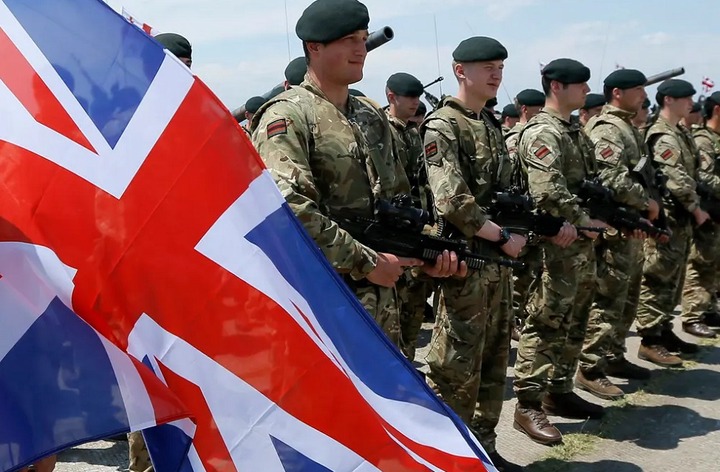
    Thousands of young Ugandans struggling with unemployment and low-paying jobs may now have a rare and life-changing opportunity abroad. The British Army is currently recruiting foreign nationals, and Ugandans are among those encouraged to apply. For many, this could mean a chance to escape poverty, support their families, and even begin a journey toward becoming UK citizens.

    The British Army is widely respected for its discipline, structure, and professionalism. It has long been one of the most organized and well-equipped military forces in the world. Now, it is opening its doors to individuals from Commonwealth nations, and Uganda is firmly on that list. For Ugandan youth facing a highly competitive and limited job market, this opportunity comes as a breath of fresh air.

    Successful applicants can earn a salary far higher than what most Ugandans ever expect to make within the country. Entry-level soldiers, known as privates, can take home the equivalent of approximately ten million Ugandan shillings per month. As they rise through the ranks, the salaries increase significantly, with senior officers reportedly earning up to twenty-five million shillings or more per month. Beyond the salary, the benefits package offered by the British Army is extensive and life-enhancing.

    To be eligible for recruitment, Ugandan candidates must first apply for a United Kingdom visitor visa. This visa is essential as it allows them to travel to the United Kingdom for up to six months. During this time, they can take part in the official recruitment process, which includes assessments and training. Applicants must provide proof that they can financially support themselves during their stay. They also need to show a valid return ticket and a fully completed visa application form. While obtaining the visa is not guaranteed, those who qualify and are determined have a real chance of moving forward.

    Once in the United Kingdom, applicants must pass several stages of evaluation. These include physical fitness tests, medical screenings, and mental aptitude exams. The process is rigorous and designed to ensure that only those who meet the British Army’s high standards are accepted. Those who succeed are granted an exemption stamp by the British Home Office. This stamp allows them to stay legally in the country, even after their visitor visa has expired, so long as they remain in service.

    In addition to the generous salaries, the British Army provides numerous support systems for its soldiers and their families. Recruits are entitled to free healthcare through the United Kingdom’s National Health Service. They also receive free housing, including accommodation for those with families. For those with children, there is access to free or subsidized education, ensuring that the next generation is given a better start in life. These benefits are designed to remove the financial stress that often burdens working families and to allow soldiers to focus entirely on their duties and personal development.

    After completing five years of active service, Ugandan soldiers become eligible to apply for British citizenship. This opens even more doors, including the right to live and work permanently in the United Kingdom, access to public services, and the ability to bring family members to join them through the Armed Forces visa scheme. For many, this could be the beginning of a new chapter that changes not just their own lives but also the lives of their families and future generations.

    The British Army also invests heavily in the professional growth of its recruits. Soldiers receive continuous training in technical skills, leadership, discipline, and teamwork. These skills are valuable both inside and outside the military. Upon completing their service, former soldiers are supported as they transition to civilian life, with career guidance and resources to help them start new careers in areas like security, engineering, logistics, and administration.

    However, with any great opportunity comes the risk of exploitation. Migration experts are warning Ugandan youth to be vigilant and avoid falling into the hands of fake agents or con artists. There have already been reports of fraudulent schemes where individuals pretend to be recruitment officers or claim to have insider connections. According to Abraham Okello, a migration consultant based in Kampala, the safest and only recommended way to apply is through the official UK government website at gov.uk. He strongly cautions against using brokers or paying any fees to individuals who are not officially connected to the British Army or the UK Home Office.

    Okello also emphasized that this chance is not for everyone. It is specifically suited for young men and women who are physically fit, mentally disciplined, and fully prepared to commit to a life of military service. The army life comes with its own set of demands, responsibilities, and sacrifices, and only those who are ready for that challenge should consider applying.

    Despite the challenges, this recruitment drive presents a rare and promising option for many Ugandans. It offers not just a job, but a career with long-term stability, global experience, and the potential for legal residency in one of the world’s most developed nations. With proper preparation, the right attitude, and a focus on using only trusted sources, Ugandan youth can take full advantage of this opportunity.

    For those who have dreamed of a better future beyond borders, the British Army may be the gateway. It offers a chance to earn a respectable income, build an honorable career, support one’s family, and possibly settle abroad. It is a path that requires courage, discipline, and dedication—but for those who succeed, the rewards can be life-changing.
  • Kabale Man Sentenced to Prison Until  2042 for Killing UPDF Soldier After Bar Fight

    Kabale Man Sentenced to Prison Until 2042 for Killing UPDF Soldier After Bar Fight

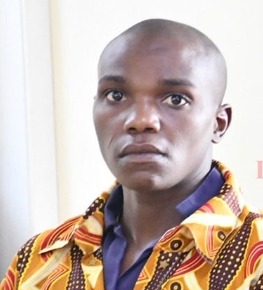
    A man from Uganda named Gilvazio Bategana has been sent to prison for 19 years. He admitted to killing a soldier named Private Patrick Byamukama, who was known as “Blackman.” The decision was made by the High Court in Kabale on Wednesday, July 9, 2025.

    The incident took place in May 2023 at a place called Kekubo Trading Centre in Butanda Sub-county, Kabale District. On that night, Bategana and Byamukama were drinking at the same bar. Witnesses said that as they left the bar, they got into an argument. The argument turned into a fight, and during the fight, Bategana pulled out a knife and stabbed Byamukama in the stomach.

    Byamukama was quickly taken to Kabale Regional Referral Hospital, but sadly, he did not survive his injuries. After the incident, the police arrested Bategana and charged him with murder. Instead of going through a full trial, Bategana made a deal with the government. He agreed to admit he was guilty, and in return, he got a shorter prison sentence.

    During the court session, the judge explained why the punishment was serious. The judge said that killing someone, especially a soldier who served the country, was a big crime. The court wanted to show everyone that such actions would not be taken lightly. However, the judge also noted that Bategana admitted his guilt, which saved the court time and money. The judge also saw that Bategana felt sorry for what he did, and this was considered when deciding his punishment.

    The judge said, “A soldier who worked hard to protect our country lost his life because of a fight fueled by alcohol. The court must protect lives like his.” This showed how important it was to punish such crimes, but also to think about the person’s actions in court.

    Some of Byamukama’s family members were in the courtroom when the sentence was announced. They had mixed feelings about the decision. Some felt that 19 years was not long enough for taking a life. Others were glad that the case was over and that Bategana was being punished. They felt that justice had been served, even if it didn’t bring their loved one back.

    Security officials in Kabale also spoke about the case. They said that what Bategana did was wrong and encouraged people to find peaceful ways to solve their problems. They especially warned against fighting when people have been drinking alcohol, as it can lead to bad decisions and terrible outcomes like this one.

    Bategana will serve his 19-year sentence in Ndorwa Government Prison in Kabale. The time he has already spent in jail since his arrest in 2023 will count toward his sentence. This means he could be released in 2042 if he serves the full term.

    This case is a reminder of how quickly things can go wrong when people let anger and alcohol take over. It also shows the importance of solving disagreements calmly to avoid hurting others. The court’s decision aims to punish Bategana for his actions while sending a message to others about the consequences of violence. For the soldier’s family, the sentence may not heal their pain, but it offers some closure. For the community, it’s a call to think twice before acting in anger.

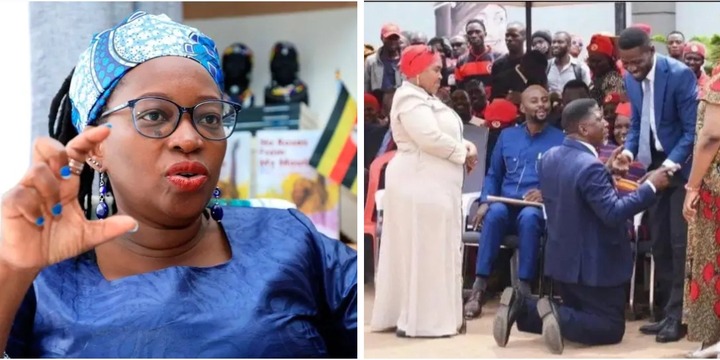
  • “Kneeling Before the Crown?” Stella Nyanzi Blasts Balimwezo Over NUP Loyalty Display

    “Kneeling Before the Crown?” Stella Nyanzi Blasts Balimwezo Over NUP Loyalty Display

    Exiled activist and controversial poet Dr. Stella Nyanzi has launched a fierce critique of Nakawa East legislator Hon. Ronald Balimwezo after he was seen kneeling before National Unity Platform (NUP) president Robert Kyagulanyi, popularly known as Bobi Wine.

    The gesture, which occurred at the party’s Kavule headquarters, has stirred debate across political and social platforms.

    Nyanzi, known for her outspoken and unfiltered rhetoric, condemned the act as symbolic of unhealthy political reverence. “The idol worship in some political parties makes even Baganda men kneel before their immoral idol,” she wrote. “To minimize the power-play, the buffoonish idol mockingly joined his worshippers on the ground. What buffoonery!”

    Her criticism appears aimed not only at Balimwezo but at the broader culture of hero-worship within opposition spaces. She argued that such dramatics erode democratic principles and reinforce autocratic tendencies disguised as revolutionary zeal.

    The viral image of Balimwezo on his knees has divided opinion. Supporters called it a mark of respect and loyalty, while critics see it as a red flag for emerging cult-like leadership dynamics within NUP.

    Nyanzi’s words struck a chord among some opposition members who are increasingly questioning internal party discipline and openness to dissent. Yet others dismissed her comments as an attempt to stay politically relevant from exile.

    As NUP intensifies its preparations for the 2026 elections, such internal criticism could become more frequent, reflecting deeper tensions within Uganda’s opposition ecosystem.

  • Five Secret Messages Hidden in Pope Francis’ Casket That Shocked the World

    Five Secret Messages Hidden in Pope Francis’ Casket That Shocked the World

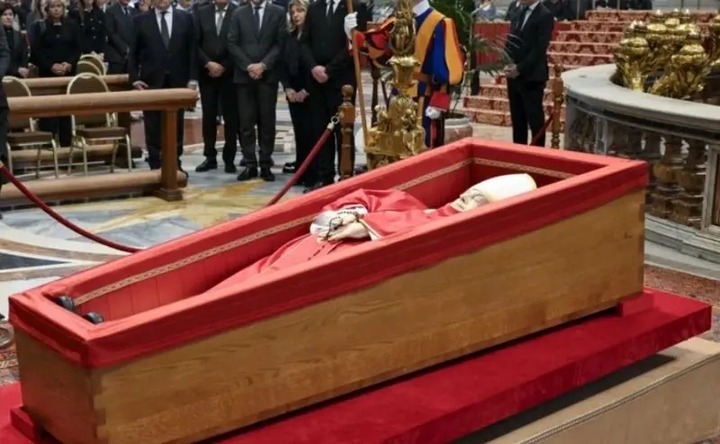
    Thousands of Catholic faithful gathered in solemn silence at St. Peter’s Basilica in Vatican City to honor the memory of Pope Francis. The basilica, known for its grandeur and history, became a place of deep emotion as mourners filed past the body of the beloved pope. While the sorrow was palpable, many noticed that his final appearance was carefully and symbolically crafted. Each detail surrounding his body seemed to carry a message. It was a quiet, visual reflection of a life spent in service, humility, and unwavering faith.

    As people approached the open casket, one of the first things that drew their attention was the deep red robe he was wearing. This color is traditionally used in the Catholic Church during major liturgical events such as Palm Sunday and Good Friday. The red symbolized sacrifice, the blood of Christ, and the profound love that Francis often spoke of throughout his life. It represented not only the suffering of Jesus but also the burdens of those Francis devoted his life to serving, including the poor, the forgotten, and the oppressed. The robe was a clear reminder of how deeply the pope had internalized the idea of sacrificial love, choosing to walk with those on the margins of society.

    Covering the red robe was a white pallium, which was marked with small black crosses. This woolen band is worn by popes and senior clergy during Mass. The pallium is made by hand from lamb’s wool, traditionally prepared by Benedictine nuns in Rome. In this context, it was more than just a liturgical garment. It symbolized the weight of leadership and the burden of caring for a global Church. Pope Francis had often spoken about the responsibility of those in power to serve rather than to dominate. The presence of the pallium on his body reflected that belief. It reminded those in attendance of the quiet, steady leadership he had embodied throughout his papacy.

    On his head rested a white mitre, a pointed ceremonial headpiece worn by bishops and popes. Unlike the richly decorated tiaras of earlier popes, Francis had chosen a mitre that was simple in design, with only subtle gold lines. This choice echoed the tone he set from the beginning of his leadership. He refused to be seen as a king. He rejected the traditional papal palace and lived in modest quarters. The plain mitre told the same story. It represented humility, a rejection of opulence, and a reminder that holiness does not need to be adorned with wealth or jewels. His decision to wear this style of mitre in death reinforced his lifelong message that simplicity is not weakness but strength.

    Another detail that stood out to many observers was the ring on his right hand. Traditionally, popes wear the Ring of the Fisherman, a unique and symbolic piece that signifies their role as the successor of Saint Peter. Upon the death of a pope, this ring is customarily destroyed to mark the end of his authority. However, Pope Francis was not wearing the official papal ring. Instead, he wore a plain silver band that he had worn daily since his time as Archbishop of Buenos Aires. This personal ring was simple and meaningful. It was not a symbol of power but a sign of personal commitment and continuity. Wearing it even in death showed his preference for authenticity over tradition and his dedication to staying true to his roots.

    In his hands lay a small silver rosary. The beads were modest in design, lacking any decorative flair. For Catholics around the world, the rosary represents devotion, meditation, and a consistent spiritual rhythm. Placing the rosary in his hands was in line with a long-standing tradition for papal funerals. However, for Pope Francis, it seemed even more appropriate. He was known for his deep prayer life and his constant emphasis on the importance of personal connection with God. The rosary in his hands was not only a symbol of Catholic faith but a reflection of his own private relationship with prayer and spiritual reflection.

    The casket itself also spoke volumes. Pope Francis had made a personal request for a simple wooden coffin reinforced with zinc, avoiding any ornate decoration or embellishment. He did not want gold, carvings, or elaborate symbols. This final request was a powerful conclusion to a life marked by humility. It rejected the temptations of legacy-building through wealth or appearance. Instead, he allowed the humility of his life and the love he had shown to others to speak for him.

    All these choices were small in appearance but enormous in meaning. They reflected a man who believed that greatness comes not from status but from service. They told the story of a pope who led not by command but by example. They reminded the world that the highest form of leadership is rooted in compassion, honesty, and humility.


    As people left the basilica, many carried more than grief. They carried a sense of inspiration. In the quiet, symbolic details of his final appearance, Pope Francis had offered the world one last lesson. It was a lesson not delivered through speeches or documents but through the language of simplicity and sincerity. And it will likely be remembered for generations.

  • Little Known Details About Uganda First Lady And Wife To Milton Obote – Miria Obote

    Little Known Details About Uganda First Lady And Wife To Milton Obote – Miria Obote

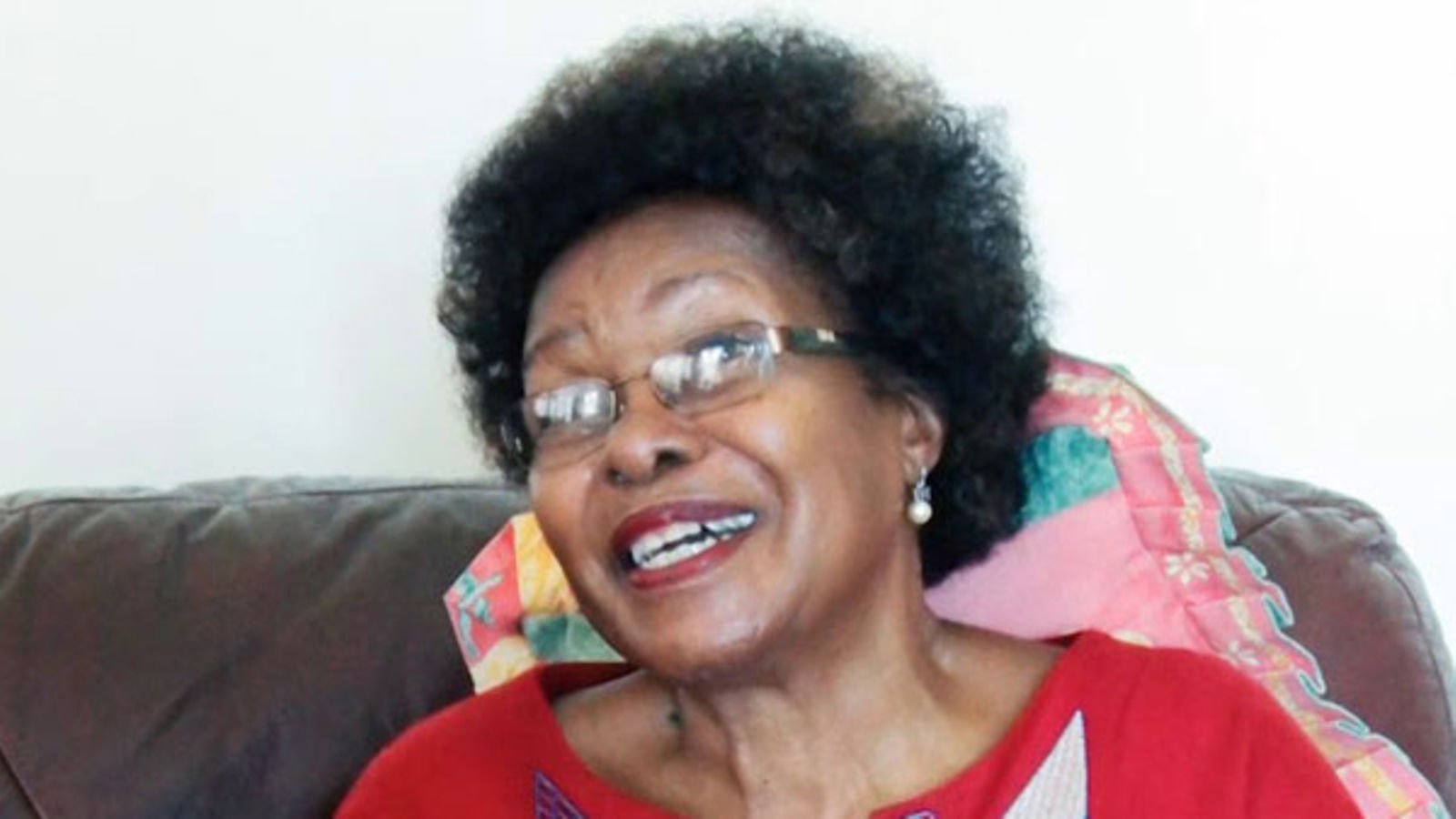
    Miria Obote, born Miria Kalule on July 16, 1936, in Kampala, Uganda, is one of Uganda’s most notable political figures not only because of her role as First Lady during two crucial periods in the country’s history, but also because of her own political journey, marked by resilience, loyalty, and an unshakable commitment to her late husband’s legacy.

    Born into a modest, hardworking family, Miria was the daughter of Bulasio Kalule, a civil servant who worked in the Ministry of Works, and Malita Kalule, a dedicated mother. Growing up in the heart of Uganda’s capital, Miria was surrounded by the values of public service, discipline, and education principles that would shape her life for decades to come.

    Her academic journey began at the prestigious Gayaza High School, one of the oldest and most respected girls’ schools in Uganda. She would later further her studies at Makerere University, the country’s premier institution of higher learning and a breeding ground for many of East Africa’s post-independence leaders. There, she gained exposure to a broader intellectual environment, sharpened her understanding of politics, and would eventually find herself connected to the circles of national leadership.

    In November 1963, Miria Kalule married Apollo Milton Obote, a rising star in Ugandan politics who would go on to become both Prime Minister and President. Their marriage marked the beginning of her role in public life. Just a few years later, when her husband assumed the presidency for the first time on April 15, 1966, Miria became Uganda’s First Lady, a role she would serve in again during his second term from December 17, 1980, to July 27, 1985.

    As First Lady, Miria Obote was known for her quiet dignity and strong support for her husband during a time of great political upheaval. The years of Obote’s leadership were marked by turbulence, conflict, and deep national division, but Miria remained a steady presence beside him, in both power and exile.

    Following the overthrow of Milton Obote’s government in 1985, the couple went into exile, living for two decades in Lusaka, Zambia, and later in Johannesburg, South Africa. For Miria, those years were marked by uncertainty, isolation, and the challenges of raising a family far from home. But even in exile, she remained involved in the Uganda People’s Congress (UPC), the political party her husband founded and led. She supported his efforts from behind the scenes and stayed closely engaged with the affairs of Uganda.

    Her return to Uganda came under solemn circumstances. After Milton Obote died on October 10, 2005, in South Africa, Miria came back home for the first time in 20 years — not only to bury her husband, but to continue the mission they had started together. She re-entered public life with a sense of duty and purpose, determined to preserve the legacy of a man who had shaped Uganda’s early political history.

    In December 2005, she was elected president of the UPC, becoming the first woman to lead one of Uganda’s oldest political parties. This marked a turning point in her political life — from First Lady and political partner to full-fledged party leader. At a time when Uganda’s political landscape was dominated by strong personalities and entrenched power structures, Miria’s leadership represented both a tribute to the past and a hope for the future.

    She became the UPC’s presidential candidate in the 2006 general election, a contest that was highly competitive and widely watched across the country. However, in the election held on February 23, 2006, she secured only 0.6% of the vote, with the incumbent President Yoweri Museveni winning by a large margin. While her electoral performance was disappointing to many of her supporters, Miria’s participation itself was deeply symbolic — a statement that the UPC still had a voice, and that she was willing to carry its banner forward, even in the face of long odds.

    Beyond politics, Miria Obote’s personal life has also been marked by both joy and sacrifice. She and Milton Obote had four children, among them Jimmy Akena, who followed in his parents’ footsteps by entering politics. Jimmy currently serves as a Member of Parliament for Lira Municipality, and like his mother, he is active in the UPC and continues to champion the causes his father once fought for.

    Miria Obote’s journey is one of remarkable strength — a life spent in the shadows of power, then stepping into its harsh light to fight for a vision of Uganda shaped by justice, national pride, and democratic ideals. She is more than the widow of a president; she is a politician in her own right, a mother who raised a political family, and a symbol of Uganda’s complicated but rich post-independence history.

    Her legacy is still unfolding, but one thing is clear: Miria Obote is a woman whose loyalty, endurance, and quiet determination have earned her a lasting place in Uganda’s political story.

  • Shock in Wakiso: Senior State Attorney Found Dead in Her Home

    Shock in Wakiso: Senior State Attorney Found Dead in Her Home

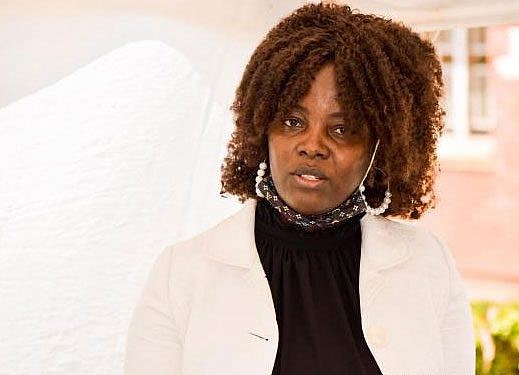
    Police in Kasangati, Wakiso District, have begun a full investigation into the sudden and tragic death of Senior State Attorney Fatuma Bbuye Nabiwemba, whose lifeless body was discovered in her house in Wampeewo on the evening of Thursday, July 10.

    Nabiwemba, 47, was a respected legal officer who served as an Assistant Director of Public Prosecutions in the Office of the Director of Public Prosecutions (DPP). According to initial reports, she was last seen alive on Monday, July 7. For days afterward, her home remained unusually quiet until neighbors began noticing a strong odor and flies gathering around the house. Concerned by the strange silence and foul smell, they broke into her residence, only to make the grim discovery.

    Her body was found lying motionless on her bed and was already in a state of decomposition. According to police, there were no visible signs of injury on her body, and she appeared to have died days before she was found.

    Luke Owoyesigyire, the Deputy Police Spokesperson for the Kampala Metropolitan area, confirmed the incident on Friday. In his statement, he said, “The deceased was discovered inside her residence in Wampeewo, Kasangati Town Council, where she lived alone. The body showed no external injuries.”

    Police were officially alerted around 8:36 p.m. on Thursday by Hamuza Kabanda, a driver from the DPP’s headquarters, after neighbors notified authorities of the discovery. Officers from Kasangati Police Station arrived at the scene shortly afterward and began a detailed forensic examination of the premises.

    During the search, detectives recovered several personal items that may help piece together the circumstances surrounding Nabiwemba’s death. One particular item of interest was a document from Butabika National Referral Mental Hospital, suggesting that she may have been receiving mental health care before her death.

    At this stage, police have not ruled out any possibility. Investigators are considering a range of causes, including natural death, suicide, or other factors that could have played a role. For now, the body has been taken for a postmortem examination to determine the actual cause of death.

    Authorities have not yet released a formal statement on what the next steps will be, but police say inquiries are ongoing and further updates will be shared with the public as soon as more details are confirmed.

    The news of Nabiwemba’s death has shocked many across Uganda’s legal and justice community. She was known as a hardworking, experienced prosecutor who had risen through the ranks over the years. Her sudden passing has left a deep sense of loss among her colleagues at the DPP’s office and the people of Wakiso District.

    As investigations continue, police are urging the public to avoid speculation and allow detectives time to gather facts and evidence. The authorities are also urging anyone with useful information to come forward and assist with the investigation.

    This tragedy has not only raised questions about the final days of a senior public servant but also about the growing mental health challenges facing professionals in high-pressure government roles. It is still unclear how her recent medical history may be connected to her death. Still, the presence of a document from Butabika hints that Nabiwemba may have been struggling silently.

    For now, the community waits for answers, and those who knew her mourn a woman who dedicated her life to justice, but whose final moments remain clouded in mystery.

  • Never Tell a Woman These 6 Things No matter How Much You Love Her

    Never Tell a Woman These 6 Things No matter How Much You Love Her

    Bringing up an ex in any relationship can be a slippery slope, and comparing your partner to someone from your past can be downright destructive. Even if you think you’re being harmless or offering a compliment (“My ex never did this, but you do, and I love it”), it opens the door to insecurity. She might start wondering if she’s being judged, if she measures up, or if you’re still emotionally tied to someone else. No one wants to feel like they’re competing with a ghost. Focus on the present. Let her know you see her for who she is, not as a replacement, but as someone entirely new and irreplaceable.

    3. “You’ve changed.”

    Change is a natural part of life and relationships. People grow, evolve, and shift over time, especially within the ups and downs of a long-term bond. But saying “You’ve changed” in a negative tone can feel like an accusation. It implies that who she is now isn’t as lovable or valuable as who she used to be. That kind of comment can sting deeply, especially if she’s already been struggling with self-doubt or transitions in her life. Instead of framing it as a complaint, talk about how you can both grow together. Say things like, “I’ve noticed we’ve both grown — how do we stay connected through it?” That kind of approach brings closeness, not distance.

    4. “You’re being too emotional.”

    This phrase carries years of stigma, especially for women. Calling someone “too emotional” reduces their feelings to a problem, as if sensitivity is a flaw that needs fixing. Emotions are part of being human, and in loving relationships, they should be welcomed, not shut down. When a woman expresses herself, she’s sharing something real, raw, and vulnerable. Dismissing that with “You’re too emotional” can make her feel like a burden or even ashamed of how she feels. If you’re overwhelmed in the moment, it’s okay to take a breath. Say, “I want to understand you better. Can we talk about this calmly?” That shows respect without shutting her down.

    5. Harsh criticism about her appearance.

    Let’s be honest, we all notice changes in the people we love. Maybe she’s gained or lost weight. Maybe her style has shifted. But there’s a massive difference between gentle honesty and cruel remarks. Saying something hurtful about her body, her skin, or the way she looks, even if you think you’re being “honest,” can destroy her self-esteem in seconds. Women often carry silent insecurities, and your words have the power to either heal or harm. If you must address something sensitive, do it with kindness, love, and support. And always ask yourself: Is this about helping her feel confident, or am I just being critical?

    6. “Calm down.”

    It may seem like a simple request, but saying “Calm down” in the middle of an emotional moment is like pouring fuel on fire. It rarely has the effect you hope for. It can feel controlling, patronizing, or dismissive, especially when someone is already upset. It suggests that her emotions are a problem to be silenced, rather than something to be understood. Instead of telling her to calm down, try listening. Stay present. Say, “I want to hear you  help me understand what’s going on.” That kind of support is far more calming than any command ever could be.

    Final Thought: Use Your Words to Build, Not Break

    Love is not about walking on eggshells, but it is about being aware. The way you speak to the woman you love can either make her feel seen, heard, and safe, or alone, rejected, and small. Words carry weight, especially in moments of conflict or vulnerability. So, pause before you speak. Ask yourself: Will this bring us closer, or drive us apart?


    At the end of the day, love doesn’t mean saying everything that crosses your mind. It means choosing words that protect her heart, even in tough conversations. Let your communication be a space of kindness, not criticism. Because when love is strong, respect follows, and your words will reflect that every time.

  • Tragedy in Mbarara: Missing Ntare Student Found Dead in River Rwizi

    Tragedy in Mbarara: Missing Ntare Student Found Dead in River Rwizi

    The body of a 19-year-old Ntare School student, Elvis Magambo, has been found floating in River Rwizi, days after he was reportedly suspended from school and went missing. His death has shocked both his school community and the city of Mbarara.

    Elvis, a Senior Five student, had recently been indefinitely suspended from Ntare School for allegedly escaping from the school compound. According to school officials, he had climbed over the perimeter wall one evening to attend a nearby trade show at Kakyeka Stadium, an act the school described as a serious case of indiscipline.

    Following this incident, the school’s headmaster, Saul Rwampororo, wrote to Elvis’s father, Dr. Emmanuel Magambo, informing him that his son had been excluded from school. The letter noted that the matter would be discussed further by the school’s Board of Governors.

    Days later, Elvis went missing from home. His disappearance was reported at Koranorya Police Station on July 2, 2025. The search continued until the evening of Thursday, July 10, when a body was spotted by residents floating near the Nyamitanga Bridge in River Rwizi, in Kasanyaraze Cell, Kakoba Ward, Mbarara City.

    According to the Rwizi Regional Police spokesperson, SP Samson Kasasira, police officers from Mbarara Central Police Station rushed to the scene after being alerted by local residents. The body, initially unidentified, was recovered and taken to the Mbarara Regional Referral Hospital mortuary for a postmortem examination.

    Kasasira confirmed later that the body had been identified as Elvis Magambo, the son of Dr. Emmanuel Magambo, a medical worker at the same hospital. “It has been confirmed that the deceased is 19-year-old Magambo Elvis, a Senior Five student at Ntare School,” Kasasira said in a statement. “We offer our condolences to the family. Investigations into his death are still ongoing.”

    What began as a suspected drowning has taken a darker turn. Dr. Emmanuel Magambo revealed that the postmortem showed his son had been stabbed before being dumped into the river. The findings have raised serious concerns about what actually happened to Elvis during the days he was missing.

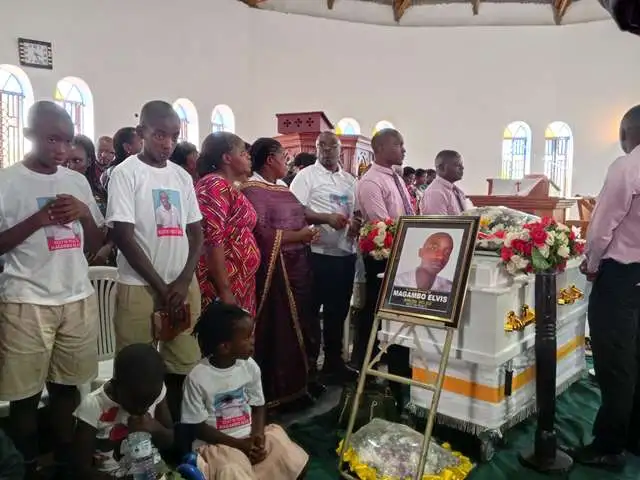
    Elvis’s death has left his family and community in deep grief. A requiem service was held at Makenke Church of Uganda in Mbarara City North Division, where friends, classmates, clergy, and mourners gathered to pay their last respects to the young student.

    Many are now calling for a thorough investigation to find out the truth behind Elvis’s final days, how a disciplinary case turned into a disappearance, and how a suspended student ended up stabbed and left in a river. Questions are being asked not only about school discipline policies but also about the events following his suspension.


    The police have opened a death inquiry, and they continue to call on anyone with information to come forward. As of now, the family is waiting for answers and justice for a young life cut short far too soon.

  • Major ADF Base Captured in Congo as UPDF Strikes Hard in Operation Shujaa

    Major ADF Base Captured in Congo as UPDF Strikes Hard in Operation Shujaa

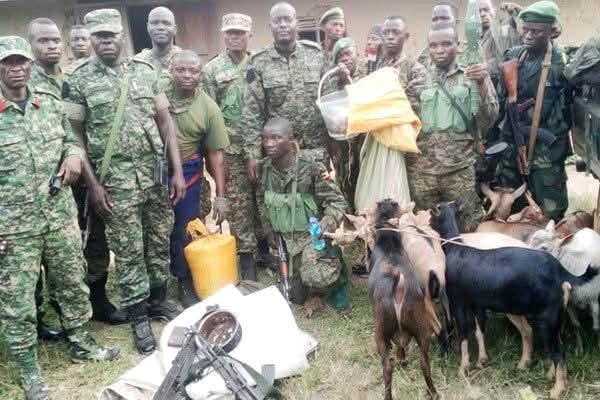
    Uganda’s army, known as the Uganda People’s Defence Forces (UPDF), has captured an important base belonging to the Allied Democratic Forces (ADF) in Apakwang, a location in the Ituri Province of the Democratic Republic of Congo (DRC). This success is part of a joint mission called Operation Shujaa, which was started to stop ADF attacks and remove their strong influence in eastern Congo.

    The UPDF worked together with the Congolese army in this mission. After many weeks of planning and operations, their forces finally broke through one of the ADF’s main camps. This breakthrough was confirmed on Thursday, 10 July 2025, by Colonel Chris Magezi, who serves as the Military Assistant to Uganda’s Chief of Defence Forces.

    According to Colonel Magezi, the operation began last Sunday with airstrikes and heavy artillery fire aimed at ADF positions in Apakwang. These strikes were carefully planned to hit the right targets and weaken the enemy’s defenses. Once the area was hit from the air, ground troops moved in and took full control of the camp.

    Magezi said that this operation was an important achievement for the military and showed how well the two countries are working together. The camp they captured was not just a place where ADF fighters stayed — it was a key base where they planned attacks, trained new members, and stored weapons and supplies. It may have also been used to plan attacks across borders, possibly even into Uganda.

    During the raid, UPDF soldiers found weapons, communication devices, and important documents. These items are now being studied by intelligence officers to learn more about the ADF’s plans, leaders, and future threats. The army believes this information will help stop future attacks and weaken the rebel group even further.

    Operation Shujaa was first launched in late 2021 after a series of deadly ADF attacks both in Uganda and inside eastern Congo. Since then, the operation has targeted key ADF locations to reduce their power and stop them from harming civilians. The capture of the Apakwang camp is seen as a major victory and a clear sign that the joint efforts between Uganda and Congo are making real progress.


    Officials say the mission is far from over, but this victory gives hope that peace and stability can be restored to the region if the cooperation continues.

  • How Ugandans Reacted After Police Were Spotted Pouring Out 15,000 Litres of Illicit Waragi

    How Ugandans Reacted After Police Were Spotted Pouring Out 15,000 Litres of Illicit Waragi

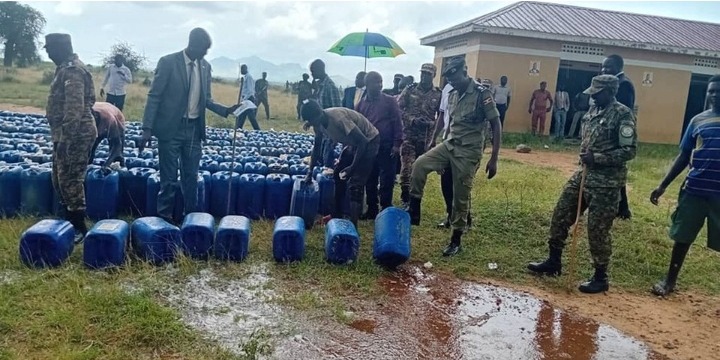
    Police in Uganda have destroyed over 15,000 litres of illegal waragi in a major crackdown targeting the transportation and sale of unlicensed alcohol in northern Uganda.

    The operation, which took place on Monday, involved pouring the seized alcohol onto the ground after it was intercepted at various roadblocks on its way to Kotido District.

    According to officials, the destroyed liquor totaled approximately 15,540 litres.

    It was found hidden in plastic containers and jerrycans, mostly transported by small trucks and motorcycles.

    The waragi was being moved from different parts of the country and was likely meant for illegal sale in the Karamoja region, where the consumption of unregulated alcohol remains high.

    “We are stepping up our fight against dangerous waragi that continues to ruin lives.

    This is a warning to all those still engaging in this illegal business,” a police officer said at the scene of the destruction.

    The move sparked a wave of reactions online, with many Ugandans taking to social media to express their views.

    On X (formerly Twitter), one user wrote, “They should invest more in helping local brewers meet safety standards instead of destroying people’s livelihoods.”

    Another netizen commented, “This is a good move.

    That waragi has killed many people in the villages. Let’s save lives instead of protecting illegal profits.”

    Facebook users also joined the debate, with some accusing the police of targeting small traders.

    One post read, “15,000 litres gone just like that! Meanwhile, some top people are still importing worse things without any action taken.”

    Others supported the police, saying the crackdown was necessary to protect public health.

    “Illicit waragi causes blindness, liver failure, and other deadly illnesses.

    Police should continue with these operations,” a concerned citizen shared.

    Despite the mixed reactions, the police have vowed to continue with the operation across the region, calling on residents to report any waragi trafficking.

    Environmental experts monitored the destruction process to ensure the alcohol was disposed of without contaminating water sources or farmland.

    “This is about saving lives, not just enforcing the law,” said a senior officer. “We want safer communities.”

    As the discussion continues online, the debate over public health versus economic survival remains a heated topic among Ugandans.