Blog

  • Why Sudhir Ruparelia Will Remain Uganda’s Richest Man for the Next 20 Years

    Why Sudhir Ruparelia Will Remain Uganda’s Richest Man for the Next 20 Years

    When people talk about wealth and business in Uganda, one name always comes up: Dr. Sudhir Ruparelia. For more than three decades, he has been at the center of the country’s business growth. His story, from a young immigrant worker in the United Kingdom to becoming Uganda’s richest man, shows a mix of discipline, courage, and vision. But what is more striking is that Sudhir’s empire is built in a way that almost guarantees he will remain at the top of Uganda’s billionaires list for at least the next 20 years.

    A Business Empire Built to Last

    Sudhir controls the Ruparelia Group, a conglomerate with investments in real estate, education, hospitality, agriculture, media, insurance, and banking. Unlike many businessmen who depend on one sector, Sudhir spread his investments across different industries. This diversification has allowed him to survive shocks, from political changes to global economic crises.

    Even when his flagship Crane Bank was controversially taken over in 2016, Sudhir did not collapse. Instead, he fought legal battles, reclaimed property, and redirected his energy into other parts of his empire, including luxury real estate and tourism. His ability to adapt shows he is not only wealthy but also resilient.

    Real Estate Powerhouse

    The backbone of Sudhir’s fortune is Meera Investments, Uganda’s largest property company. From high-rise towers in Kampala’s central business district to luxury apartments in Kololo, Meera controls a vast share of the city’s skyline. Properties like Pearl Business Park, Speke Apartments, and Kingdom Kampala Mall remain steady income generators.

    Real estate is one of the safest and fastest-growing industries in Uganda, especially with urbanization accelerating. With Kampala’s population expected to double in the coming decades, Sudhir’s properties will only grow in value, ensuring his wealth keeps multiplying.

    Tourism and Hospitality Leadership

    Another reason Sudhir’s empire will stay strong is his investment in hospitality and tourism. His flagship Speke Resort Munyonyo is not just a hotel; it is a landmark for international conferences, weddings, and events. Now, with new projects like the 19-acre Paradise Island Resort on Lake Victoria, Sudhir is positioning himself to dominate Uganda’s luxury tourism for decades to come.

    Uganda’s tourism industry is projected to expand as the country markets its natural beauty, wildlife, and culture to the world. Sudhir’s hotels, resorts, and leisure facilities will be at the center of this growth.

    Education, Media, and Other Sectors

    Beyond property and tourism, Sudhir has invested heavily in education, running schools like Kabojja International School, Kampala Parents School, and Delhi Public School International. These institutions are trusted by Uganda’s elite families, and the demand for quality private education continues to grow.

    In addition, his ownership of Sanyu FM, one of Uganda’s oldest private radio stations, gives him influence in the media sector. His group also operates in agriculture through Premier Roses, a flower export business that earns millions of dollars from international markets.

    These diverse investments ensure that even if one sector slows down, others will keep his empire thriving.

    Sudhir’s success is not just about money but also about vision and adaptability. Having lived in the UK as a young man, he understands global business standards. Yet he also knows Uganda’s local market inside out. This balance allows him to create ventures that meet international expectations while fitting perfectly into the Ugandan economy.

    Resilience Against Crises

    Over the years, Sudhir has faced challenges that would have destroyed ordinary businessmen: political pressure, banking crises, legal battles, and economic downturns. But each time, he has come out stronger. His recent legal victories in the Crane Bank case, both in Uganda and abroad, have restored confidence in his empire and protected his reputation.

    This resilience, combined with his vast network of allies in business and politics, makes it difficult to imagine a scenario where he would lose his top spot in Uganda’s billionaire rankings.

    The Next 20 Years

    Looking ahead, Uganda’s economy is expected to grow, driven by oil production, infrastructure development, and urban expansion. All these areas connect directly to Sudhir’s businesses—real estate, hotels, logistics, and services. He has already laid the foundation to benefit from this future growth.

    Moreover, his children are active in managing different parts of the Ruparelia Group, showing clear signs of succession planning. This ensures that his empire will not fade when he eventually steps back from daily management.

    Dr. Sudhir Ruparelia’s wealth is not built on chance. It is built on property that cannot easily be replaced, on schools that parents trust, on hotels that attract international visitors, and on resilience that has been tested again and again.

    For these reasons, Sudhir is not just Uganda’s richest man today, he is almost certain to remain on top for the next 20 years. His empire is built to outlast crises, grow with the economy, and adapt to new opportunities, making him a lasting symbol of wealth and success in Uganda.


  • Sudhir Ruparelia Wins Lifetime Achievers Award for Transforming Uganda’s Real Estate

    Sudhir Ruparelia Wins Lifetime Achievers Award for Transforming Uganda’s Real Estate

    Dr. Edwin Musiime, Chairman of the Uganda Homeowners Association, led a delegation of board members to recognize business mogul Dr. Sudhir Ruparelia with the Lifetime Achievers Award at the National Property Awards.

    The award, presented at Sheraton Hotel in Kampala last week, celebrated Sudhir’s outstanding contribution to Uganda’s real estate sector and his role in improving access to affordable housing. The ceremony brought together government officials, business leaders, and real estate stakeholders.

    “Dr. Sudhir has lived a life dedicated to bettering the standards of living for many Ugandans. Beyond affordable housing, he has invested heavily in education, healthcare, and recreation,” said Dr. Musiime during his keynote speech.

    Sudhir’s Real Estate Legacy

    Sudhir, Uganda’s wealthiest businessman, has built a wide real estate portfolio through Meera Investments and the Ruparelia Group. His properties include Speke Resort Munyonyo, Kabira Country Club, Pearl Tower, Kingdom Kampala, the high-end One-10 Apartments in Kololo, and others.

    The Ruparelia Group also operates in banking, hospitality, and education, making it one of Uganda’s most powerful business empires.

    According to Forbes, Sudhir began his journey in the United Kingdom, where he saved 25,000 US dollars before returning to Uganda in 1985. He started by trading and importing premium Kenyan beer brands, setting up one of Kampala’s first organized distribution networks. From there, he expanded into property and hospitality.

    Housing Deficit in Uganda

    Speaking at the event, Hon. Judith Nabakooba, Minister of State for Lands, Housing and Urban Development, warned that Uganda faces a housing deficit of nearly seven million units. She urged government and private partners to focus on affordable housing to improve living conditions.

    Her call was supported by Mugabi Lazarus, Director of the Board of Governors, AREA Uganda, who advised households to limit accommodation costs to 30% of their income. He said housing shortages are a global challenge but stressed the need for government intervention.

    Sudhir’s recognition goes beyond real estate. His work in education, healthcare, and philanthropy has created thousands of jobs and transformed Kampala’s skyline.

    As Uganda continues to face rapid urbanization and a growing housing deficit, the award highlights the importance of private sector leaders like Dr. Sudhir Ruparelia in shaping the country’s future.

  • Rwanda Launches Africa’s First Self-Flying Electric Air Taxi

    Rwanda Launches Africa’s First Self-Flying Electric Air Taxi

    Rwanda has made history in aviation by hosting the first public flight of a self-flying passenger drone on the African continent.

    The demonstration took place in Kigali on Wednesday, just before the Africa Aviation Summit 2025, scheduled for September 4–5. The event featured the EHang EH216-S, an electric Vertical Take-Off and Landing (eVTOL) aircraft built to carry two passengers without a pilot.

    During the test, the drone rose about 100 meters above the ground, giving the audience a glimpse of what the future of air travel could look like. For Rwanda, this flight is not just a technical showcase but also a symbol of its ambition to be at the forefront of advanced aviation technology in Africa.

    Rwanda as a Leader in Aviation Innovation

    The Government of Rwanda partnered with China Road and Bridge Corporation (CRBC) and EHang, a world leader in urban air mobility, to organize the pilot flight. Officials say the project strengthens Rwanda’s image as a hub for modern air technology on the continent.

    By combining CRBC’s global engineering experience with EHang’s cutting-edge aircraft, Rwanda hopes to build an ecosystem for Advanced Air Mobility (AAM). This new industry is expected to help reduce traffic jams in cities, cut carbon emissions, and provide cleaner, faster, and more sustainable transport options.

    The Minister of Infrastructure said Rwanda is committed to building a connected, modern economy through innovation in transport. “By showcasing this flight, Rwanda is sending a clear message that we are ready to embrace the future of aviation. Our goal is not only to demonstrate the technology but also to develop a safe and forward-looking regulatory framework for Advanced Air Mobility,” the minister explained.

    CRBC and EHang’s Contribution

    HUANG Qilin, Director General of CRBC’s Rwanda Office, praised the partnership. He said CRBC is proud to support Rwanda’s vision of becoming a pioneer in aviation technology. Using CRBC’s global expertise, he added, the partnership will explore the potential of what is being called the “low-altitude economy” and create models for new economic growth in Africa.

    EHang, the company behind the EH216-S drone, noted that the aircraft is part of a new generation of self-flying eVTOLs. It has already been tested in Asia and the Middle East, but Rwanda’s demonstration is the first of its kind in Africa. The company highlighted that this launch shows Rwanda’s openness to futuristic transport systems and its role in leading the continent into a new era of aviation.

    The Global Context of Passenger Drones

    The idea of passenger drones, often called “flying taxis,” is still new but is advancing quickly around the world. Countries like China and the United Arab Emirates have already tested these drones, and some European cities are beginning to explore their potential.

    These electric, battery-powered aircraft are designed mainly for short-distance urban travel. They are seen as eco-friendly solutions that can reduce reliance on fuel-powered cars and improve city mobility.

    With this first demonstration, Rwanda has placed itself among the early movers in the global race to adopt passenger drones. The country’s decision to embrace the technology reflects its broader vision of innovation, sustainability, and leadership in Africa’s aviation future.

  • Woman Returns Home After 10 Years in Saudi Only to Be Betrayed by Her Own Brother

    Woman Returns Home After 10 Years in Saudi Only to Be Betrayed by Her Own Brother

    Maureen Mbatha spent more than ten years working in Saudi Arabia as a house help. Her life there was not easy. She had little education, her employer kept her passport, and the job came with long hours and difficult conditions.

    Even with these challenges, Maureen remained strong. She prayed, worked tirelessly, and faithfully sent money home to support her family. Most importantly, she saved so her son could have a better future.

    After years of sacrifice, Maureen finally saw an opportunity to invest back home. She decided to buy a piece of land in her village. The plot cost 150,000 shillings, and she was excited because it meant she was building something permanent for herself and her family. Since she could not travel home right away, she turned to her brother for help. She trusted him completely and sent him the money through Mobile money, giving him clear instructions on which land to buy.

    But instead of following her request, her brother went behind her back. He bought a smaller piece of land in a less desirable area for 130,000 shillings. He then tried to convince Maureen that it was the best option available, warning her that if she delayed, she might lose the chance to buy.

    When Maureen finally returned home, she discovered the truth. Her brother had betrayed her trust, and the land she dreamed of owning was gone. What was supposed to be a proud moment of investment and progress turned into deep disappointment.

    Maureen’s story is not unique. Many Africans working abroad face the same struggles when they send their savings home. They often rely on relatives to manage investments, only to be let down by dishonesty or mismanagement. Her experience is a painful reminder of the risks migrant workers face and the need for safer, more reliable ways to invest their hard-earned money.

    It also highlights a bigger issue: migrant workers sacrifice years of their lives in difficult jobs, far from their families, only to return home and find their efforts wasted. Protecting their investments and creating trustworthy systems for them is not just important—it is necessary for their future and for the families who depend on them.

  • 5 Things Every Woman Wants In The Morning But Will Never Tell You

    5 Things Every Woman Wants In The Morning But Will Never Tell You

    Every woman has her own way of starting the morning, but there are some small things that many women quietly wish for when they wake up. These wishes are often not spoken out loud, yet they can make a big difference in how her day begins. When understood and acted upon, they can strengthen relationships, create harmony in the home, and make her feel loved before she even steps out the door.

    Here are five things that many women would love in the morning but may never directly ask for, along with why these little gestures matter more than most people realize.

    1. A Little Time to Herself

    For many women, mornings can feel like the busiest part of the day. They wake up already thinking about work, children, house chores, or personal goals. Having even ten or fifteen minutes of quiet time can feel like a luxury. Maybe it is a calm moment with a cup of tea, a short meditation, reading a page from a book, or just sitting in silence before the rush begins. This pause helps her clear her mind, lower stress, and prepare for the demands ahead. Giving her space in the morning shows respect for her peace and reminds her that her personal needs matter too.

    2. A Thoughtful Compliment

    When someone offers genuine words of kindness, it can completely change the energy of the morning. Women, like anyone else, sometimes wake up feeling tired or unprepared for the day. A sincere compliment, such as telling her she looks beautiful, appreciating the way she cares for the family, or simply saying how much she is valued, can lift her spirit instantly. It is not about flattery, but about recognition. These simple words can make her feel noticed and appreciated without her having to ask for them.

    3. Help with Morning Tasks

    Mornings are often filled with responsibilities that can feel overwhelming. Preparing breakfast, getting the children ready for school, packing bags, or tidying up the home all demand time and energy. Even small acts of support make a difference. Helping with the dishes, making the bed, or preparing the coffee can remove some of the pressure. This teamwork not only lightens her load but also creates a sense of partnership, showing her that she is not carrying the morning alone.

    4. Understanding and Patience

    Not every morning will be smooth. Sometimes there will be stress, worry about the day ahead, or leftover fatigue from the day before. Women may not always want to explain or complain about these feelings, yet a partner’s understanding goes a long way. A patient attitude, a listening ear, or even a small comforting gesture like a hug or smile can provide quiet strength. This type of emotional support does not need many words; it shows that you are present and ready to stand by her no matter how the morning feels.

    5. Affection and Connection

    Affection is one of the most powerful ways to begin the day with warmth. A soft kiss, holding hands for a moment, or a gentle hug can create a sense of closeness that lasts throughout the day. These little touches remind her that she is loved and cherished, not just for what she does but for who she is. Even when mornings are busy, making time for connection helps build trust and intimacy in the relationship.

    Why These Gestures Matter

    These small actions may seem simple, but they hold deep meaning. They tell her she is valued not only as a partner, mother, or worker but also as a person who deserves care and attention. Meeting these unspoken needs creates a stronger emotional bond, reduces stress in the household, and sets a positive mood for the day.

    When you show her kindness in these quiet ways, she feels seen without having to ask. She feels appreciated without demanding recognition. And most importantly, she feels loved from the very start of the day.

    In the end, mornings are not only about rushing through routines. They are about building moments that create connection, trust, and joy. By noticing these unspoken desires and offering them freely, you can turn an ordinary morning into a foundation for a stronger, happier relationship.

  • Why Most Marriages Fail—and the Simple Way to Prevent It

    Why Most Marriages Fail—and the Simple Way to Prevent It

    When we hear about divorce, the common reasons often mentioned are cheating, financial struggles, or couples drifting apart. But according to a recent survey of relationship experts, the number one cause runs deeper: poor communication. This shows that no matter how much love or attraction exists, a marriage without clear and open communication is fragile.

    Good communication and emotional closeness are the foundation of a strong relationship. Without them, misunderstandings build up, trust begins to fade, and emotional distance grows. If you have ever felt frustrated because your partner does not share their feelings, you are not alone. The good news is that many problems can be solved when couples learn how to talk honestly and listen with care.

    Why Communication Matters Most

    Communication problems are not just about arguments. They include avoiding important conversations, shutting down emotionally, or behaving in passive-aggressive ways that cause resentment. Experts in the survey said that 74 percent of divorces are linked to disagreements about children, money, or intimacy. All of these are connected to how couples communicate.

    That is why it is so important to talk openly about expectations and long-term goals. Avoiding these discussions may keep the peace for a while, but it creates bigger problems later.

    Warning Signs Before Marriage

    The survey also found that 80 percent of experts believe a bride’s pre-wedding doubts can be a sign of future trouble. What many dismiss as “cold feet” may actually be a warning about unresolved issues. Some couples marry quickly because of family or social pressure and avoid difficult talks about the future. This makes it harder to fix problems once patterns are set.

    Taking time to face fears and doubts before marriage helps create trust and understanding.

    The Cost of Divorce

    Divorce is not only the end of a marriage, it also leaves deep emotional scars. The survey revealed that 58 percent of experts believe people who divorce once are more likely to divorce again. This shows how important it is to break unhealthy patterns early and build emotional strength.

    Divorce often brings feelings of failure, shame, and loneliness. At the same time, it can also become a chance to grow if handled with care and support. Financial challenges, especially for women, can make the process even harder. This is why learning to communicate before conflicts get out of control is so important.

    Why Mediation Works Better

    For couples who decide to separate, the way they handle divorce makes a big difference. According to the survey, 70 percent of experts recommend mediation instead of going straight to court. Mediation allows couples to work together respectfully on issues like finances and child custody. It reduces trauma and often leads to healthier long-term relationships, especially when children are involved.

    How to Protect Your Marriage

    The real goal is not only to avoid divorce but to build a marriage that grows stronger with time. Experts suggest four simple practices:

    1. Talk Regularly and Honestly
      Make time to check in with each other about feelings, dreams, and worries. Do not avoid difficult topics. A safe space for open conversation builds trust.

    2. Be Aware of Emotions
      Notice your own triggers and share them gently. Use “I feel” statements instead of blaming. For example, say “I feel sad when we don’t spend time together” instead of “You never care about me.”

    3. Keep the Friendship Alive
      The strongest marriages are built on friendship. Spend time together doing activities you both enjoy and stay connected emotionally, not just through responsibilities.

    4. Seek Help Early
      If problems keep repeating, see a counselor or therapist before the situation worsens. Early help can stop small cracks from becoming permanent breaks.

    The Role of Boundaries

    Healthy emotional boundaries protect a marriage from resentment. Boundaries allow partners to respect each other’s needs while staying close. When both feel safe, communication flows more easily and love grows.

    The Core Truth

    Love alone is not enough to keep a marriage strong. Without trust, understanding, and emotional safety, love begins to fade. The most lasting marriages are built on friendship, openness, and the daily choice to connect with each other.

  • Son of Former Minister Maria Kiwanuka Found Dead in U.S.A

    Son of Former Minister Maria Kiwanuka Found Dead in U.S.A

    Former finance minister and current presidential advisor on economy and finance, Maria Kiwanuka, is mourning the loss of her youngest son, Nsereko Kyamukungubya Kiwanuka, widely known as “Kyamu.”

    Nsereko, who once worked at dfcu Bank before moving to the United States, was found dead on Wednesday, September 3, 2025, in his rented apartment in Washington, DC.

    According to the family, an initial postmortem showed that he suffered a heart attack.

    They explained that Monday was a public holiday in the U.S., so Nsereko stayed home. On Tuesday he still had not gone to work, even though he had seemed healthy before. A family friend grew concerned and called the police.

    When officers arrived, they found the apartment locked. They forced the door open and discovered him unresponsive, with the television still on and tuned to his favourite sports channel.

    Before his passing, Nsereko had recently graduated with a Master’s in Business Administration from the University of Denver. He had also secured a job as a finance advisor at a U.S. real estate firm. His competence was so outstanding that his confirmation came within two months instead of the usual six. The family said he was excited about passing probation shortly before his death.

    His uncle, Owek. Robert Wagwa Nsibirwa, the second deputy Katikkiro of Buganda, confirmed that arrangements are being made to repatriate his body and organise burial.

    The loss comes less than a month after the passing of two other family members: Rhoda Nakibuuka Nsibirwa Kalema, a key family figure, and Nnaalongo Margret Kiwana, Maria Kiwanuka’s mother.

    At dfcu Bank, Nsereko was recognised as a skilled professional in client relations. He worked as a pinnacle relations manager and managed a portfolio worth about $10 million.

    Colleagues described him as dedicated, innovative, and highly competent. He introduced a client onboarding system that encouraged high-value transactions and launched campaigns promoting zero transaction costs.

    These initiatives brought more than 150 cash-only traders into the banking system. Reports show that his efforts increased revenue by 35 percent and improved customer satisfaction by 50 percent.

    Colleagues remembered him as self-driven, passionate, and committed to delivering exceptional value.

  • UPDF Brigadier General Tom Kabuye Found Dead in Luwero

    UPDF Brigadier General Tom Kabuye Found Dead in Luwero

    Brigadier General Tom Kikoyo Kabuye, the Assistant Chief of Defence Intelligence, has been confirmed dead in Kikyusa Town Council, Luwero District, his family announced on Sunday morning.

    “It is with a heavy heart that I announce the untimely death of one of our own members and great sons of Luwero District. Brig Gen Tom Kabuye was discovered this morning at Kikyusa Town Council. May his soul rest in eternal peace,” a family statement read.

    At the time of his death, Brig Gen Kabuye was serving as Assistant Chief of Defence Intelligence. He was one of the most senior officers in Uganda’s security system and was highly respected in the Uganda People’s Defence Forces (UPDF) for his years of service and his role in military intelligence.

    The cause of his death is not yet known. Authorities have not released an official statement, but investigations are expected to begin.

    Kabuye, who was from Luwero, worked his way up the ranks of the UPDF and was instrumental in shaping Uganda’s intelligence operations.

  • RDC Orders Arrest of Isingiro NRM Registrars Over Theft of Shs 90m

    RDC Orders Arrest of Isingiro NRM Registrars Over Theft of Shs 90m

    The Resident District Commissioner (RDC) of Isingiro, Ada Nasiima, has ordered the arrest of several National Resistance Movement (NRM) sub-county registrars accused of misusing more than Shs 90 million that was meant for party mobilisation.

    Speaking after a closed security meeting on Friday, Nasiima told reporters that her office had received more than 10 complaints from youth who claim the registrars diverted the money.

    She explained that the party had set aside over Shs 90 million to support youth mobilisation during the recent NRM primaries. She added that investigations are ongoing and warned that anyone who fails to account for the funds will be arrested.

    Nasiima also said the probe will be widened to cover money given to special interest groups and elders.

    Isingiro District NRM chairperson, Moses Mushabe, confirmed that registrars must either provide accountability or report to police and record statements. He stressed that party guidelines were clear, with money given to registrars who were expected to distribute it to youth in their sub-counties. Mushabe, however, asked the youth to stay calm and not stage protests, assuring them that the matter would be handled properly.

    Juma Gumaoshabe, the NRM youth flagbearer for Isingiro Town Council, revealed that more than five registrars have already been arrested and handed to police to make statements.

  • Pastor Missing After High-Voltage Electricity Kills 3 at His Church Crusade in Bushenyi

    Pastor Missing After High-Voltage Electricity Kills 3 at His Church Crusade in Bushenyi

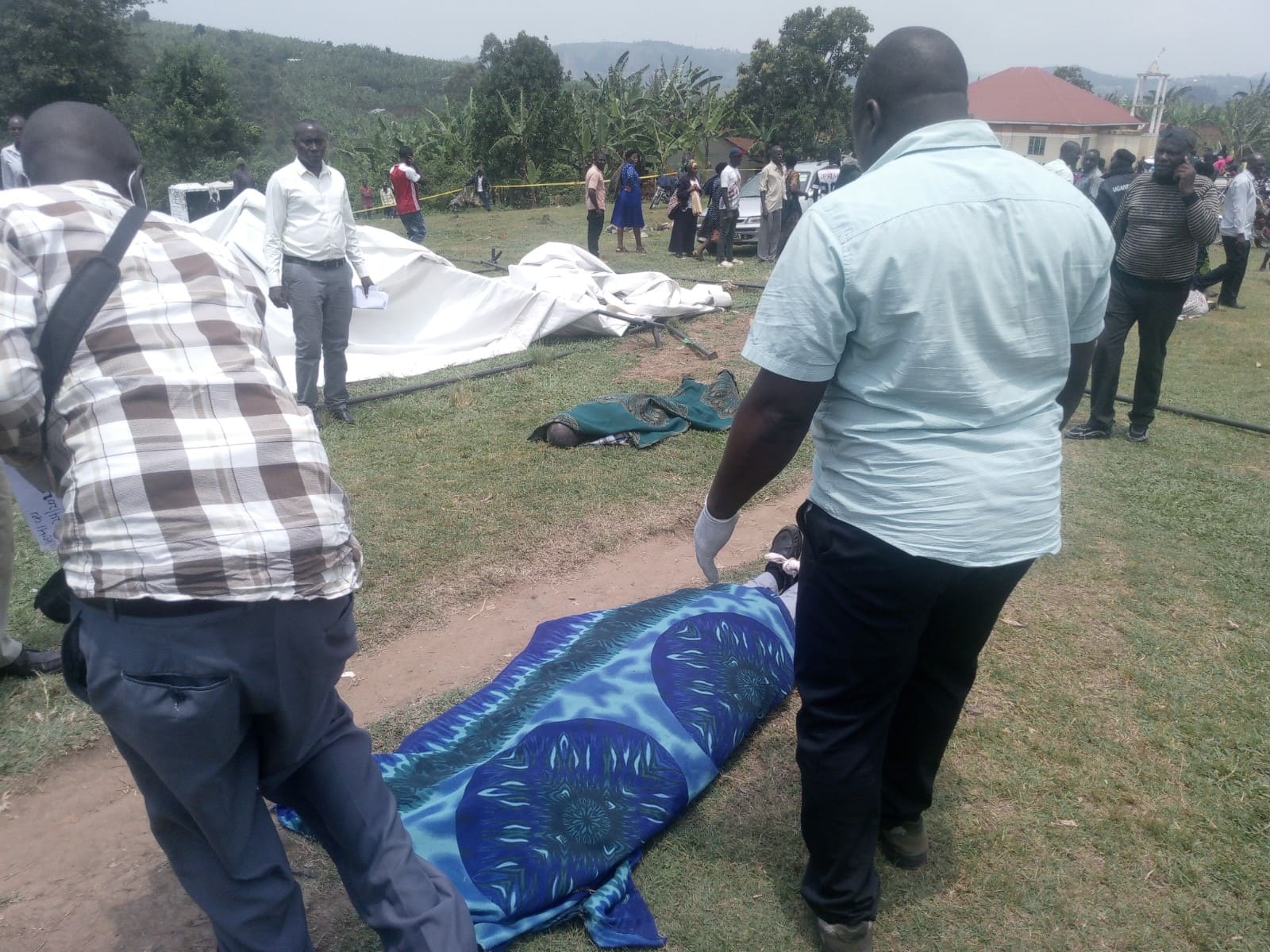
    Pastor Kiiza, the head of Rock Ministries Church, is said to be on the run after three people were electrocuted during a church crusade in Bushenyi district.

    According to Apollo Tayebwa, the police spokesperson for the Greater Bushenyi Region, the tragedy happened on Friday evening at Kashenyi marketplace in Ibaare sub-county, where Rock Ministries had organized a crusade.

    The victims were identified as Blessed Atuhweere, 23, from Ntungamo district, Waiswa Narutazari from Mitooma district, and William Rwakisheija from Bushenyi district. Another man, Nathan Mulekwa, 40, survived but suffered serious injuries.

    Police say the accident occurred when a metal pole from one of the tents touched a three-phase high-voltage power line.

    The bodies were taken to Kampala International University Teaching Hospital in Ishaka for postmortem examination.

    Bushenyi deputy RDC William Kasigazi blamed the church organizers for not informing security officials or providing a medical team at the event. He added that the crusade was immediately stopped as investigations continue.