

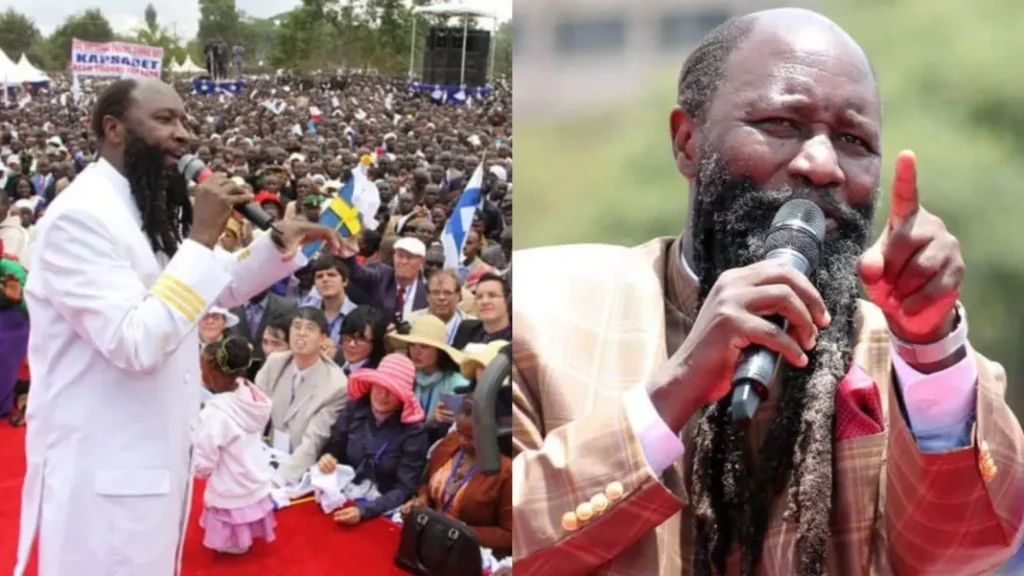
A Kenyan preacher, Dr. David Owuor, has stirred waves of curiosity, skepticism, and debate after allegedly predicting the exact date the world will end. According to a report circulated on various social media platforms, particularly by African Hub on X (formerly Twitter), the pastor claimed that August 2 of this year would mark the final day of humanity as we know it.
The statement, bold and dramatic, has sparked a surge of conversation online, with thousands weighing in from across Africa and beyond. While some express fear or anticipation, many more have reacted with cynicism or outright disbelief. The reason is simple: claims of this kind have emerged before, and not one has ever proven true.
Dr. Owuor’s declaration joins a long list of doomsday predictions that have failed to materialize. These forecasts, often rooted in religious beliefs or apocalyptic ideologies, capture public attention but rarely stand up to scrutiny. In this case, no verified evidence or theological consensus accompanies Owuor’s claim. Scientific bodies, religious authorities, and governments have offered no support for the idea that August 2 holds any global significance.
This isn’t the first time such predictions have surfaced, especially in East Africa. In 2023, another Kenyan preacher, Paul Nthenge Mackenzie, became the center of an international scandal after leading hundreds of his followers into a deadly cult-like belief. Mackenzie, head of the now-banned Good News International Ministries, instructed his followers to starve themselves to “meet Jesus.” The tragedy resulted in the deaths of over 400 people and prompted a national reckoning about religious extremism in Kenya.
The chilling incident underscored just how dangerous unfounded religious prophecies can become when combined with unchecked influence and a vulnerable following. It also served as a warning about the power of persuasive but unverifiable religious claims, especially when they promise answers to the world’s biggest mysteries.
Elsewhere on the continent, similar apocalyptic warnings have come and gone. Earlier in 2024, a Nigerian pastor prophesied that the world would end on April 25. Despite attracting media attention and a degree of panic among some circles, the day came and passed like any other just another in a long history of failed doomsday prophecies.
These repeated failures beg an important question: why do such predictions continue to gain traction?
Experts point to a combination of factors: fear of the unknown, religious fervor, distrust of institutions, and the human desire for meaning in chaotic times. In many cases, when communities face poverty, political instability, or rapid change, apocalyptic messages can feel like a strange kind of comfort, a way of making sense of the suffering around them. But such narratives often do more harm than good, distracting people from real issues and putting them at risk of manipulation.
A Biblical Response to Predictions
For many Christians, the very idea of someone predicting the exact date of the world’s end directly contradicts core Biblical teachings. One of the most frequently cited verses in response to such claims is Mark 13:32, which states: “But about that day or hour no one knows, not even the angels in heaven, nor the Son, but only the Father.” This passage alone casts doubt on anyone who claims to know the exact moment of humanity’s end, including pastors, prophets, or self-proclaimed messengers of God.
Despite this, some religious leaders continue to make bold announcements, often framing them as divine revelations. Whether for attention, power, or genuine belief, the result is usually the same: public anxiety followed by disappointment or disillusionment.
The Role of Social Media
One reason these stories spread so quickly in recent years is the power of social media. Platforms like X, Facebook, and TikTok allow dramatic statements to reach millions in a matter of hours. When someone claims to know the “exact date” of the world’s end, it’s only a matter of time before it trends, especially if the person has a significant following.
However, with influence comes responsibility. Many online users, including religious followers, may not have the tools or resources to fact-check these predictions. That’s why digital literacy and critical thinking are more important now than ever before.
What Should People Do?
In moments like these, it’s essential to respond with calm, clarity, and evidence. There is no scientific basis for Dr. Owuor’s August 2 prediction. Neither NASA nor any global astronomical authority has identified any threats to Earth on that date. Nor has any religious council affirmed the pastor’s message.
As history has repeatedly shown, no one, no matter how revered or convincing, has accurately predicted the end of the world. Until such a day comes, if it ever does, humanity would be better served by focusing on solving real problems: poverty, conflict, inequality, and climate change. These are the challenges that demand action, not fear over unverified prophecies.
In the end, while claims like Dr. Owuor’s may make headlines, they should be taken with caution and viewed through the lens of reason. Fear may trend fast, but truth always lasts longer.